
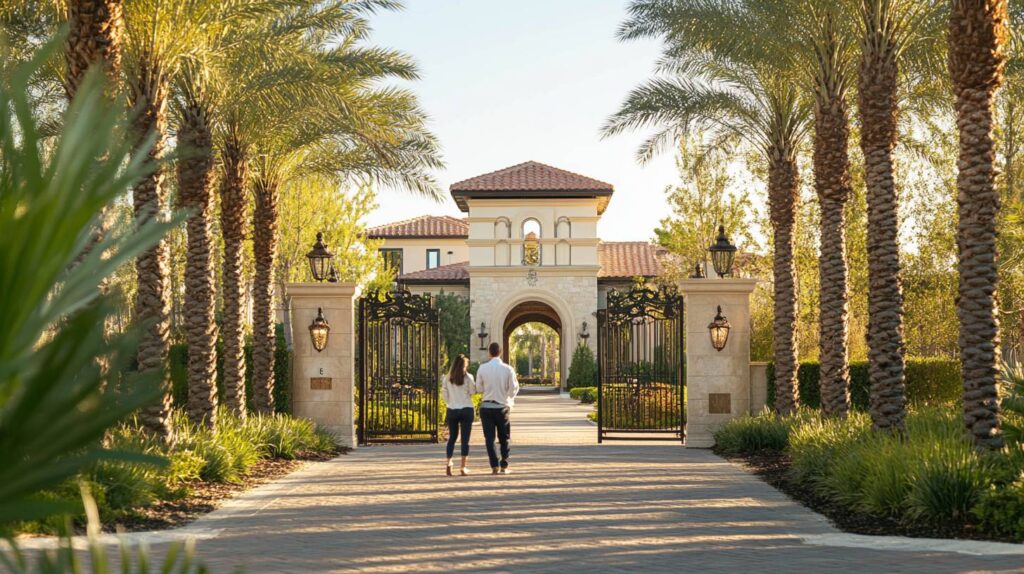
Every year, the stretch from March through June produces the most significant concentration of luxury home transactions in the United States. Spring is traditionally the busiest season for home sales, and in the upper price tiers, the activity is even more pronounced. According to NAR’s 2025 Profile of Home Buyers and Sellers, all-cash buyers — the segment most likely to purchase a home in or near a private club community — are now at an all-time high, representing a growing share of total transactions. These are not buyers who need to wait on financing. They are decisive, financially confident, and actively building the infrastructure of a new life.
Yet most clubs squander this window. They wait for new homeowners to come to them — trusting that a welcome packet or a neighbor’s recommendation will be enough to convert a prospect into a member. In today’s environment, that approach is no longer sufficient. The clubs that are winning the spring season are doing something fundamentally different: they are embedding themselves into the real estate transaction itself, long before a buyer ever unpacks a box.
The Convergence Is Already Happening — With or Without You
The relationship between luxury real estate and private club membership has always been implicit. What has changed is the degree to which that relationship is now being made explicit — and monetized — by developers, real estate brokerages, and competing lifestyle brands who have recognized the opportunity that clubs themselves have been slow to seize.
The market data supports the urgency. The global private club membership market reached $32.7 billion in 2024 and is projected to grow at a 7.2% annual rate through 2033, according to Growth Market Reports. North America accounts for roughly $14.5 billion of that total — and much of that growth is being driven directly by the integration of club access into luxury residential developments. Research by Knight Frank found that buyer demand for properties within a 15-minute drive of a prominent private club ran more than 2.3 times higher than for comparable properties without nearby club access.
Across the country, a growing number of clubs are leading the way — each offering a distinct model for how membership and real estate can be made inseparable.
| 2.3× Higher buyer demand for properties within a 15-minute drive of a prominent private club, compared to comparable properties without nearby club access. (Knight Frank) |
Clubs That Are Getting It Right
Ranked among Forbes’ top 20 American country clubs, Houston Country Club has long operated as one of the most prestigious and exclusive private clubs in the nation. Founded in 1908 and set within one of Houston’s most affluent corridors, the club’s positioning is deeply intertwined with the luxury residential market that surrounds it. With a robust waiting list for membership and an $8.7 million clubhouse renovation completed in recent years, the club has doubled down on its relevance to the high-net-worth buyer market — making it a natural anchor for luxury real estate conversations in the greater Houston area.
Set across 1,000 acres of Gulf Coast landscape in Osprey, Florida, The Oaks Club has built one of the most direct real estate-membership integrations in the country: membership is mandatory for all property owners within its three gated residential communities. Buyers choosing between The Oaks Bayside, Clubside, or Preserve neighborhoods aren’t just purchasing a home — they’re committing to the club simultaneously. This structure eliminates the gap between homebuyer and member entirely, producing a community where engagement levels are high, social bonds form quickly, and retention is driven by the depth of residents’ investment in the lifestyle itself.
Nestled along the scenic James River in Richmond, Virginia, Willow Oaks Country Club has cultivated a membership that reflects the character of one of the city’s most established residential neighborhoods. Founded in 1957 and member-owned, the club offers championship golf, tennis, fitness, and a year-round social calendar that positions it as the community anchor for affluent Richmond families. Its proximity to the Libbie-Grove Corridor — one of the region’s most sought-after luxury residential areas — gives the club a natural pipeline of prospective members who arrive as homebuyers already oriented toward the lifestyle the club provides.
Bent Creek Golf Club represents the community-centered model of private club membership — one where the emphasis is on accessible excellence and family-forward programming rather than exclusivity for its own sake. For clubs operating in markets where the luxury real estate buyer skews toward young families and active professionals, Bent Creek’s approach offers a compelling template: build a club where members genuinely want to spend time together, and the residential community around it will follow. In markets where lifestyle alignment, rather than prestige alone, drives membership decisions, this model is proving increasingly effective at converting homebuyers into long-term members.
“The buyer isn’t purchasing a house. They’re purchasing a life. The club that understands that — and shows up in the conversation before the ink dries — owns a relationship that can last decades.”
For private clubs, this shift represents both a threat and a significant opportunity. The threat: if your club does not have active relationships with the luxury real estate ecosystem in your market, you are invisible during the moment when prospective members are most receptive. The opportunity: clubs that build these relationships systematically — and arm real estate professionals with the right tools and messaging — can create a pipeline that delivers qualified, motivated prospects at a fraction of the cost of traditional advertising.
Why This Spring Matters More Than Most
The 2025 NAR Profile of Home Buyers and Sellers revealed a housing market increasingly dominated by equity-rich repeat buyers. First-time buyers hit a historic low of 21% of the market — the lowest share since NAR began tracking in 1981. That means the buyers who are active in the market right now are disproportionately affluent, financially established, and motivated by lifestyle rather than necessity. They are exactly the profile that private clubs are built to serve.
| 21% First-time buyers’ share of the housing market in 2025 — a historic low since NAR began tracking in 1981, reflecting a market dominated by affluent, equity-rich repeat buyers. (NAR, 2025) |
The initiation fee escalation of recent years adds further context. According to industry data, private club initiation fees have climbed nearly 25% since 2020, with some clubs seeing fees move from the tens of thousands into the $200,000 range. That trajectory signals sustained demand — and creates a window of opportunity for clubs in markets where fees have not yet reached ceiling levels to aggressively recruit before the window tightens.
Advertisement
Five Strategies Smart Clubs Are Deploying This Spring
The following approaches are being implemented right now by clubs that have made real estate alignment a core pillar of their spring membership strategy.
1. The Broker Partnership Program
Leading clubs are establishing formal, tiered relationships with the top luxury real estate agents in their market — not one-off referral arrangements, but structured programs with co-branded materials, hosted agent familiarization events, and dedicated membership concierge contacts. The best agents don’t want to sell club memberships. They want to deliver extraordinary client experiences. Make it effortless for them to do both, and they become some of your most effective recruiters.
2. The Lifestyle Preview Package
Rather than traditional guest passes, clubs are creating curated preview experiences designed to align with the specific life stage and interests of the real estate buyer. A 72-hour “new neighborhood immersion” package — including a private dinner, a sport or wellness experience, and a social introduction to current members — transforms a transactional trial into an emotional commitment. When a prospect has already experienced the club’s version of their new life, the membership conversation becomes a formality.
3. Developer Co-Marketing Agreements
For clubs adjacent to active residential developments, a formal co-marketing agreement allows the club to be featured in all developer sales materials, model home presentations, and buyer communications. In exchange, clubs typically offer discounted initiation for development purchasers during a defined window. The result is a steady cadence of warm leads delivered at the moment of peak motivation, with the developer relationship providing social validation that no amount of club-side marketing can replicate.
| +20% Property price premium in areas near prestigious private clubs compared to otherwise comparable locations without club access. (Crown Continental Research) |
4. The “Neighborhood Insider” Content Strategy
Prospective buyers research neighborhoods obsessively. NAR’s 2024 Generational Trends Report confirmed that searching online for properties and community information is the first step taken across all buyer generations. Clubs that publish high-quality content positioning themselves as the social and cultural center of their community — seasonal dining guides, member spotlights, local event calendars — show up in that research organically. When a buyer’s first encounter with the club is a beautifully produced digital guide to the neighborhood they’re about to join, the membership conversation begins before anyone has made contact.
5. The New Resident Engagement Sequence
The 90 days following a home purchase represent a window of extraordinary receptivity. New residents are establishing routines, building social connections, and actively seeking anchors for their new identity. Clubs with a structured new resident engagement sequence — triggered by public real estate transaction data, coordinated with real estate partners, or activated through community relationships — can ensure that a warm, personalized club introduction arrives at exactly the right moment. Automated but human-feeling, this sequence transforms a passive prospect into an active conversation within weeks of move-in.
What the Data Is Telling Us
The clubs that have systematized their real estate partnerships are seeing measurable results. Members recruited through real estate channel partnerships demonstrate meaningfully higher retention rates in years two and three. The hypothesis is intuitive: a member who joined the club as part of a deliberate lifestyle decision — tied to a home purchase that represents the most significant financial and emotional commitment of their adult life — has a fundamentally different relationship with the club than someone who joined on a friend’s recommendation. That depth of commitment reduces churn, increases F&B and program spend, and improves the overall quality of the membership community.
| +25% Rise in private club initiation fees since 2020, with some clubs now entering the $200,000 range — signaling sustained demand and a tightening window for competitive recruitment. |
Real estate-linked membership is not simply a recruitment tactic. It is a selection mechanism — one that pre-qualifies prospects by financial standing, lifestyle alignment, and depth of commitment to the community in ways that most other acquisition channels cannot replicate.
The Messaging Imperative: Lead With Life, Not Amenities
Perhaps the most consequential shift for clubs pursuing real estate-aligned recruitment is the messaging realignment it demands. Real estate buyers are not evaluating amenity checklists. They are making decisions about identity, community, and belonging. A membership pitch that leads with yardage, court counts, or fitness square footage will always underperform relative to one that leads with the answer to a single, unspoken question: What will my life look like here?
The most effective club marketing materials developed for real estate channels lean into lifestyle photography, member narrative, and community stories. They present the club not as a facility to access but as a community to join — one that already knows the member’s neighbors, shares their values, and has been waiting for exactly this kind of person to arrive.
This framing is not only more persuasive. It is also more accurate. The best private clubs are, at their core, communities of people who have chosen to live and belong in a particular way. The real estate transaction is simply the moment that makes that choice possible. Clubs that understand this — and that show up to that moment with the right message, the right relationships, and the right system — will own the spring selling season, and the members that come with it.