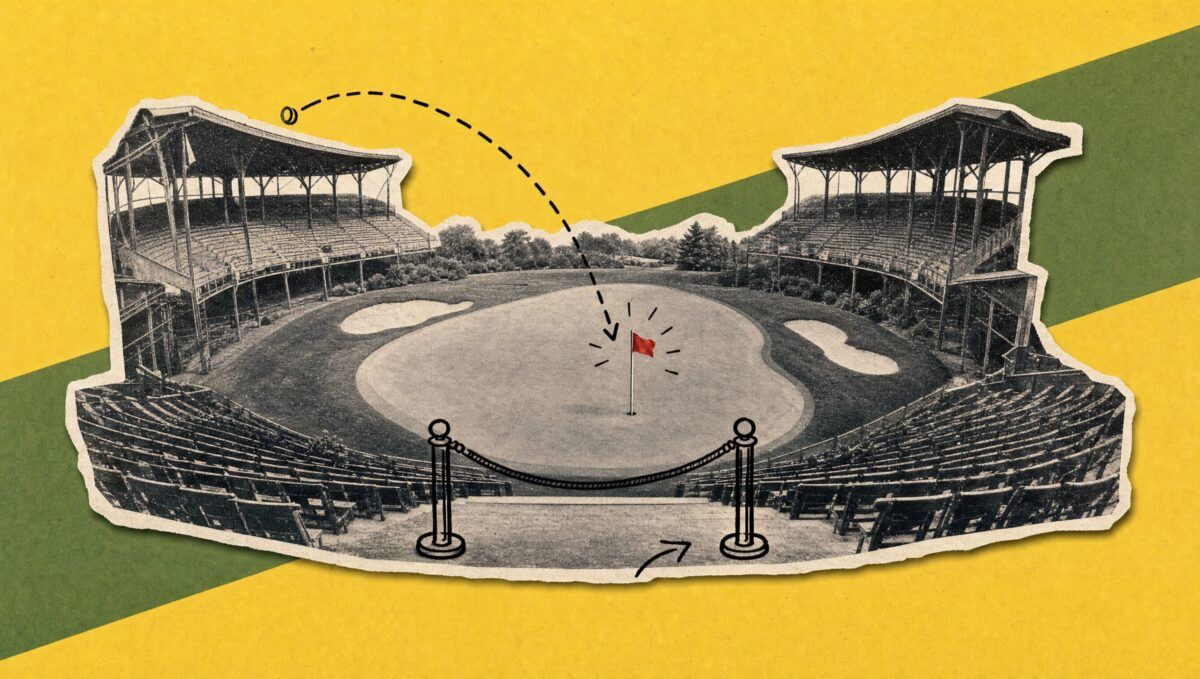

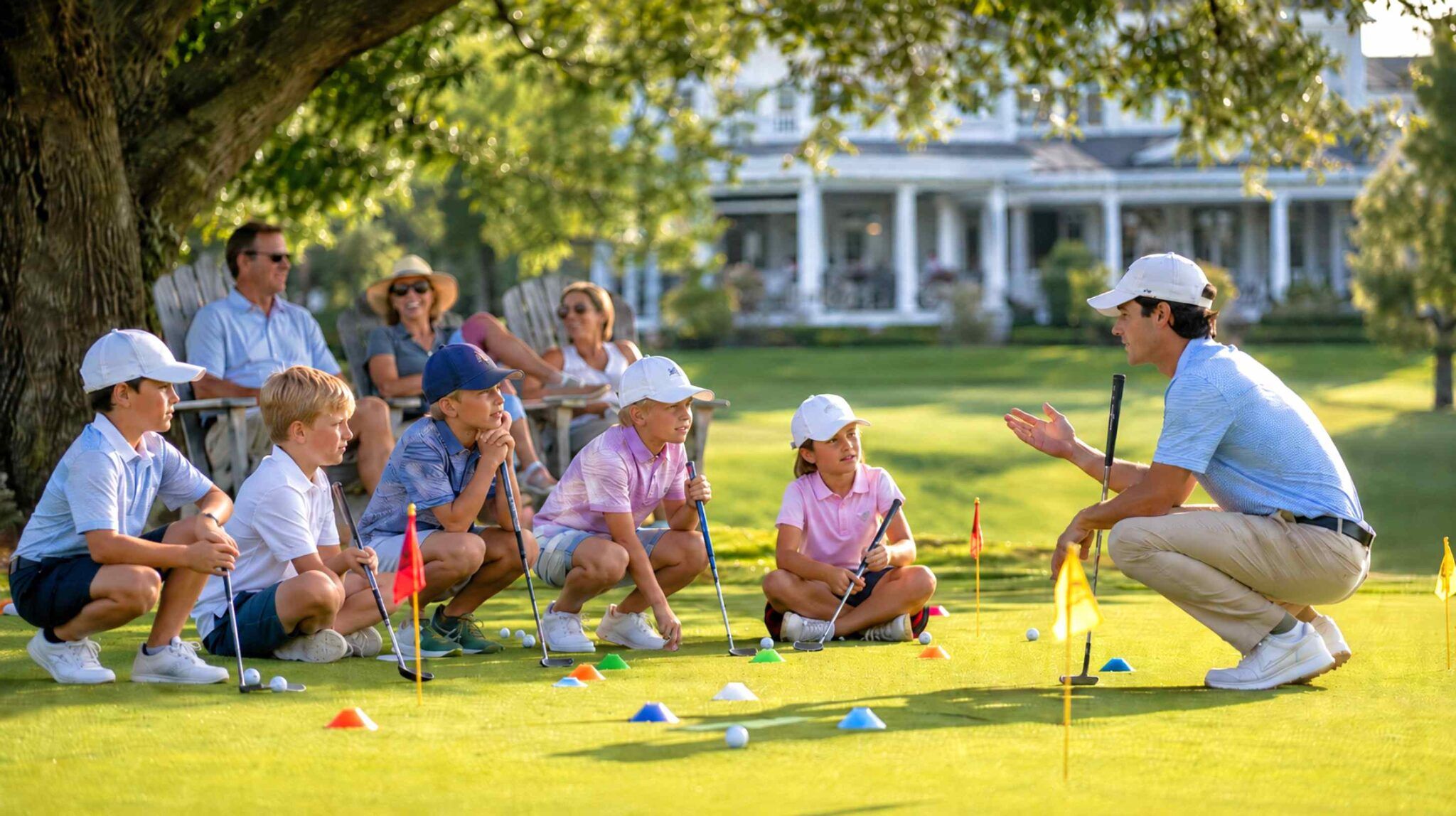
Junior programming is the most underpriced acquisition channel in the private club industry. Not the most expensive to run — the most underpriced to value. Most clubs still book summer camp on a camp-week P&L: registration revenue in, counselor labor out, a modest net, and a line in the budget that never quite justifies the chaos. That accounting misses the entire point.
The under-45 family does not join a club for itself. It joins for the kids. Camp is not a break-even childcare service that happens to run in July. It is the top of the family-membership funnel, and the clubs that have figured that out are scoring it on lifetime member value, not camp-week margin. The demand signal is unmistakable: junior golf participation is at a two-decade high, Gen X is emerging as a growing joiner cohort, and the clubs with the deepest kids’ programming are posting member-satisfaction numbers the rest of the industry cannot touch.
Here is the paradox that should reframe the budget conversation. The generation joining fastest is also the least satisfied. Family programming is the bridge between those two facts — the difference between a family that joins and a family that stays. Below is the demand data, the three-level framework for maturing a junior program from babysitting into a legacy pipeline, and how three member-owned clubs are running it.
The demand signal is at a twenty-year high
Start with participation, because the tailwind is real and it is generational. Just under 4 million juniors played on-course golf in 2025 — the most since 2004. Junior participation is up 58 percent since 2019, the largest gain of any age group, according to the National Golf Foundation. The pipeline is also broadening: 35 percent of junior golfers are now girls, up from 15 percent in 2000, and 26 percent are people of color, up from roughly 6 percent two decades ago. This is not a niche holding steady. It is the fastest-growing, most diversifying segment in the game.
Organized junior play is surging in parallel. PGA Jr. League set a record with more than 77,000 players in 2024, per the PGA of America’s 2025 registration announcement; the program has coached more than 500,000 kids in 12 years. Team-format junior golf has become a durable, recurring reason for families to organize their summer around the club.
Now the part that turns participation data into a membership strategy. GGA Partners’ 2025 Club Leaders’ Perspectives research, conducted with the Club Management Association of America, finds significant and substantial generational differences in club experience — younger members are more engaged with non-golf and dining amenities, while 75 percent of leaders agree younger and older members want to socialize across generations. The under-45 family is walking through the door. But the same research family points to a catch: board members under age 50 report a lower perceived satisfaction with member access to club amenities (3.6 out of 5) than the all-age average (4.0), according to GGA Partners’ 2025 Club Board Perspectives Study. The youngest members are, on some key measures, the least satisfied ones you have.
That gap is the whole game. McMahon Group’s 2026 Club Trends analysis finds that clubs investing comprehensively in modern aquatics — often the first amenity young families evaluate when considering membership — consistently report the investment as “transformational” for family participation and community building. Read the two findings together and the strategy writes itself: the under-45 family joins for the kids, and how satisfied that family stays depends on whether the club builds the family-facing infrastructure to match. Junior programming is not an amenity. It is a core piece of the retention mechanism for your growth segment.
The macro backdrop supports the spend. Private Club Marketing’s “10 Private Club Membership Trends Defining 2026” report, based on a 1,200-club dataset, states that 63 percent of clubs reported increased membership over the prior year, with average waitlists of 70 prospective members. Demand is there. The question is which clubs convert a summer of kids into a decade of dues.
From babysitting to pipeline: three maturity levels
Not all junior programming does the same job. It matures through three levels, and most clubs are stuck one rung below where their demand would let them operate.
Level one — childcare. The entry rung: supervised, safe, convenient. A place to leave the kids while the parents play or dine. It has real value — it removes the friction that keeps young families from using the club — but it generates no lasting attachment. A child parked in a kids’ room does not grow up a member. If this is the whole program, the club is subsidizing babysitting and calling it family programming.
Level two — camps and leagues. The engine rung: structured camps, swim teams, junior golf and tennis, PGA Jr. League. Now the child has a team, a coach, a peer group, and a reason to want to be at the club. This is where camp waitlists appear — and a camp waitlist is a leading indicator of family-membership demand, the same signal a membership waitlist gives you, arriving years earlier. Score programs at this level on the families they attract and retain, not on camp-week net.
Level three — legacy pipeline. The compounding rung: the child who grows up in the program becomes the reason the family never leaves, and eventually a member in their own right. This is where junior programming pays its largest dividend and where almost no club measures. The junior who spent ten summers on the range is the least likely family in the club to resign, and the most likely to sponsor the next generation. Lifetime member value, not camp revenue, is the metric.
The clubs below are operating at levels two and three — and treating the results as a membership strategy, not a summer service.
Ansley Golf Club: the 900-kid leading indicator
Ansley Golf Club in Atlanta is a member-owned, two-campus club, and its junior numbers read like a demand dashboard. Per Club + Resort Business reporting, Ansley serves roughly 1,500 member families and around 900 children age 13 and under. Its camps sell out with waitlists; a preschool camp for ages 3 to 5 caps at 24 and fills. The swim team runs around 300 kids, and — the figure every membership director should sit with — junior tennis grew from 30 to 130 players over six years, per that same C+RB coverage.
That tennis curve is the thesis in one line. A program that grew more than fourfold is not a cost center; it is a member-acquisition funnel with a waitlist attached. Ansley reads its junior demand the way a smart operator reads a membership pipeline — as a forward signal of where the family-membership base is heading. (Figures are drawn from Club + Resort Business reporting and should be refreshed against current club numbers before republication.)
The Country Club at DC Ranch: dedicated space closes the satisfaction gap
Where Ansley shows the demand, The Country Club at DC Ranch in Scottsdale shows the close. The member-owned club built two dedicated kids’ facilities: “The Corral” for children 10 and under and “The Hideout” for teens. Per Club + Resort Business reporting, the club recorded 95 percent member satisfaction on those spaces and roughly doubled its slate of camps and activities after opening them.
Set that 95 percent against GGA’s finding that under-50 board members report a 3.6-out-of-5 perceived satisfaction with amenity access, versus 4.0 for all ages, and the payoff of dedicated family infrastructure is hard to miss. DC Ranch did not paper over a younger-member satisfaction gap with a discount. It built the family offering out and turned its youth spaces into some of its most satisfying amenities. That is the kind of retention fix McMahon’s data points to, executed.
This season is a live test of that commitment: the club’s golf course is closed for a full renovation, which took the usual summer junior golf camps with it. Rather than shelve junior golf for the year, the club folded weekly bucket-golf sessions into its youth activity camps and doubled down on family golf infrastructure mid-closure — installing nine synthetic greens from Celebrity Greens on the floor of the driving range that serve both as range targets and as a year-round short course for parent-junior events and family gatherings. Patrick Denney, PGA, the club’s Director of Golf, frames the short course as the on-ramp for kids who might feel “intimidated to go out on the big course”: start them on par-three golf, “see if we can get them bitten by the golf bug,” then graduate them to the big course when they are ready. Next season layers on PGA Jr. League teams and a fuller slate of family instruction — clinics for men, women, and juniors — built to drive utilization. For Denney, junior programming is where the family-membership math either works or does not.
“When both spouses want to utilize the club and they have kids who need to utilize the club too, cost justification becomes that much more important — having the amenities and programming for every part of the family, so it’s no longer just the husbands enjoying the golf and the camaraderie. If members are justifying the cost to their families, it needs to really be a family lifestyle, and that’s what we hope to provide.”
— Patrick Denney, PGA, Director of Golf, The Country Club at DC Ranch
Woodfield Country Club: family wellness as an onboarding tool
The newest edge in junior programming is not on the range at all — it is in the fitness studio. Woodfield Country Club in Boca Raton, a member-owned, five-star club, runs a broad family wellness calendar that treats kids as full participants. Per Club + Resort Business’s “Kid-Tested, Parent-Approved” coverage, the club offers a kids’ Funky Flow class and aerial yoga for ages 9 to 12 alongside its adult wellness slate — programming that pulls the whole family into the club’s healthiest, stickiest daypart.
Family wellness does something camp alone cannot: it turns the club into a shared routine rather than a drop-off. When the parent’s Saturday workout and the child’s aerial yoga run on the same calendar, the club stops being a place the kids go and becomes a place the family belongs. That shift — from amenity to habit — is where onboarding and retention actually happen.
The common thread across all three clubs is that they stopped accounting for junior programming as a summer service and started treating it as the front end of the family-membership funnel — the reason under-45 families join, and the reason they stay. (For the broader case on why this cohort behaves the way it does, see PCM’s coverage of under-45 family programming.)
What operators should do now
- Re-score every junior program on lifetime member value. Stop closing out camp on a camp-week P&L. Attach each program to the families it attracts and retains, and to the multi-year dues those families represent. The number will change the conversation with your board.
- Treat the camp waitlist as a membership pipeline. A sold-out camp with a waitlist is a leading indicator of family-membership demand, arriving years before a membership inquiry. Capture those families’ data and market to them deliberately.
- Close the under-45 satisfaction gap with dedicated space, not discounts. DC Ranch’s 95 percent satisfaction came from building family infrastructure out, against GGA’s under-50 board-member amenity-access benchmark of 3.6 out of 5. Invest where your fastest-growing, least-satisfied cohort actually feels it.
- Build a family wellness calendar, not just a camp. Woodfield’s model turns the club into a weekly family habit rather than a summer drop-off. Programming that puts parents and kids on the same calendar is an onboarding and retention tool, not a fitness add-on.
- Map your program to the three maturity levels and climb one rung. If you are running childcare, build camps and leagues. If you have camps, build the legacy pipeline and start measuring the members it produces. The demand — 4 million juniors and a growing wave of Gen X joiners — is already there.
Sources
- Summary of Junior Golf Participation in the U.S. 2025 (NGF) — ~4M juniors, most since 2004, +58% since 2019
- Golf Industry Research (NGF) — 35% girls, 26% people of color among junior golfers
- 2025 PGA Jr. League registration (The Golf Wire) — 77,000+ record
- 2025 PGA Jr. League registration opens nationwide (First Call) — 500,000+ kids coached in 12 years
- 2025 Club Leaders’ Perspectives Report (GGA Partners, with CMAA) — generational differences in club experience; cross-generational socializing
- 2025 Club Board Perspectives Study (GGA Partners) — under-50 board members’ perceived amenity-access satisfaction, 3.6/5 vs 4.0 average
- The Essential Facilities for Modern Club Success (McMahon Group) — comprehensive aquatics investment described as “transformational” for family participation
- Standout Summer (Club + Resort Business) — Ansley member families, kids, preschool camp, swim team, tennis growth figures
- Merger sets up Ansley GC for success (Club + Resort Business) — Ansley member-owned two-campus profile
- Clubs focus on dedicated youth spaces (Club + Resort Business) — DC Ranch The Corral/The Hideout, 95% satisfaction, doubled camps
- Kid-Tested, Parent-Approved (Club + Resort Business) — Woodfield family wellness, Funky Flow, aerial yoga
- Woodfield Country Club — club profile
- Interview with Patrick Denney, PGA, Director of Golf, The Country Club at DC Ranch (Private Club Marketing, July 8, 2026) — renovation-year junior programming, short-course investment, PGA Jr. League plans
- Under-45 family programming (Private Club Marketing) — family programming for younger members
- “10 Private Club Membership Trends Defining 2026” (Private Club Marketing) — 63% of clubs reported increased membership, average waitlists of 70 prospects, based on a 1,200-club dataset
Free Download
The 2026 Private Club Benchmark Report
The membership, amenity, and pricing data reshaping private clubs — from a 1,200-club analysis. Enter your details and we'll send it to your inbox.