
If you’ve been watching the racquet sports landscape from behind a club boardroom table, you’ve probably noticed that pickleball has consumed most of the oxygen in the conversation. And rightfully so — pickleball’s growth has been extraordinary and its impact on club programming is real. But while your competitors have been debating whether to convert tennis courts to pickleball, a quieter revolution has been building. It’s called padel, and it’s about to change the economics of racquet sports at private clubs in ways that matter to your bottom line.
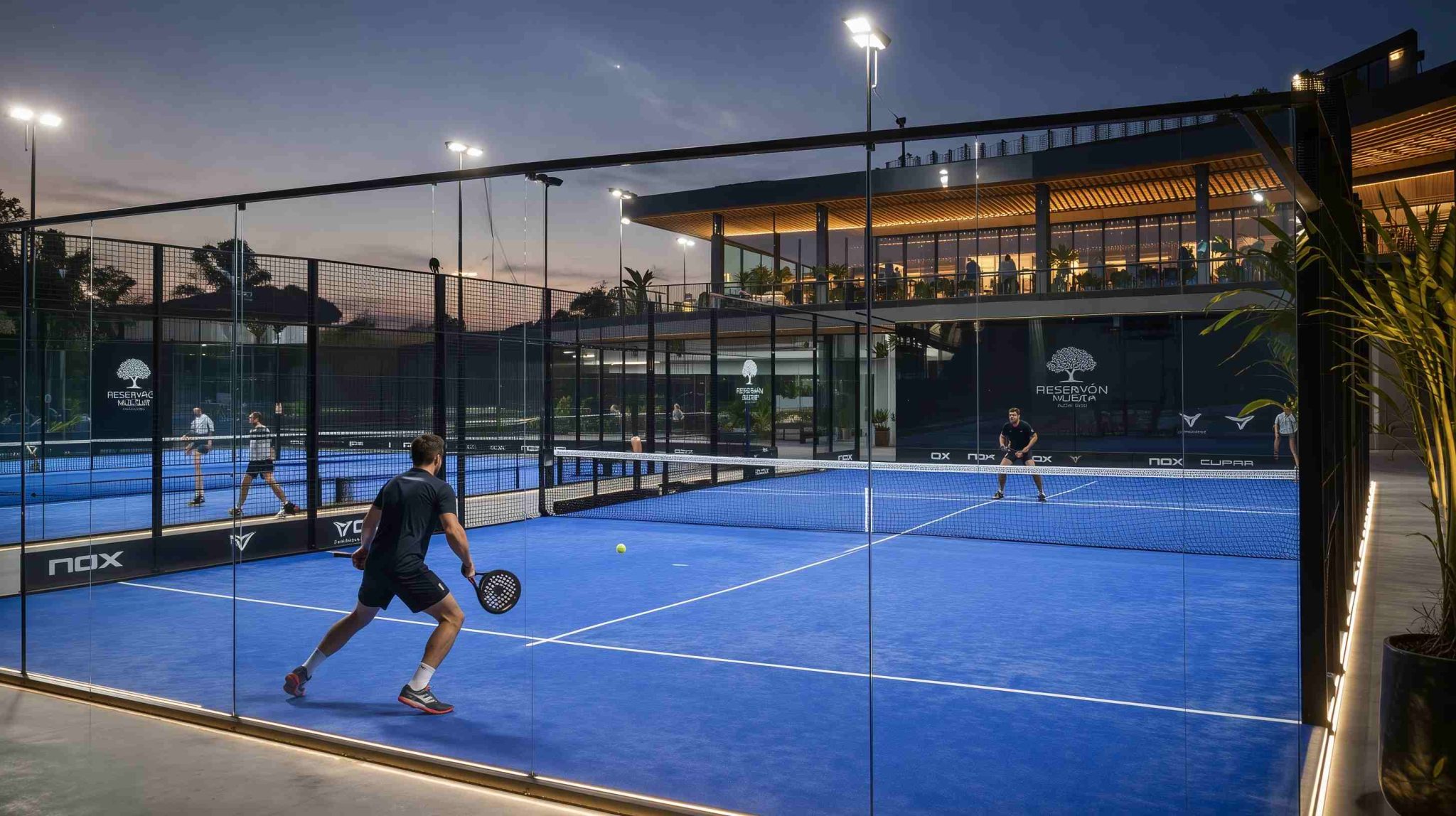
Padel — the glass-walled, doubles-only racquet sport that has been the dominant participation sport in Spain and Latin America for decades — has crossed the Atlantic with force. The numbers aren’t theoretical anymore. They’re happening on courts in South Florida, Texas, California, and New York right now. And the clubs that move early are discovering something that the pickleball wave only hinted at: a racquet sport that functions as a premium revenue engine, a membership acquisition tool, and a demographic expander all at once.
The Growth Story in Hard Numbers
The U.S. Padel Association tracked just 163 members in 2020. By 2024, that number had reached 1,917 licensed professionals, with amateur participation climbing past 100,000 by early 2025 and reaching an estimated 112,872 players by mid-year. The infrastructure is racing to keep up.
As of mid-2025, the United States had 688 padel courts across 180 facilities in 31 states — with more than 50% of those courts installed since January 2024 alone. In 2024, 352 new courts were built nationwide, according to Playtomic’s Global Padel Report 2025. Florida leads with 268 courts, making up 41% of the national total, with Texas, California, and New York following.
Sources: 2022 and 2023 figures from Playtomic/Deloitte Global Padel Reports. Mid-2025 figure from Misitrano Consulting “State of Padel in the U.S.” report (Q2 2025). *Misitrano counts actively operating courts; cumulative build totals using Playtomic methodology suggest ~800+ courts by end of 2024.
According to projections from Misitrano Consulting’s “State of Padel in the U.S.” report, the country could reach 6,800 courts and nearly 900,000 players by 2030 — if strategic infrastructure, marketing, and investment decisions are made now.
For private clubs, the question isn’t whether padel will become relevant. It’s whether you want to be offering it when your members start asking — or scrambling to build courts after they’ve already found padel somewhere else.
What It Actually Costs to Build
The first question every board and finance committee asks is the right one: what does it cost? The answer is more accessible than most operators expect, and significantly less than a new tennis facility.
Outdoor padel court construction costs range from $38,000 to $55,000 per court for a quality installation, including the glass walls, turf, lighting, and ground preparation. Some vendors quote as low as $24,000 for basic configurations, while premium competition-grade courts with enhanced glass and lighting packages can run $45,000 to $65,000. For comparison, a new Har-Tru clay tennis court typically costs $40,000 to $100,000 or more when you include subsurface drainage, irrigation, and proper fencing — with costs varying significantly by market and site conditions.
The footprint advantage is equally compelling. A standard padel court measures 20 meters by 10 meters — roughly one-third the size of a tennis court’s full playing footprint. That means clubs with existing unused tennis court space can potentially fit two to three padel courts in the footprint of a single tennis court, dramatically increasing the player capacity and revenue potential of the same square footage.
Indoor conversions carry higher costs — you’re adding the building envelope, HVAC, and more sophisticated lighting — but several clubs have successfully converted underutilized indoor tennis space into padel facilities at a fraction of the cost of a ground-up build.
The Revenue Math That Makes Boards Pay Attention
If construction costs are the entry point, revenue per court is the closer. And this is where padel’s economics become genuinely compelling for private club operators.
Padel courts typically rent for $40 to $60 per hour, and because the sport is exclusively doubles — four players per court, every session — each booking generates consistent four-player revenue. A single 90-minute session at $50 per hour can generate $75 in court fees alone. Over a 12-hour operating day at a conservative 60% utilization rate, a single court generates roughly $360 per day — or approximately $10,800 per month.
Industry benchmarks show that well-managed padel facilities target 70–85% daily utilization, with the sweet spot being high enough to drive strong revenue without creating access frustrations that push members to play elsewhere. At 70% utilization and $50 per hour, a two-court installation generating $25,000 or more per month in court fees — before lessons, clinics, leagues, and F&B — can recover its construction cost within 18 to 30 months.
The ancillary revenue is where the model gets even more interesting. Padel’s social format — four players sharing a small, enclosed space — creates natural post-play dining and bar traffic that exceeds typical tennis or pickleball play. Operators report that padel players tend to spend more on food and beverage, equipment, and events than participants in other racquet sports. A well-managed padel program generates income from court rentals, private lessons, group clinics, junior academies, league fees, tournament entry fees, corporate events, and pro shop sales.
Efficient padel operations maintain 30–35% EBITDA margins through high utilization and multi-stream revenue layering.
Advertisement
The Clubs Already in the Game
South Florida — predictably, given its Latin American cultural connections and year-round outdoor playing conditions — has emerged as the proving ground for padel at private clubs.
Boca Grove Golf and Tennis Club in Boca Raton became the first private country club in South Florida to add padel courts. The club now operates two dedicated padel courts alongside its tennis courts — including Har-Tru clay surfaces and one imported Italian red clay stadium court — and pickleball courts. Boca Grove offers a full spectrum of padel programming — team play, youth leagues, clinics, individual and group lessons, seasonal events, and competitive play — treating padel not as a novelty addition but as a fully integrated racquet sports offering.
Addison Reserve Country Club in Delray Beach has gone even bigger, installing four padel courts as part of its racquet sports complex alongside nine Har-Tru tennis courts and eight pickleball courts. Addison Reserve — ranked #4 among the top 150 Platinum Country Clubs in America — introduced padel in 2024 with a deliberate goal of getting ahead of the curve among Florida’s private clubs, converting existing courts before adding two more the following summer after member demand exceeded expectations. As the club put it, padel has allowed Addison Reserve “to separate ourselves from our neighboring clubs and elevate our membership’s racquet opportunities” — a premium amenity that distinguishes it from the dozens of other high-end clubs in the Palm Beach County market.
The broader fitness and racquet sports industry has also validated padel’s commercial viability. Life Time, the athletic lifestyle company operating more than 170 facilities nationwide, has aggressively expanded its racquet sports footprint in recent years — a signal of mainstream momentum that puts competitive pressure on private clubs in markets where major athletic club operators offer emerging racquet sports and the country club down the road does not.
Padel vs. Pickleball vs. Tennis: The Economics Compared
The inevitable question in every racquet sports committee meeting is how padel stacks up against the other options. The answer isn’t that one is better than the others — it’s that they serve different strategic purposes, and the smartest clubs are offering all three.
Tennis remains the heritage sport at most private clubs and the one with the deepest embedded infrastructure. Tennis courts are expensive to build and maintain — particularly Har-Tru clay surfaces that require daily irrigation and seasonal rebuilding — but they serve a loyal, high-spending membership segment that values tradition and competitive play. Tennis isn’t going anywhere, and clubs would be unwise to cannibalize quality tennis facilities.
Pickleball is the participation engine. Its low barrier to entry, social format, and multi-generational appeal have made it the fastest-growing sport in America for several consecutive years. A single tennis court can be converted into four pickleball courts, accommodating up to 16 players simultaneously. Pickleball drives high participation volume and is an effective tool for attracting younger members and families to the club. But its revenue per player tends to be lower than padel, and the sheer volume of facilities offering pickleball means it’s becoming a table-stakes amenity rather than a differentiator.
Padel occupies a different strategic niche. It functions as a premium engine — a sport that commands higher per-session pricing, attracts a demographic profile (younger, more international, more fitness-oriented) that many clubs are actively trying to recruit, and creates a distinctive amenity that separates your club from competitors who all offer the same tennis-and-pickleball combination.
A key economic advantage of padel is that every session is doubles. Four players per court per booking, by design. This means every peak-time slot generates more participation, more bar traffic, and more lesson demand than a typical tennis session, which may serve just two players in a singles match.
Programming Models That Work
Building the courts is step one. Programming them effectively is where the real value creation happens. The clubs seeing the strongest returns on their padel investment are running structured programming that builds recurring revenue and community engagement simultaneously.
Social leagues are the foundation. Weekly or biweekly league play — organized by skill level, with rotating partner assignments — creates the habit loop that drives consistent utilization. Members who play in a league tend to book additional practice sessions, attend clinics, and bring guests at higher rates than casual players.
Junior development programs address a critical strategic gap at many clubs: engaging the next generation. Padel’s enclosed court and slower ball speed make it more accessible to younger players than tennis, while its competitive format keeps teenagers engaged in ways that more casual racquet sports sometimes don’t. Clubs that build strong junior padel programs are investing in the membership pipeline of the 2030s and 2040s.
Corporate events and outings leverage padel’s novelty factor and social format for revenue generation. A padel event for 20 guests requires only five courts and naturally creates the kind of interactive, conversation-friendly environment that corporate groups seek. Clubs charging $100–$150 per person for a padel clinic, round-robin tournament, and post-play reception can generate $2,000–$3,000 per event while introducing prospective members to the club.
Private instruction and clinics round out the programming portfolio. Certified padel instructors — still relatively rare in the U.S. — command $75–$125 per hour for private lessons and $30–$50 per person for group clinics. Clubs that invest in developing or hiring qualified instruction staff create a sustainable recurring revenue stream and a compelling reason for members to deepen their engagement with the sport.
The Membership Acquisition Angle
Perhaps the most strategically valuable aspect of padel for private clubs isn’t the court revenue at all — it’s the membership impact.
Padel attracts a demographic that many clubs have struggled to reach through traditional channels. The sport’s roots in Spain, Argentina, and Mexico mean it resonates strongly with internationally connected professionals — exactly the high-net-worth demographic that premium clubs covet. Younger professionals in their 30s and 40s, who may view golf as a five-hour time commitment they can’t afford, find padel’s one-hour format far more compatible with their schedules.
Offering padel gives clubs a differentiated entry point. In markets where every competing club offers golf, tennis, and pickleball, padel becomes the amenity that prompts a prospect to schedule a tour. Once they’re on property, the full club experience — dining, pool, fitness, social programming — can do the rest.
The Timing Argument
The clubs that are building padel courts today are operating in a window of strategic advantage that won’t remain open indefinitely. Right now, offering padel at a private club is a genuine differentiator — a way to signal that your club is forward-looking, responsive to member interests, and willing to invest in emerging amenities. As the sport continues to scale rapidly — with over 50% of all U.S. courts installed since January 2024 alone — that window of differentiation will narrow.
The construction economics also favor early movers. Court manufacturers and installation firms are scaling up to meet demand, and competition among vendors is keeping prices accessible. As demand accelerates toward the projected 6,800 courts by 2030, construction timelines may lengthen and costs may rise.
For a private club board evaluating capital improvements, the padel business case is unusually straightforward: a $100,000 to $150,000 investment in two to three courts, generating $25,000 or more per month in combined revenue, paying for itself in under two years, attracting a new demographic of prospective members, and providing a premium amenity that most competing clubs don’t yet offer.
The risk isn’t that padel won’t work. The risk is waiting until every club in your market has it — and discovering that you’ve lost the early-mover advantage that could have set your club apart.
Your members are going to discover padel. The only question is whether they discover it at your club or someone else’s.