For most private clubs, the pool complex is the heartbeat of summer. It is where families gather, where teenagers build friendships that last decades, and where members who never touch a golf club find their reason to renew. Yet despite all that emotional weight, too many clubs treat their aquatics operation as a cost center rather than what it actually is — a powerful revenue engine and the single greatest driver of summer member satisfaction.
Private club pool programming has evolved far beyond lap lanes and a snack bar. The clubs doing it right are generating meaningful poolside F&B revenue, filling cabana reservations weeks in advance, and creating summer programming that turns seasonal members into year-round advocates. Here is how the best clubs in the country are making every warm-weather week count.
The Economics of the Pool Complex
The numbers tell a compelling story. According to Club Benchmarking, average food and beverage income per member climbed to $4,428 in fiscal year 2023 — a 75% increase from just two years prior. A significant portion of that growth is happening poolside, where ultra-casual dining formats lower the barrier to impulse spending. A family that might skip the formal dining room three nights a week will happily order a round of drinks, a flatbread, and ice cream sandwiches without a second thought when they are already in swimsuits.
The clubs capturing the most poolside revenue share a few common traits. They invest in covered outdoor kitchens that can fire food quickly. They offer mobile ordering through their club app so members never have to leave their lounge chair. And they price for volume — a $14 poolside burger with a $9 craft cocktail feels like a treat, not a transaction. When a family of four spends $60 to $80 per pool visit without blinking, and they visit two or three times a week through a 16-week summer season, the math gets very real very fast.
Cabana Rental Economics: The Premium Lane
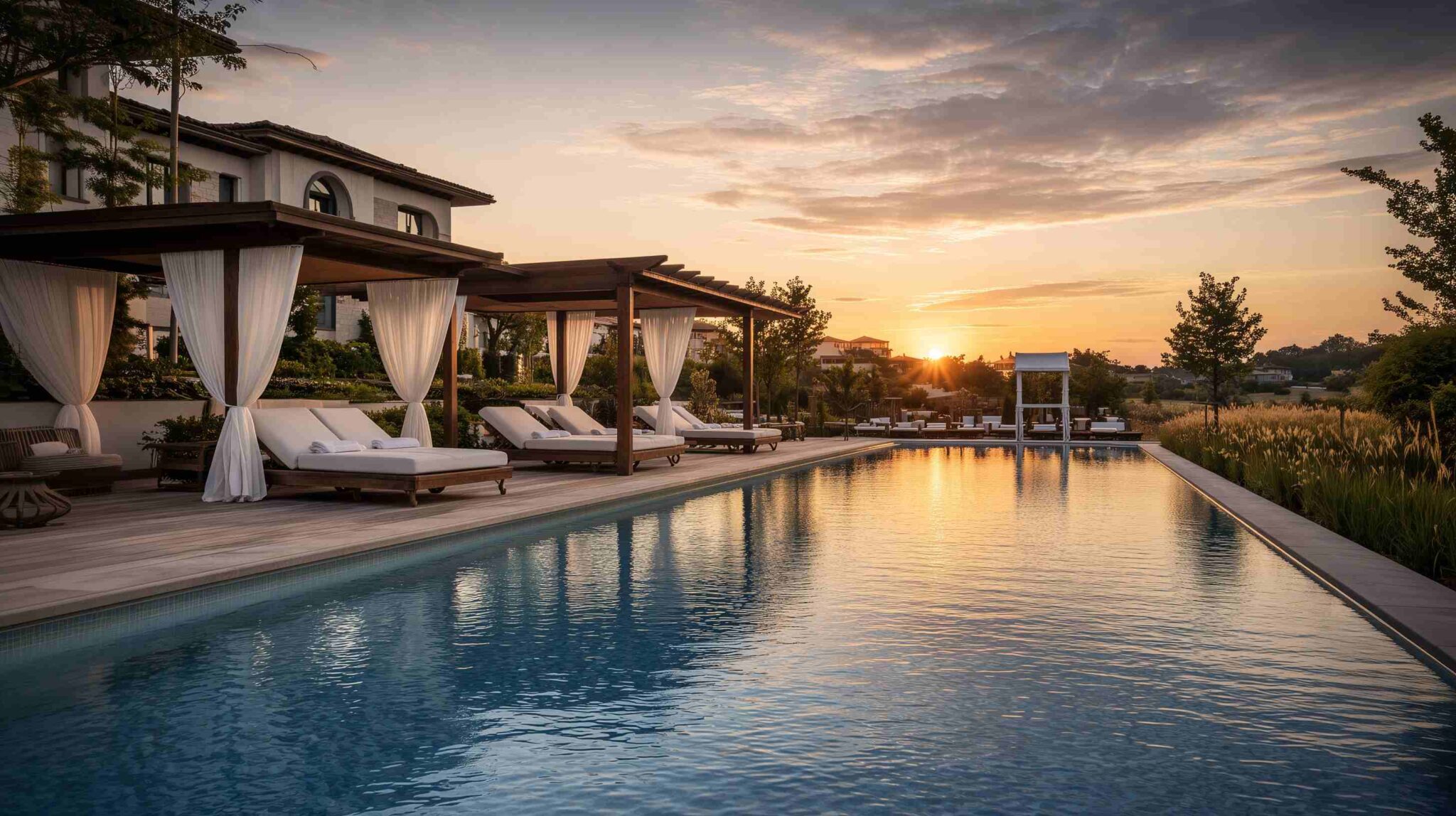
The cabana has quietly become one of the highest-margin amenities at any private club. At The Breakers Palm Beach, the resort operates 25 poolside bungalows available for daytime rental — each outfitted with a private full bathroom, shower, individual climate control, and a dedicated concierge. While The Breakers is a resort property, the premium cabana model is gaining traction across private clubs nationwide.
Premium resort cabanas now command $500 to $950 per day at top-tier properties — and can push past $1,000 in high-demand markets. Private clubs are adapting this playbook at a member-friendly price point, anchoring the cabana as a premium amenity without publishing a rack rate. The most sophisticated clubs include a food and beverage credit with every booking, which serves double duty: it guarantees incremental F&B revenue and makes the cabana feel like a value play rather than an upcharge.
The key is scarcity. A club with 8 to 12 cabanas and 400 member families can fill a weekend waitlist by mid-May. That scarcity creates perceived value, and perceived value keeps pricing power intact. Clubs that over-build cabana inventory dilute the exclusivity and end up discounting by July.
Staffing the Pool: The Challenge That Keeps GMs Up at Night
Aquatics staffing remains one of the most persistent operational headaches in the club industry. According to industry surveys, 41.8% of aquatic facility managers reported experiencing lifeguard staffing shortages in 2024 — an improvement from the 67.3% who reported the same problem in 2022, but still a significant hurdle for clubs trying to deliver a premium summer experience.
The average aquatics lifeguard earns approximately $19 per hour nationally, though competitive clubs in high-cost markets are pushing well above $22 to attract and retain certified guards. When you factor in training, certification reimbursement, and the reality that most clubs need a minimum of three to four guards on deck during peak hours, the fully-loaded staffing cost for a pool complex can easily run $80,000 to $120,000 for a 16-week season — and that is before you add head lifeguards, pool managers, and swim instructors.
The clubs winning the staffing battle are doing several things differently. They recruit early — posting positions in January and locking in returning college students before spring break. They pay above market and offer end-of-season bonuses tied to attendance and member satisfaction scores. And increasingly, they are cross-training pool staff to work the poolside F&B operation during slower morning hours, which improves labor utilization and gives employees more hours.
Advertisement
Programming That Drives Usage and Loyalty
Congressional Country Club in Bethesda, Maryland — the number-one ranked Platinum Club in the country with an initiation fee reported in the range of $100,000 to $300,000 — operates two outdoor swimming pools, a kiddie pool, and a heated indoor pool. But the real magic is not the infrastructure. It is the programming calendar that keeps families coming back five days a week.
The most successful summer club programming follows a rhythm. Monday through Wednesday should focus on instructional programming — swim lessons, water aerobics, and junior swim team practice. Thursday and Friday are best reserved for social events — poolside happy hours, dive-in movie nights, and family barbecue cookouts. Weekends work well as open recreation days with elevated F&B service.
The Country Club at Mirasol in Palm Beach Gardens, Florida exemplifies this family-first approach. With roughly 380 of its 1,170 homes housing school-age children and an average member age about 10 years younger than comparable clubs in the area, Mirasol has built its programming around the reality that families drive engagement. Their calendar includes a carnival with rides, an annual fireworks extravaganza, drive-in movies, game nights, and their popular Stay Late Saturdays — all designed to make the Sports Complex the social center of the community.
Swim Team as a Retention Engine
Do not underestimate the power of a competitive swim team. Clubs with strong junior aquatics programs consistently report higher family retention rates, and for good reason — when a child swims competitively for the club, the family’s social calendar revolves around the pool deck from May through August. Parents build friendships with other swim families, siblings participate in age-group events, and the weekly routine creates a habit of club engagement that carries into fall and winter.
The operational model is straightforward. A head swim coach — typically earning $50,000 to $70,000 seasonally at a well-funded club — runs the program with two to four assistant coaches. Registration fees of $400 to $800 per swimmer cover a meaningful portion of coaching costs, and the ancillary F&B revenue from families spending entire afternoons at the pool more than justifies the remaining investment.
The Poolside F&B Playbook
The highest-performing clubs are rethinking poolside dining as a distinct operation rather than an extension of the main kitchen. Here is what that looks like in practice.
First, the menu needs to be tight. Eight to twelve items, heavy on shareable formats — nachos, flatbreads, tacos, poke bowls — plus a dedicated kids’ menu. Speed matters more than complexity. A family waiting 25 minutes for chicken fingers will not order a second round of drinks.
Second, beverage service is where the real margin lives. A frozen cocktail program with three to four signature drinks — priced at $12 to $16 — can generate a 78% to 82% pour margin while creating an Instagram-worthy moment that members share organically. Clubs like Quail West Golf & Country Club in Naples, Florida, where a glass-enclosed solarium pool is surrounded by a garden designed to evoke an island lagoon, understand that the setting sells the experience and the experience sells the drinks.
Capital Investments That Pay for Themselves
If your board is debating a pool renovation, the data supports the investment. According to the CMAA and Club Benchmarking economic impact study, private clubs collectively generated $32.6 billion in direct revenue in 2023 and supported 573,000 jobs. Clubs are investing capital at record rates, and aquatics facilities are among the highest-return projects because they directly impact the amenity that the broadest cross-section of members actually uses.
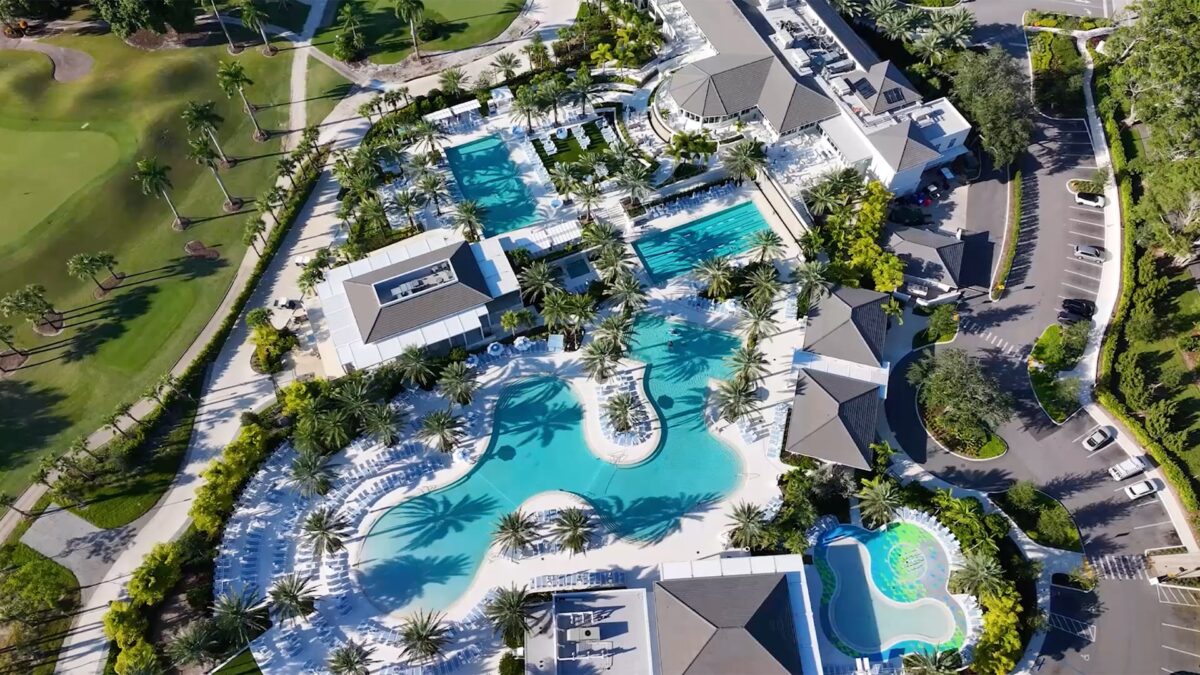
The clubs seeing the best returns from pool renovations are not just replacing tile and upgrading filtration. They are adding resort-style zero-entry pools for young families, dedicated lap pools for the fitness crowd, splash pads for toddlers, and — critically — covered poolside dining pavilions with dedicated kitchen lines. The goal is to create a facility that serves every member demographic, from the 28-year-old mom with two kids under five to the 72-year-old retiree swimming laps at 7 AM.
Making Summer Count
The 16-week window between Memorial Day and Labor Day represents a disproportionate share of a club’s annual member touchpoints. Every great pool day reinforces the value of membership. Every frustrating experience — a dirty pool deck, a 30-minute wait for food, a shortage of lounge chairs — plants a seed of doubt that grows into a non-renewal letter come October.
The clubs that treat pool season as their most important operating period — staffing it accordingly, programming it intentionally, and investing in the infrastructure to deliver a genuinely premium experience — are the ones building the kind of member loyalty that no marketing campaign can replicate. Summer is not a season. It is a strategy.