If you have ever watched a Hollywood film from the 1930s or 1940s, you have heard it — that unmistakable, not-quite-British, not-quite-American way of speaking that made every actor sound as though they had been educated at the finest institutions on two continents. That is the Transatlantic accent, also known as the Mid-Atlantic accent, and its story is deeply intertwined with the world of elite society, prestigious boarding schools, and the private club culture that shaped American high society for generations.
The Transatlantic accent was never a natural dialect. No child grew up speaking it in any town on earth. It was an entirely fabricated way of speaking — carefully designed, rigorously taught, and deliberately adopted by the American upper class as a marker of refinement, education, and social standing. And for a few remarkable decades, it became the dominant voice of American power, culture, and glamour.
What Is the Transatlantic Accent?
The Transatlantic accent is a consciously learned style of speaking English that blends elements of British Received Pronunciation (RP) with standard American English. The name itself tells the story: it sounds as though the speaker exists somewhere in the middle of the Atlantic Ocean, belonging fully to neither America nor Britain.
Sometimes called the Mid-Atlantic accent, it is characterized by a crisp, almost musical quality that emphasizes clear enunciation above all else. The speaker sounds educated, worldly, and impossible to place geographically — which was precisely the point. In the words of the voice coaches who championed it, this was “Good Speech,” meant to transcend regional identity and communicate sophistication on a universal level.
You know the sound even if you have never heard the name. It is the voice of Cary Grant and Katharine Hepburn. It is the cadence of Franklin D. Roosevelt’s fireside chats. It is how Orson Welles narrated Citizen Kane and how Bette Davis commanded every scene in All About Eve. In at least a few films, it is quite literally the voice of God.
The Origins: William Tilly and the Invention of “World English”
The Transatlantic accent did not emerge organically from any community or region. Its creation can be traced to the early 1900s and a single, ambitious idea: that the English-speaking world’s educated elite should all sound the same, regardless of whether they hailed from New York, London, or Melbourne.
The architect of this vision was William Tilly (1860–1935), an Australian-born phonetician who taught at Columbia University from 1918 until his death. Tilly believed that regional accents were markers of provincialism and that a truly cultivated person should speak a standardized form of English that erased all geographic traces. He called his creation “World English” — a hybrid that drew the most prestigious features from both sides of the Atlantic.
Tilly himself did not work directly with actors, but several of his most prominent students carried his ideas into the worlds of theater, broadcasting, and education. Among them were Margaret Prendergast McLean, Windsor Daggett, and most notably Edith Skinner, whose 1942 book Speak with Distinction became the definitive guide to what she termed “Good American Speech.” Skinner taught at Carnegie Mellon University and trained generations of actors who would go on to define the sound of Hollywood’s golden age.
The Transatlantic Accent and Elite Private Education
Before the Transatlantic accent ever reached a Hollywood soundstage, it lived in the hallways and dining rooms of America’s most exclusive boarding schools. The accent’s earliest adopters were not actors but the sons and daughters of the country’s wealthiest families, learning to speak at institutions that modeled themselves on the traditions of the British upper class.
Schools like Groton in Massachusetts, Miss Porter’s in Connecticut, and St. Paul’s in New Hampshire incorporated elocution classes into their curricula, teaching students to drop their regional dialects in favor of a polished, vaguely British manner of speech. The accent became so closely associated with these institutions that it earned the nickname “boarding-school lockjaw” — a reference to the exaggerated enunciation quality that seemed to require clenching the jaw muscles.
This was no accident. For the American elite of the late 19th and early 20th centuries, British culture represented the gold standard of refinement. Adopting its speech patterns was a way to signal membership in a rarefied social class — the same impulse that drove the founding of exclusive social clubs, country clubs, and dining societies throughout the Northeastern United States. The accent was, in effect, a verbal membership card to a world of privilege and prestige.
Franklin D. Roosevelt, perhaps the most powerful man to speak with a Transatlantic accent, was a product of this world. Educated at Groton and Harvard, Roosevelt’s distinctive speech was not an affectation adopted for political purposes — it was simply how he had been taught to talk. The same was true of other political and cultural figures of the era, from Dean Acheson to George Plimpton, whose cultivated speech marked them as members of a very particular social stratum.
How Hollywood Made the Accent Famous
The Transatlantic accent might have remained an exclusive marker of the Northeastern elite if not for a technological revolution: the arrival of sound in film. When Hollywood transitioned from silent pictures to “talkies” in the late 1920s, the industry faced an immediate and practical problem. Early recording equipment favored higher-pitched, clearly enunciated speech. Regional accents — particularly the harder consonants of working-class dialects — did not translate well through primitive microphones.
The Transatlantic accent offered an elegant solution. Its emphasis on crisp consonants, elongated vowels, and non-rhotic pronunciation (dropping the “r” sound after vowels) recorded beautifully with early sound technology. Studios quickly recognized its utility and began requiring their actors to learn it.
By the 1930s, the accent had become the default voice of American cinema. Every major studio employed voice coaches who drilled actors in its finer points. The accent communicated sophistication and education to audiences, and because it was not tied to any particular region, it worked for characters from any background. It was equally at home in a drawing room comedy as in an adventure film, and equally convincing coming from an American-born actress or a European émigré.
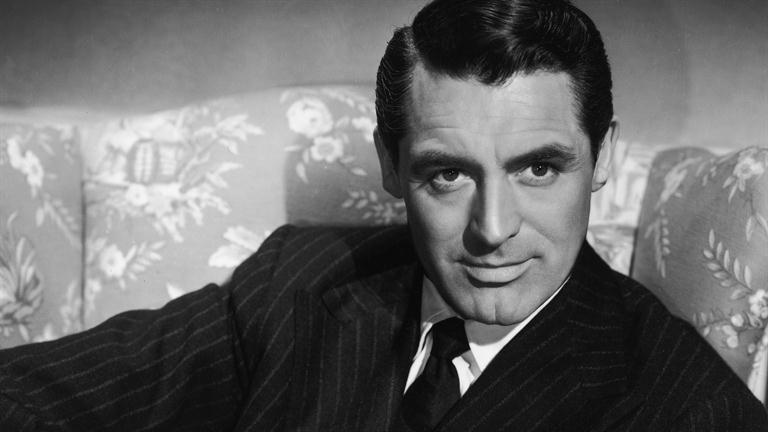
This is the era that gave us the most iconic practitioners of the accent. Katharine Hepburn, who came from a privileged Connecticut family, spoke with a natural version of the dialect and continued using it long after it fell out of fashion. Cary Grant, born Archibald Leach in Bristol, England, crafted his own distinctive variation that was neither fully British nor fully American — and became perhaps the accent’s most famous ambassador. Ingrid Bergman, Vincent Price, Bette Davis, and Grace Kelly all contributed to making the Transatlantic accent the definitive sound of old Hollywood glamour.
How to Speak with a Transatlantic Accent
Despite its manufactured origins, the Transatlantic accent follows a remarkably consistent set of rules. If you wanted to adopt the accent yourself — starting from a standard American English base — here is what you would need to do:
Drop the “r” after vowels. This is the accent’s most distinctive feature, borrowed directly from British Received Pronunciation. The word “fear” becomes something closer to “fee-ah.” “Winner” loses its final “r” sound. However, you keep the “r” when it appears before a vowel — “red” and “running” are pronounced normally.
Pronounce every “t” as a hard “t.” In standard American English, the “t” in words like “water” and “butter” softens into something close to a “d.” In the Transatlantic accent, these consonants remain crisp and percussive. “Water” becomes “wah-tah,” not “wadder.”
Use broad British vowels. The short “a” sound shifts to something longer and more open. “Dance” becomes “dahns.” “Bath” becomes “bahth.” “Ask” becomes “ahsk.” This feature, known as the trap-bath split, was adopted from RP and is one of the accent’s most recognizable qualities.
Enunciate “ng” endings fully. Where casual American speech might clip the ending of “going” to “goin’,” the Transatlantic accent demands the full “ng” sound. Every syllable gets its due.
Speak with deliberate, measured pacing. The accent favors clarity and precision over speed, though some of its most famous practitioners — particularly in screwball comedies — proved it could be delivered at a rapid clip with devastating charm.
It is, by all accounts, a demanding accent to master. Robert L. Hobbs wrote an entire book on the subject — Teach Yourself Transatlantic: Theatre Speech for Actors (1986) — and voice coaches note that getting it wrong can sound more comical than cultivated. Interestingly, British speakers often find it easier to learn than Americans do, since they already possess the non-rhotic foundation.
Famous Speakers of the Transatlantic Accent
The roster of individuals who spoke with the Transatlantic accent — or something close to it — reads like a who’s who of 20th-century American culture:
In Hollywood: Katharine Hepburn, Cary Grant, Bette Davis, Ingrid Bergman, Grace Kelly, Orson Welles, Vincent Price, Christopher Plummer, and Audrey Hepburn all used variations of the accent in their most celebrated performances.
In politics and public life: Franklin D. Roosevelt, Jacqueline Kennedy Onassis, Dean Acheson, and Gore Vidal were all known for their cultivated, Mid-Atlantic speech patterns — products of the same elite educational system that incubated the accent.
In media and letters: William F. Buckley Jr. spoke with his own distinctive version of the accent, blending it with his idiosyncratic personal style. Peter Jennings, the longtime ABC News anchor, adopted elements of Transatlantic speech. George Plimpton’s aristocratic cadence made him the living embodiment of the accent’s social connotations.
In popular culture: The accent has been used to signal wealth, sophistication, and occasionally villainy. Frasier and Niles Crane on Frasier, Thurston Howell III on Gilligan’s Island, and numerous Disney villains — from Maleficent to Cruella de Vil to Jafar — all speak in variations of the Transatlantic accent. Even Darth Vader’s deep, commanding voice carries its influence.
Why the Transatlantic Accent Disappeared
The Transatlantic accent’s decline was as swift as its rise. By the end of World War II, the cultural conditions that had sustained it were rapidly eroding.
The war itself played a significant role. Millions of Americans from every region and social class served together, and the conflict produced a powerful wave of democratic sentiment that made aristocratic affectations feel increasingly out of touch. The regional American accents that soldiers brought home from the war carried an authenticity and an everyman quality that audiences found more compelling than the polished speech of the prewar elite.
Hollywood reflected this shift. A new generation of actors — Humphrey Bogart, James Cagney, Marlon Brando, James Dean — brought working-class speech patterns and regional accents to the screen. Method acting, which prized emotional authenticity over technical polish, replaced the formal elocution training that had been standard in earlier decades. The Transatlantic accent began to sound not refined but artificial, not worldly but pretentious.
In education, the shift was equally dramatic. Boarding schools quietly dropped their elocution programs. The rise of sociolinguistics — particularly the groundbreaking work of William Labov in the 1960s — challenged the very idea that one way of speaking was inherently superior to another. The notion that “Good Speech” required erasing one’s regional identity came to seem not aspirational but elitist.
By the 1960s, the Transatlantic accent had retreated to the margins, kept alive by a handful of holdouts like Katharine Hepburn and William F. Buckley Jr. who had internalized it so deeply that it had become their natural way of speaking.
The Transatlantic Accent’s Enduring Legacy
Though the Transatlantic accent has largely vanished from everyday speech, its cultural legacy remains remarkably potent. Film and television productions set in the early to mid-20th century still rely on it to evoke a specific era and social milieu. Shows like The Marvelous Mrs. Maisel and The Crown use elements of the accent to establish period authenticity, while filmmakers like David Fincher employed it in Mank to recreate the world of 1930s Hollywood.
The accent also endures as a theatrical tool. Classical stage productions, particularly those involving Shakespeare or other canonical works, sometimes use a Transatlantic or near-RP accent to give the language a timeless, elevated quality. Voice coaches continue to teach its principles as part of comprehensive dialect training for actors.
Perhaps most interestingly, the Transatlantic accent remains a window into a vanished world of American social aspiration — a time when the right way of speaking could open doors to boardrooms, ballrooms, and the most exclusive private clubs in the country. It was the sound of a society that valued polish and pedigree, and while its era has passed, its echoes continue to shape how we think about sophistication, class, and the power of how we present ourselves to the world.
Does your club’s brand tell a story as compelling as the institutions that defined an era? Contact our team to discover how Private Club Marketing can elevate your club’s identity.
Frequently Asked Questions About the Transatlantic Accent
The Transatlantic accent is a real accent in that people genuinely spoke it, but it is not a naturally occurring dialect. Unlike regional accents that develop organically within communities over generations, the Transatlantic accent was deliberately constructed and taught. Phonetician William Tilly designed it in the early 1900s by combining features of British Received Pronunciation with standard American English, and it was then codified and spread through elite boarding schools, elocution classes, and Hollywood voice coaching. While it was an artificial creation, the people who spoke it — from Katharine Hepburn to Franklin Roosevelt — used it as their authentic, everyday manner of speaking.
In most usage, they refer to the same thing. Both terms describe the manufactured blend of British and American English pronunciation that was popular from the 1920s through the 1950s. However, some linguists draw a subtle distinction: “Mid-Atlantic accent” can also refer to the natural regional accents of the Mid-Atlantic states (the Philadelphia and Baltimore area), which sound quite different from the cultivated Hollywood accent. To avoid confusion, “Transatlantic accent” is generally the clearer term when referring to the fabricated prestige dialect of old Hollywood and the Northeastern elite.
The distinctive speech you hear in films from the 1930s and 1940s is the Transatlantic accent, which was the standard way actors were trained to speak during Hollywood’s golden age. Studios required it for several reasons: it recorded well with early microphone technology, it sounded educated and sophisticated to audiences, and it was not tied to any specific region, making films more universally appealing. After World War II, audiences began to prefer more naturalistic performances with authentic regional accents, and the Transatlantic accent gradually disappeared from the screen.
Several forces converged to end the Transatlantic accent’s dominance after World War II. The war created a wave of democratic, egalitarian sentiment that made aristocratic affectations feel out of step with the times. Method acting — which prized emotional authenticity over vocal technique — replaced formal elocution training in drama schools. The GI Bill sent millions to college, democratizing higher education and weakening the accent’s association with elite exclusivity. And the rise of television brought a far wider variety of regional accents into American homes, making the Transatlantic accent sound increasingly artificial by comparison.
The Transatlantic accent has effectively vanished from everyday speech. No schools teach it as a standard of proper English, and no public figures use it as their natural speaking voice. However, it remains alive in specific contexts: actors learn it for period roles in film and theater, voice coaches teach it as part of comprehensive dialect training, and it is still used in media to signal old-money wealth, sophistication, or villainy. Contemporary productions like The Marvelous Mrs. Maisel and The Crown use elements of the accent to establish period authenticity.
Yes, the Transatlantic accent can be learned through dedicated practice, since it was always a taught accent rather than a natural one. The key features to master include non-rhotic pronunciation (dropping the “r” after vowels), hard “t” sounds (saying “wah-tah” instead of “wadder”), broad British vowels (saying “dahns” instead of “dance”), and crisp, deliberate enunciation. Studying classic films — particularly performances by Katharine Hepburn, Cary Grant, and Bette Davis — is one of the best ways to train your ear. Voice coaches note that British English speakers often find it easier to learn than Americans, since they already possess the non-rhotic foundation.
Cary Grant’s accent is one of the most fascinating examples of the Transatlantic dialect because it was not purely manufactured in an elocution class — it was a product of his unique biography. Born Archibald Leach in Bristol, England, Grant emigrated to America as a teenager and spent decades living and working on both sides of the Atlantic. His accent naturally evolved into something that was neither fully British nor fully American, making him the living embodiment of the Mid-Atlantic sound. While other actors consciously learned the accent, Grant’s version emerged more organically from his transatlantic life, which is part of what made it so distinctive and impossible to imitate.