
Anchors and Aspirations: Spring Marketing Strategies for Yacht and Waterfront Clubs
The first warm Saturday of March does something particular to waterfront real estate. It fills the docks. It fills the parking lots. And for the membership directors of America’s premier yacht and waterfront clubs, it signals the opening of the most consequential selling season of the year — a window that closes faster than most boards appreciate, and rewards, almost exclusively, those who prepared for it in January.
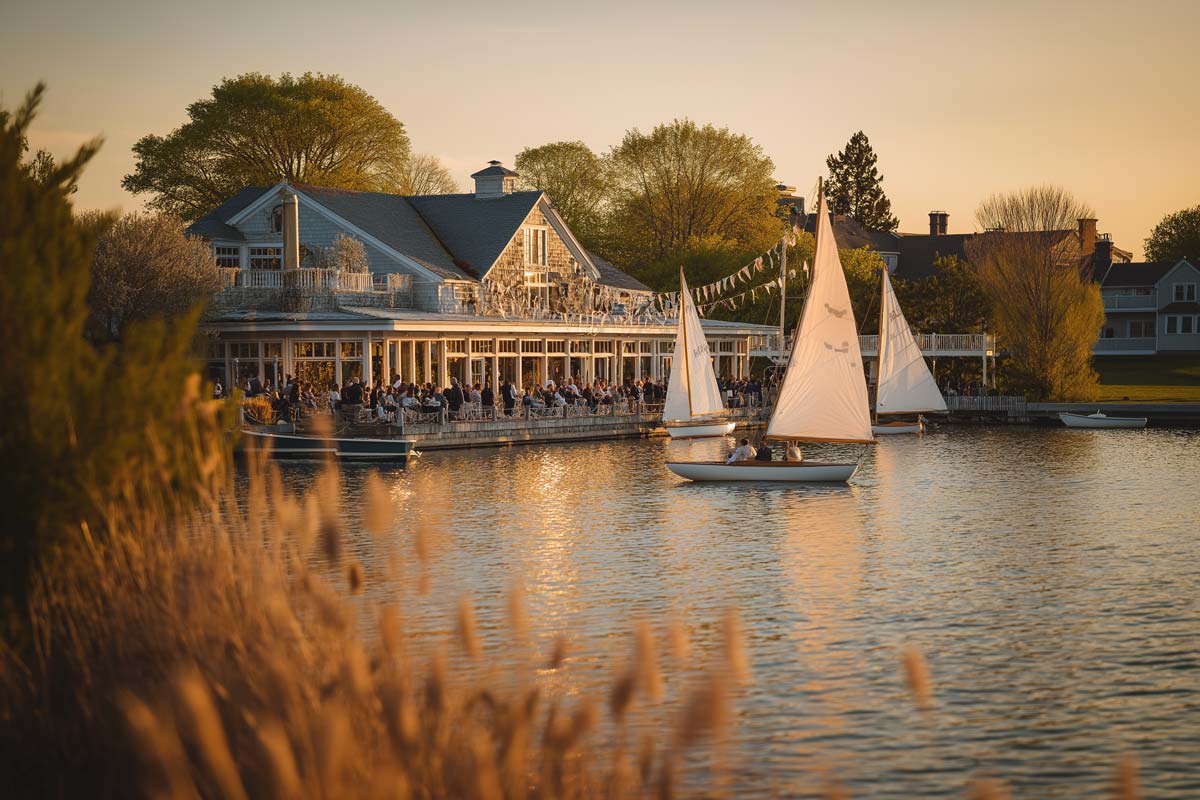
Spring is not merely a seasonal uptick for waterfront clubs. It is the annual moment when the emotional chemistry of membership aspiration is most potent: the water is inviting, social calendars are filling, and the psychological friction of a major financial commitment is at its lowest. Prospects who have spent winter passively observing the club’s digital presence, imagining themselves docked at a slip or seated at a terrace table at golden hour, are primed to act.
The clubs that capture this moment do not simply open their doors wider. They engineer a system — one that converts aspiration into enrollment, and enrollment into long-term referral. Clubs running structured spring membership campaigns consistently outperform those relying on passive inquiry processes, and the gap is most pronounced at clubs that begin preparation in the off-season rather than responding to demand after it arrives.
Industry data bears out the primacy of personal referral in private club membership: across the club segment, personal introductions and member-sponsored visits remain the dominant pathway through which prospects first seriously investigate joining — a pattern that, in yacht club contexts, is even more pronounced given the tight social networks of the boating community. Meanwhile, interest in recreational boating among younger demographics has accelerated meaningfully since 2020, expanding the addressable prospect pool at precisely the moment that legacy clubs are competing against more flexible, lower-barrier waterfront offerings.
The data also surfaces a structural tension that makes spring strategy uniquely complex for waterfront clubs. Research now consistently shows that between 30% and 50% of yacht club members do not own boats — they join for the waterfront lifestyle, dining, community, and access to the water without the burden of vessel ownership. This social sailor population represents both an enormous expansion of the addressable prospect pool and a genuine identity challenge: how does a club that defines itself by maritime heritage market to people whose relationship to the water is aspirational rather than operational?
The answer, for the clubs executing this best, is not to dilute the brand. It is to stage the experience so that aspiration becomes participation.
The Waitlist Is Not a Passive Queue — It Is an Active Asset
In the golf and country club world, the shift from passive waitlist management to proactive prospect cultivation took the better part of a decade to take hold. In the yacht club segment, that shift is happening now — and the clubs moving fastest are establishing competitive advantages that will compound over multiple membership cycles.
The core insight is straightforward: a waitlisted prospect at a waterfront club has already self-selected into a highly specific lifestyle identity. They have raised their hand. Treating that commitment as an administrative placeholder rather than an emotional signal is one of the most persistent and costly errors in club membership management. The clubs capturing the most revenue this season are engineering waitlists as proactive marketing instruments — not waiting for qualified candidates to flow through.
St. Francis Yacht Club in San Francisco — consistently ranked among the top five yacht clubs in the country by Club Leaders Forum’s Platinum Clubs of America — has developed what its membership team describes as a proximity model for waitlisted candidates. Rather than leaving prospects in a quiet queue, the club invites them to observe key racing events, attend select social programming, and engage with the club’s 130-plus annual competition days before their membership slot formally opens. By the time an offer arrives, a significant portion of new members have already spent meaningful time at the facility, dramatically reducing the window between offer and signed agreement — and yielding conversion rates that clubs relying solely on correspondence cannot match.
This approach aligns with what behavioral economists call the endowment effect — the tendency for people to assign greater value to things they have already experienced or feel partial ownership over. When a prospect has stood on the dock during a major regatta, tasted the dining program, and introduced themselves to a half-dozen members before their membership is official, the psychological work of conversion is largely complete. The club is not selling them on a concept. It is confirming a decision they have already made emotionally.
The Endowment Effect Waterfront clubs have a structural advantage that inland clubs cannot replicate: the experience they sell is visible, tactile, and publicly spectacular. Regattas, sunset cruises, dock parties — these are organic marketing events that require only deliberate access management to become powerful conversion tools. Inviting waitlisted prospects to observe, not just imagine, closes the psychological gap between aspiration and commitment faster than any email sequence. The clubs that execute this best develop quarterly touchpoints that move prospects emotionally and informationally closer before a spot officially opens — invitations to non-member events, behind-the-scenes dock tours during off-peak hours, early access to the racing calendar. The result is that by the time a membership slot opens, the prospect has already psychologically committed to joining.
Structuring the Spring Drive for Maximum Conversion
Source: Revinate, 2025 Hospitality Email Benchmark Report — 2.4 billion emails across hotels, resorts, and membership organizations
A spring membership drive executed at the highest level has three distinct phases: activation, acceleration, and anchoring. Collapsing them into a single undifferentiated push — or treating the entire season as one email blast — is the most common structural error in club marketing planning.
- Phase 1: Activation (Late February – Early March) — Shift from brand awareness to offer-driven messaging. Segment the waitlist by profile — racing-primary, cruising-primary, social/dining-primary — and deploy tailored communications aligned to each prospect’s reason for joining.
- Phase 2: Acceleration (March – April) — Personalized, one-to-one outreach at maximum intensity. Host a spring preview on the water that functions simultaneously as an experience driver and a natural referral moment. Guests bring guests.
- Phase 3: Anchoring (Late April – May) — Urgency-driven communications that make the cost of waiting tangible. Communicate specific spot availability, upcoming fee adjustments, and slip access windows — factual and data-grounded, not promotional.
The activation phase is where most clubs underinvest. Sending a single announcement to the full waitlist — “Spring membership spots are now available” — misses the segmentation opportunity that is the primary lever of high-performing spring campaigns. According to Revinate’s 2025 Hospitality Email Benchmark, email campaigns to lists under 5,000 contacts achieve open rates of approximately 42–45% when properly segmented, compared to a hospitality industry baseline of roughly 30% for undifferentiated sends. The principle applies directly to private club communications: in the yacht club segment, where a competitive racer has almost nothing in common with a social member who wants a dock table at sunset, segmentation is not a sophistication. It is a basic operational necessity.
Free Download
The 2026 Private Club Benchmark Report
The membership, amenity, and pricing data reshaping private clubs — from a 1,200-club analysis. Enter your details and we'll send it to your inbox.