
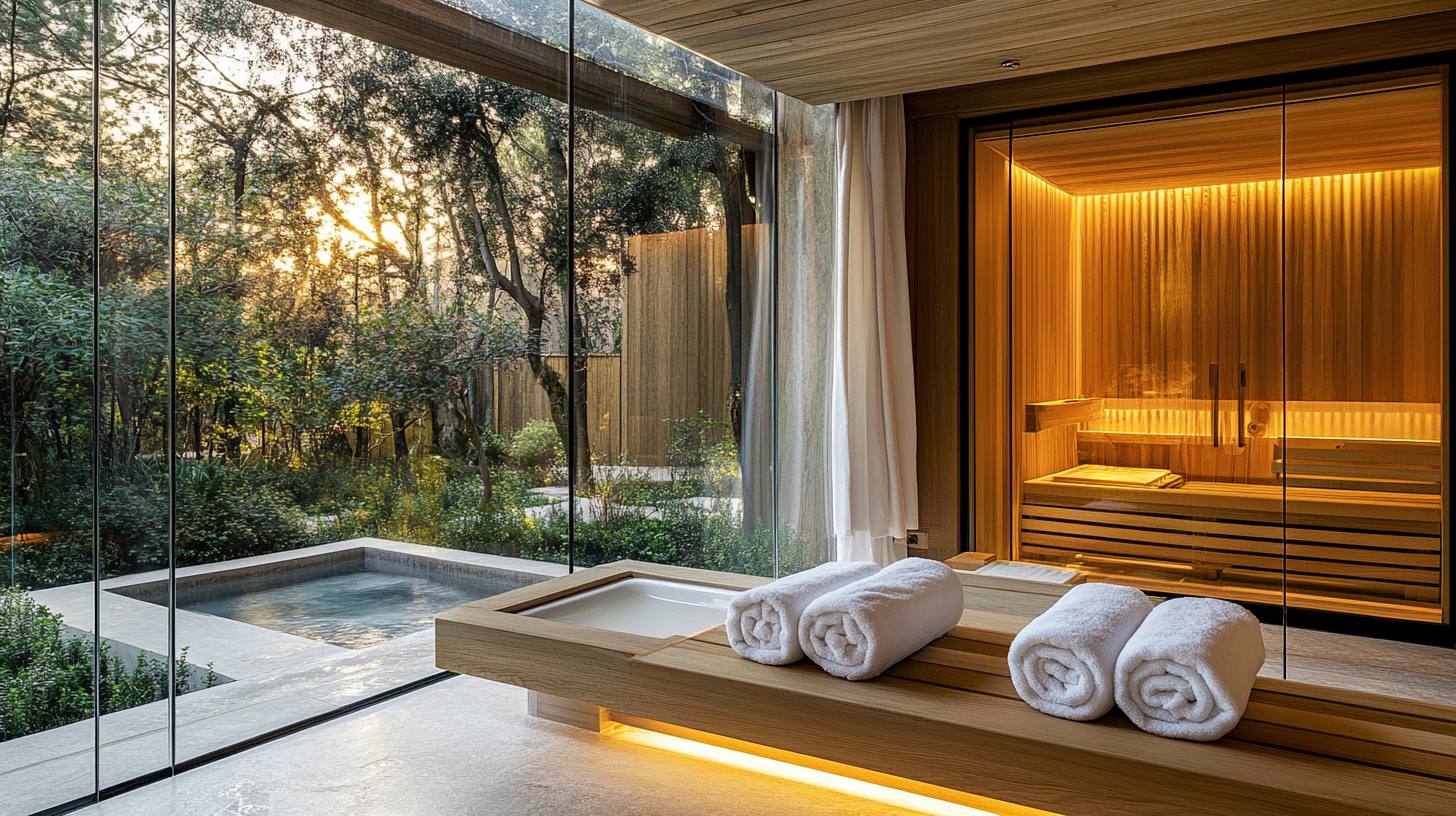
By Memorial Day, the spa calendar tells the truth no membership survey will. The 6 a.m. sauna slots are gone by Sunday night. The cold plunge has a wait. The IV-drip room — quietly added last winter, almost as an afterthought — is the hardest reservation on the property. Summer has always been the club’s busiest season for golf and dining. Increasingly, it is also the season that exposes how badly most clubs have under-built their wellness footprint.
That gap is not a local quirk. It is the dominant feature of the entire wellness market. In its Future of Wellness 2025 survey of more than 9,000 consumers across the U.S., U.K., Germany and China, McKinsey found that demand is still outstripping supply across the roughly $2 trillion global wellness industry — and that 56% of consumers say they prioritize wellness more than they did a year earlier. For a membership business built on anticipating what affluent households want before they ask, that is both a warning and an opening.
Wellness real estate — homes and communities built around health — reached $584 billion in 2024 and is projected to roughly double to $1.1 trillion by 2029, the Global Wellness Institute reports. Every year since the GWI first quantified the market in 2013, wellness real estate has been the fastest-growing sector in the wellness economy. A private club is, in effect, a piece of wellness real estate that members already trust. The question is whether the physical plant reflects it.
The point of the frame is not the percentages — invent your own. It is the discipline of separating three distinct returns: trial (a marketing number), recurring spend (an ancillary-revenue number), and renewal influence (a retention number). Most clubs underwrite wellness on the first alone and are then disappointed. The case is strongest when all three are modeled honestly and the retention line is given the weight it deserves.
The market clubs are underwriting
The wellness economy is no longer an adjacent category. According to the Global Wellness Institute’s 2025 Global Wellness Economy Monitor, the global wellness economy reached a record $6.8 trillion in 2024 and is forecast to grow to $9.8 trillion by 2029. To put that in scale, the Institute notes wellness now eclipses global mega-industries including sports and tourism. The fastest-growing piece of it sits squarely in a club’s wheelhouse: real estate and the built environment.$6.8T
Global Wellness Economy, 2024
$584B
Wellness Real Estate, 2024
56%
Prioritize Wellness More Than a Year Ago
$9.8T
Forecast Economy by 2029
From spa to recovery science
What members are asking for has also shifted in character. The traditional menu — massage, facials, a steam room — still matters, but it is no longer the leading edge. The European Spa Leaders’ Resource 2026 describes recovery as a core focus across fitness clubs and social-wellness spaces, defining it as “the application of science and technology — through modalities including cold and heat, red light therapy, sleep, nutrition and supplements — to speed healing.” The same resource notes that recovery programming is expected to keep growing, with compression technology from brands such as Hyperice moving from elite athletic training rooms into mainstream wellness floors. This is the vocabulary the modern member arrives with: contrast therapy, HRV, sleep architecture, VO2 max, biological age. The clubs winning the conversation are translating it into bookable amenities — cold plunge and sauna circuits, infrared and red-light rooms, IV and micronutrient services, compression recovery, and, at the ambitious end, longevity assessments that benchmark a member’s health over time.Where Member Demand Is Concentrating
None of this is fringe. Restore Hyper Wellness, a recovery-focused franchise, now operates more than 225 studios across some 40 states, offering cryotherapy, IV drip therapy, infrared sauna, compression and micronutrient testing — a standalone retail proof that members will pay out of pocket, on a recurring basis, for exactly the services many clubs already have the square footage to house.
225+
Recovery studios a single franchise has opened across roughly 40 states — evidence that members are already buying these services somewhere. The only question is whether it’s at your club.
Restore Hyper Wellness, 2025
The revenue and retention case
For a GM, the strategic appeal is not the day-rate on a cryo session. It is the way recovery and longevity programming changes the membership math. McKinsey’s Future of Wellness 2025 research found that the longevity category is one of the strongest in wellness: up to 60% of consumers across markets report that healthy aging is a “top” or “very important” priority. That is a recurring, high-intent, high-income behavior — the exact profile of a club’s existing roster. Properly structured, a wellness build does three things at once: it justifies a dues increase by adding tangible value rather than raising price on a static product; it opens an ancillary-spend line (assessments, IV packages, recovery memberships) that doesn’t cannibalize golf or dining; and it gives the household a reason to come to the club on the days they otherwise wouldn’t. The third effect is the one that quietly drives retention — and retention is where the real money lives.60%+
Of Consumers
report healthy aging is a “top” or “very important” priority, according to McKinsey’s Future of Wellness 2025 survey of more than 9,000 consumers — a recurring, high-intent behavior that maps directly onto a club’s member profile.
Source: McKinsey, Future of Wellness 2025
An illustrative model — read it as a frame, not a forecast
Consider a club with 450 members weighing a recovery suite. The figures below are illustrative only — placeholders to structure a conversation, not projections of any actual club’s results. Every club’s labor, utilization and pricing will differ, and the model should be rebuilt on real assumptions before any capital decision.Members who try the suite in year one (illustrative)
35%
Convert to a recurring recovery add-on (illustrative)
18%
Cite wellness as a top reason to renew (illustrative)
9%
Building it without diluting the brand
The risk is not under-investing. It is building a chrome-and-neon “recovery lab” that reads as a suburban franchise dropped into a heritage clubhouse. The European Spa Leaders’ Resource 2026 is pointed on this — it explicitly sets out to “challenge wellness-washing and empty narratives.” For a private club, the discipline is to treat recovery as architecture and service, not signage: quiet materials, unhurried scheduling, a credentialed wellness director who can speak the longevity language without overselling it, and an assessment program that gives members a reason to return quarterly rather than once. Summer is the moment the demand makes itself visible. The clubs that act on it will not be the ones that bolt on a cold plunge for a season. They will be the ones that recognize what the data has been saying for a decade — that wellness is now the fastest-compounding category their members spend in, and that a club is uniquely positioned to own it.Free Download
The 2026 Private Club Benchmark Report
The membership, amenity, and pricing data reshaping private clubs — from a 1,200-club analysis. Enter your details and we'll send it to your inbox.