
The most dangerous moment for an iconic private club brand is not when it is struggling. It is the moment someone decides it is worth £1.4 billion.
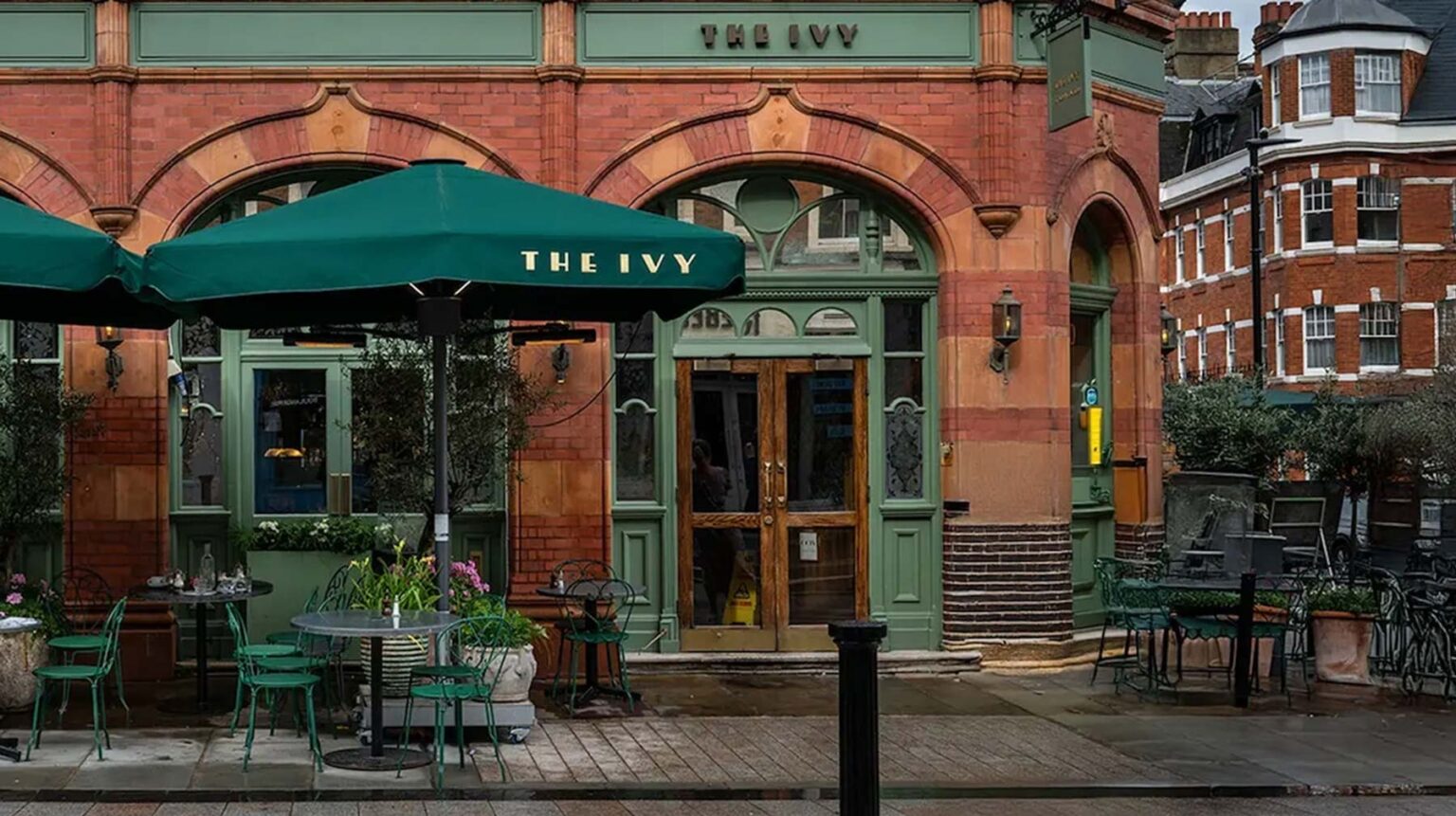
That is the position Richard Caring’s empire now occupies. The sale of Annabel’s, The Ivy, Scott’s, Sexy Fish, and five other London institutions to DIAFA — an Abu Dhabi entity controlled by Sheikh Tahnoon bin Zayed al-Nahyan — was celebrated last week as a triumph of brand-building. We covered its financial architecture in full: a 24x earnings multiple, a £303 million revenue business, a deal that puts a hard number on what decades of protected exclusivity are actually worth.
But the deal also starts a clock. The moment a legendary private club changes hands at a premium valuation, new owners face a structural pressure that did not exist before: they need to justify what they paid. The most reliable way to justify a premium is growth — more members, more locations, more revenue events. Which is precisely how you destroy the thing you bought.
This is not a hypothetical risk. It has a name, a stock ticker, and a cautionary timeline that played out in real time over the last four years.
Soho House Wrote the Case Study
In July 2021, Soho House went public on the New York Stock Exchange at $14 per share. The brand had spent decades as a carefully curated network of members’ clubs — a small number of locations, a long waitlist, and a reputation for creative-class exclusivity that money alone could not buy.
Public markets changed the math. A listed company answers to shareholders who need quarterly growth. Soho House expanded aggressively — 42 locations, more than 250,000 dues-paying members, a presence in cities that diluted the scarcity that defined it. The stock fell more than 65 percent from its IPO price. By 2024, London, New York, and Los Angeles — the clubs that built the brand — stopped accepting new members entirely because the waitlist had grown unwieldy and the product was under strain. The company went private again in a $2.7 billion deal, still unprofitable, still trying to reconcile what it had been with what growth required it to become.
The paradox is structural. A members’ club derives its value from exclusivity. Exclusivity requires limits. Public ownership requires expansion. The two are not compatible — and Soho House is what happens when the market wins.
ClubCorp Wrote the Private Club Version
Soho House’s lesson came from hospitality broadly. ClubCorp’s came from private clubs specifically.
Founded in 1957 in Dallas by Robert Dedman Sr., ClubCorp grew into the largest operator of private clubs in the United States — a portfolio of golf courses, country clubs, and city clubs built over five decades of disciplined acquisition. In 2006, KSL Capital Partners acquired the company in a leveraged buyout for approximately $1.8 billion. What followed was the standard PE playbook: accelerated acquisitions, operational efficiencies, and a 2013 IPO on the New York Stock Exchange that made ClubCorp’s growth obligations public and quarterly.
The membership experience deteriorated in ways that became documented industry history. Cost-cutting showed up in food quality, staffing ratios, and facility maintenance. By 2017, Apollo Global Management took the company private again for approximately $1.1 billion — less than KSL had paid eleven years earlier, despite a significantly larger club count. More clubs. Lower value. The arithmetic of what happens when you grow a members’ club by the wrong metrics, executed over a decade.
The company was eventually rebranded as Invited under Apollo — a name change that is itself a signal. When you stop leading with the word “club,” something has already been conceded about what you are.
What DIAFA Is Signaling
The Caring acquisition is not the same situation. Several signals suggest DIAFA understands the trap.
The price itself is the first signal. At 24x earnings — well above the 8 to 12x standard for hospitality — DIAFA paid a premium specifically because the brand has not been diluted. They know what they bought. Destroying it through expansion would not just be culturally wrong; it would be financially self-defeating.
The CEO appointment is the second. Ravi Thakran — former Chairman of LVMH Asia Pacific, founder of L Capital Asia, a career spent scaling luxury brands without erasing what made them valuable — is a direct answer to the question every Annabel’s member and Ivy regular is quietly asking. His explicit framing as “a brand operator, not a financial engineer” is not marketing language. It is a positioning statement against the Soho House model.
The third signal is Caring himself. He stays on as executive chairman. An owner who just pocketed £1.4 billion does not remain involved out of obligation. He remains because the deal structure requires brand continuity — and because DIAFA understands that the institutional knowledge of how to manage these clubs is part of what they paid for.
DIAFA’s existing track record with Zuma, Roka, and Nammos — all scaled across multiple cities without losing identity — provides a fourth data point. This is not a firm encountering luxury hospitality for the first time.

The Conflict That Remains
None of that eliminates the underlying tension. It mitigates it.
IHC — the $232 billion conglomerate that backs DIAFA — operates across 85 countries and answers to public shareholders on the Abu Dhabi Securities Exchange. At some point, the Caring portfolio will appear in a quarterly earnings presentation, and the question of whether Annabel’s is growing fast enough will be asked in a boardroom. The Ivy’s planned US expansion — bringing the brand to American cities that have never had a single location — is where the thesis gets tested in real time.
Forty locations in the UK, done carefully by Caring, maintained the brand. Whether DIAFA can execute the same discipline in a new market, under shareholder scrutiny, with leadership that has never operated a British dining institution, remains entirely open. The Ivy in America will tell us more about the future of this deal than anything announced at signing.
IHC is not a boutique hospitality group. It is a $232 billion conglomerate that now sits alongside the great luxury houses of Europe — in scale, if not yet in identity.
That scale creates obligations. LVMH built its reputation for brand stewardship over five decades. Richemont has maintained Cartier and Van Cleef through market cycles by treating each house as autonomous. IHC is new to this. The Caring acquisition is their first test at the luxury brand level — and the first test is always the hardest one to pass.
“The 18 months after a deal closes is when a brand is most vulnerable. The previous owner’s cultural instincts are gone before the new owner’s growth instincts have been corrected. Every decision made in that window sets a pattern that is very hard to reverse. DIAFA has the right pedigree. The question is whether the right pedigree survives first contact with a quarterly earnings call.”
— Zack Bates, CEO, Private Club Marketing
What American Clubs Should Take From This
The Caring deal will be the most-watched case study in private club brand stewardship for the next decade. But the tension it exposes is not unique to London’s great dining rooms.
Every American private club that has accepted outside capital, taken on a management company, brought in a new ownership group, or simply started optimizing aggressively for revenue has encountered the same structural conflict at smaller scale. The pressure to add members to cover rising costs. The temptation to rent the clubhouse on off-peak nights. The renovation funded by a dues increase that gradually prices out the members who built the culture. Each decision is defensible in isolation. Together, they add up to the same thing Soho House experienced — a brand that grows itself out of what made it worth belonging to.
Exclusivity Is an Operational Strategy, Not an Attitude
Growth and Brand Are in Constant Negotiation
Every Brand Decision Is Also a Financial Decision
The Caring deal is a reminder that great private club brands are built over decades and can be compromised in months. DIAFA appears to understand this. Whether that understanding survives the pressure of ownership is the story worth watching — and the question every American club operator should be asking about themselves, right now, before someone else is asking it about them.
Free Board Briefing
Before You Take the Money
A 7-chapter board briefing on acquisition brand risk in private clubs — with case studies from Soho House and ClubCorp, a 9-point protection scorecard, and the questions your legal team isn’t asking.
Get the Free Guide →Instant access — no paywall — PDF-ready