
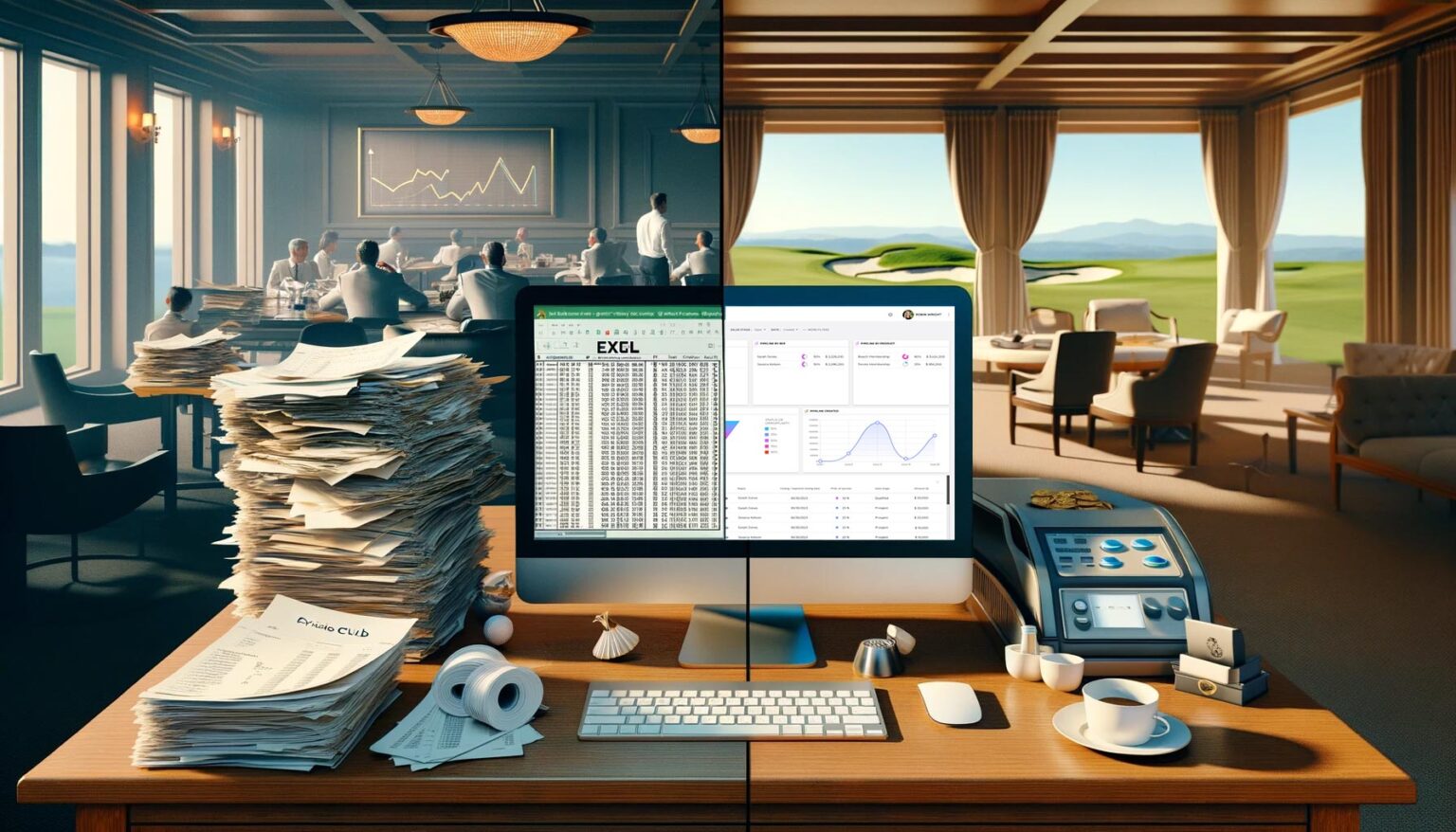
In the exclusive realm of private clubs, the art of curating a unique and personalized member experience stands paramount. These sanctuaries of leisure and networking thrive on a foundation of meticulous member management and engagement. For years, Excel has been the silent workhorse in this endeavor, but as the world evolves into a more connected and data-driven age, the limitations of traditional tools like Excel become glaringly apparent. Enter the era of Customer Relationship Management (CRM) platforms, which promise not just to fill the gaps left by Excel but to transform the very fabric of private club management.
The Shortcomings of Excel in Data Centralization
Excel, with its grid lines and cells, has long been the standard for data organization. However, when it comes to managing the intricate details of private club memberships, its limitations are evident.
- Data Disparities: Excel’s lack of a unified data structure often leads to conflicting information, especially when multiple staff members manage separate spreadsheets.
- Manual Updates: The manual process of updating spreadsheets is not only time-consuming but also prone to human error, resulting in outdated and inconsistent data.
- Version Control Challenges: Without a central system, identifying the most recent and accurate data becomes a complex task, often leading to confusion and inefficiency.
Club Example: A prestigious Golf Club, where each department maintains its own Excel sheet for member details. When a member updates their contact information, the change is not uniformly reflected, leading to communication mishaps and a disjointed member experience.
Real-time Data: A Game Changer in Club Management
The need for instant access to updated information in the fast-paced environment of private clubs cannot be overstated. CRM platforms address this need adeptly.
- Instant Updates: Real-time data synchronization ensures that all departments have up-to-date information.
- Accessibility Anywhere: Cloud-based CRM platforms allow staff to access data from anywhere, enhancing responsiveness.
- Unified Data Source: A single source of truth eliminates the confusion of multiple spreadsheets.
Club Example: At a Golf & Country Club, the CRM system immediately reflects a member’s event cancellation, enabling the staff to offer the spot to another interested member without delay, thereby optimizing event attendance and member satisfaction.
Automation and Integration: The Power Duo in CRM
CRM systems bring automation and integration to the forefront, radically enhancing operational efficiency.
- Streamlined Processes: Automated workflows reduce manual data entry, minimize errors, and save time.
- Integration Capabilities: Seamless integration with other software tools enhances overall club management.
- Personalized Communication: Automated personalized emails and notifications improve member engagement.
Club Example: A lakeside Yacht Club uses CRM to automate membership renewal reminders. This not only ensures timely renewals but also frees up staff time for more personalized member interactions.
Advertisement
Scalability and Club Growth: CRM’s Strong Suit
As a club grows, so does its data. CRM systems are built to scale effortlessly, unlike Excel.
- Handling Large Data Sets: CRM platforms manage large volumes of data without compromising on performance.
- Adapting to Growth: CRM systems adapt to increasing member numbers and club activities with ease.
- Data-Driven Insights: Enhanced reporting capabilities provide insights for strategic decision-making.
Club Example: An ocean view Country Club, with its growing membership, leverages CRM to efficiently manage member data and gain insights into usage patterns, helping in planning and resource allocation.
Enhancing Member Interactions with CRM
Personalized member experiences are at the heart of private club success, and CRM is the key to unlocking this potential.
- Comprehensive Interaction Records: Detailed tracking of every interaction allows for tailored member engagement.
- Data-Driven Personalization: Analysis of member preferences leads to more customized experiences.
- Feedback Utilization: Member feedback, systematically recorded in CRM, informs service improvements.
Club Example: An elite City Club utilizes CRM to track member preferences in dining and activities, allowing them to offer bespoke experiences, thereby enhancing member satisfaction and loyalty.
Conclusion: The CRM Imperative for Modern Private Clubs
The transition from Excel to CRM is not merely a technological upgrade; it is a strategic leap towards redefining club management. By embracing CRM platforms, private clubs can unlock unparalleled efficiencies in membership sales, lead management, member relations, retention, and usage. This shift promises not just streamlined operations but a deeper connection with members, fostering a sense of belonging and loyalty that is the hallmark of every successful private club.
Case Study
/*! elementor – v3.18.0 – 20-12-2023 */
.elementor-heading-title{padding:0;margin:0;line-height:1}.elementor-widget-heading .elementor-heading-title[class*=elementor-size-]>a{color:inherit;font-size:inherit;line-height:inherit}.elementor-widget-heading .elementor-heading-title.elementor-size-small{font-size:15px}.elementor-widget-heading .elementor-heading-title.elementor-size-medium{font-size:19px}.elementor-widget-heading .elementor-heading-title.elementor-size-large{font-size:29px}.elementor-widget-heading .elementor-heading-title.elementor-size-xl{font-size:39px}.elementor-widget-heading .elementor-heading-title.elementor-size-xxl{font-size:59px}
Beach & Tennis Club Generates $4M in New Member Prospects
See how Private Club Marketing assisted in generating over $4M in new member prospects from a single email promotion.
- Targeted List Development
- Email Design
- Promotional Copywriting
- Lead Tracking
Get the Case Study
/*! elementor – v3.18.0 – 20-12-2023 */
.elementor-widget-image{text-align:center}.elementor-widget-image a{display:inline-block}.elementor-widget-image a img[src$=”.svg”]{width:48px}.elementor-widget-image img{vertical-align:middle;display:inline-block}