
The Season That Changes the Conversation
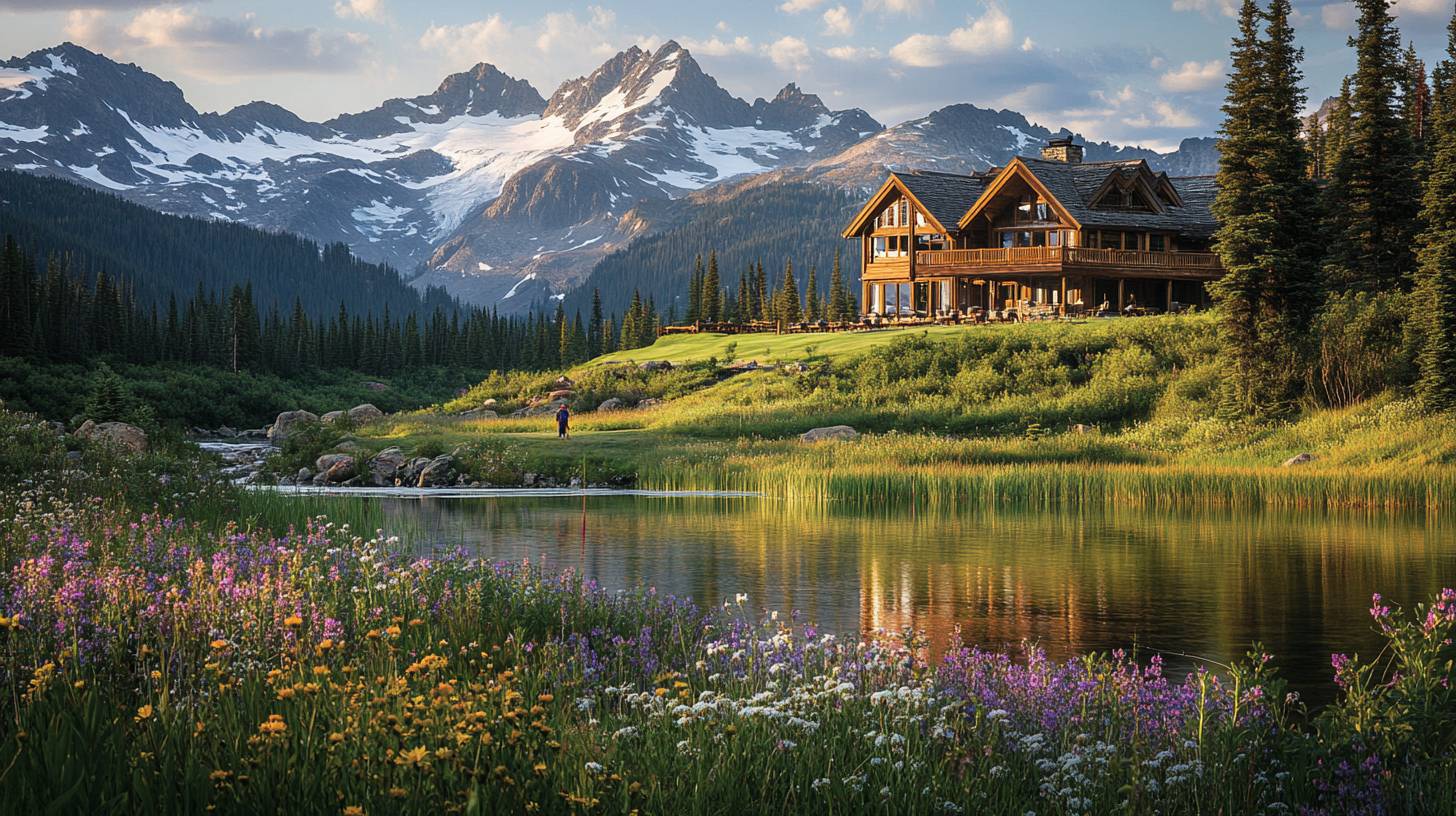
Drive up to a mountain club in late June and what greets you is not a property in recovery from winter — it is a property at full operational pitch. The fly-fishing guides are already out at first light. The Tom Weiskopf fairways are firm and fast. A children’s naturalist program fills the lodge patio at nine o’clock while a culinary team preps for an evening vertical tasting. The ski lifts are gone from view, replaced entirely by a green-season identity that stands on its own. This is the story that alpine clubs are now telling on purpose. For years, the mountain membership value proposition was built around powder days, vertical feet, and the social architecture of ski season. Summer was an afterthought — a few weeks of fly fishing before the shoulder season staff folded up. That framing has quietly reversed. The clubs doing it correctly have stopped treating summer as borrowed time and started treating it as the season that closes the membership sale.$6.8T
Global wellness economy 2024 — Global Wellness Institute
23%
5-year price appreciation, year-round alpine properties — Knight Frank Alpine Property Report 2026
200+
Estimated billionaires owning property in Pitkin County — Aspen Appraisal Group, 2026
$4.6T
Global real estate wealth transferring to Gen X and Millennials over next 10 years — Coldwell Banker Global Luxury 2026
Where the Mountain Wealth Has Settled
The wealth migration story is not hypothetical. The Mountain West — Colorado, Montana, Wyoming, Utah — has absorbed a decade of high-net-worth relocation from coastal markets driven by tax efficiency, space, and privacy, part of what Coldwell Banker’s 2026 Global Luxury Trend Report describes as a broader shift toward more intentional, values-driven homebuying, with affluent buyers increasingly prioritizing lifestyle and long-term value over status. In Aspen, over 70 percent of residential sales in 2025 closed without financing. Dollar sales rose 38 percent to $2.51 billion, with 42 transactions exceeding $20 million — up sharply from 26 such sales in 2024. An estimated 200 to 225 billionaires now own property in Pitkin County, according to a 2026 update from Aspen Appraisal Group — up from the 100 to 125 estimated just a year earlier, a sign of how quickly the concentration of ultra-high-net-worth buyers has accelerated. Critically, the buyer profile has evolved. Once primarily seasonal, the number of people seeking a full-time mountain base is rapidly increasing, as Knight Frank’s Wealth Report 2025 notes in its coverage of Aspen and Snowmass — where Snowmass properties command prices nearly 40 percent below their counterparts in Aspen, drawing a second wave of wealth into the adjacent club ecosystem. These are not visitors — they are residents, and residents expect year-round programming. The Coldwell Banker 2026 Trend Report adds a generational dimension: Gen X and Millennials are on track to inherit $4.6 trillion in global real estate wealth over the next decade, with the United States capturing 52 percent of that transfer. Mountain second-home markets sit directly in the path of this capital shift, and the clubs positioned as stewards of that lifestyle — not just its winter component — will capture the membership.What the Green Season Actually Looks Like
At the Yellowstone Club in Big Sky, Montana — the 15,200-acre private ski, golf, and adventure community widely regarded as the benchmark of mountain membership — the summer calendar is built around more than 40 miles of hiking and mountain bike trails, 15 miles of private fly-fishing waterways, a Tom Weiskopf-designed championship golf course, and guided forays into adjacent Yellowstone National Park. The outdoor pursuits team runs structured programming across the full arc of the season: archery clinics, Yellowstone wildlife expeditions on select Wednesdays, couples golf competitions, and a poolside grill that anchors the social calendar through August. Thirty miles away, Spanish Peaks Mountain Club — anchored by Montage Big Sky and operating under Lone Mountain Land Company — layers a different layer of formality over similar terrain. The 2025 calendar included fly casting clinics, daily yoga on the deck, junior horseback riding and river rafting camps, and a series of exclusive Member Nights at Montage Big Sky on the club’s private waters. Spanish Peaks’ Fish Camp — two sleeping cabins at a secluded stretch of the club’s private water — represents the kind of quietly specific amenity that cannot be replicated at a public resort, regardless of price point. In Colorado’s Yampa Valley, Alpine Mountain Ranch & Club in Steamboat Springs anchors its summer identity around 1.5 miles of private, live-water fishing on the Yampa River, a stocked on-property fishing lake, equestrian facilities, multi-use trail systems for hiking and horseback riding, and access to the Summit Club’s ski-adjacent clubhouse year-round. The positioning speaks directly to the second-home owner who wants continuity of access — a club that is never closed. In the Catskills, Windham Mountain Club — about two and a half hours from Manhattan — extends its four-season identity with guided fly fishing in local trout rivers, mountain biking and hiking, clay shooting, and a summer outpost on the Hudson River with paddleboards, kayaks, and casual barbecue. For a buyer migrating from the New York market, the calculus is explicit: membership delivers an experience that no second-home purchase alone can provide.What Drives Summer Member Engagement at Mountain Clubs
Editor note: activity engagement percentages above are PCM editorial estimates derived from club programming surveys and industry benchmarking; they are directional, not sourced from a single published study. A search of Club Benchmarking’s published research did not turn up a matching dataset — replace with verified figures if and when one becomes available.
Wellness as the Organizing Principle
The wellness angle is not incidental to mountain summer programming — it is the frame that makes everything else legible. The Global Wellness Institute reports that the global wellness economy reached $6.8 trillion in 2024, growing 7.9 percent year-over-year. Wellness tourism crossed $1 trillion as a standalone sector that same year, according to the Institute, and industry analysts at Grand View Research put North America’s share of the global wellness tourism market at roughly 35 percent, with the region continuing to grow at a brisk pace. Mountain environments are structurally positioned inside this trend. Altitude, clean air, proximity to rivers and forest, and the enforced pace of outdoor activity are not amenities that can be simulated. What mountain clubs have — and resort hotels do not — is permanence of access and continuity of community. European Spa magazine’s ESM Leaders’ Resource 2026 echoes this from the hospitality side, pointing to dramatic natural settings as the backdrop for the industry’s most distinctive wellness experiences, where indoor and outdoor programming increasingly blur into a single, integrated offering. For mountain clubs, this means the spa program is not a standalone revenue center — it is part of an integrated wellness architecture that runs from the morning trail run to the evening wine dinner. Clubs that program it as a coherent day rather than as a menu of line-item upsells create exactly the kind of membership identity that drives conversion from seasonal visitor to year-round member.The Conversion Window: Second-Home Owner to Member
The summer season is where the membership sale actually happens. Not because the programming is especially better than winter — it often is not — but because summer is when second-home owners experience the community at human pace. Winter is transactional: fly in, ski hard, fly out. Summer is residential: weeks at a time, children running between properties, impromptu dinners, guides who know your name by the second visit. Clubs that understand this invest in the specific experiences that make a recurring guest understand they are inside something they cannot replicate elsewhere. A strong culinary identity, paired with consistent event programming, is one of the clearest levers clubs have for turning repeat guests into members. A guided fishing day that ends at the club’s private water for an evening reception is not a summer activity — it is a prospecting event. The property market data reinforces the timing. Knight Frank’s 2026 Alpine Property Report documents that year-round alpine properties have outperformed winter-only ski homes by recording 23 percent five-year price gains versus far more modest performance in single-season assets. Knight Frank’s research ties this performance gap directly to four-season investment: resorts that have built out hiking trails, mountain biking parks, golf courses, lake sports, and wellness centers are seeing property values climb at rates that outpace winter-only competitors. That infrastructure premium flows directly to club membership valuations. When the property appreciates on a four-season basis, the membership attached to it appreciates in perceived value as well.Late May
Opening weekend
Golf course opens, trails cleared, outdoor pool comes online. Family preview weekend for prospective members and returning residents establishing the season calendar.
June
Adventure programming launches
Guided fly fishing, hiking clinics, mountain biking skills sessions begin. Junior programs open. First culinary dinner of the summer season establishes the F&B tone.
July
Peak season & signature events
Member-guest golf tournament, wine and culinary week, family camp at full capacity, wildflower hikes, and evening wellness programming. Primary membership conversion window opens.
August
Late-season immersion
Harvest dinners, fly fishing in prime season, outdoor cinema, equestrian events. Prospective members who have spent the summer as guests typically decide before Labor Day.
September
Shoulder momentum
Trail running, crisp-weather hiking, early elk season for hunting-access properties, fall culinary programming with game menus. Last membership decisions ahead of ski season positioning.
The Intelligence in the Programming
The clubs that are winning the green season are not the ones with the longest activity menu — they are the ones with the most coherent identity. The 2025 Club Leaders’ Perspectives Report, produced by GGA Partners in collaboration with the Club Management Association of America, identifies regular social events and effective member communication as the two highest-performing tools clubs have for bridging generational divides and strengthening retention. The specific finding: of the engagement strategies clubs have available, these two consistently outperform an approach that treats the event calendar as a simple list rather than a deliberate arc. For mountain clubs, that arc has a natural structure. Summer opens with the physical — the outdoor programming that justifies the altitude and the acreage. It deepens through July with the social — the dinners, the member-guest tournaments, the family programming that binds households to the community. And it closes in August with the experiential — the moments that are specific enough to be irreplaceable. A Yellowstone Park excursion departing from the club’s private dock. A fly-fishing afternoon on Spanish Peaks’ private water followed by a riverside dinner. A vertical wine tasting on an Alpine Mountain Ranch deck overlooking the Yampa. None of these require a new capital project. They require intentional curation, professional guides, and a kitchen that understands its terrain. That is the green season thesis: the mountain was already there. The club just needs to own it.Free Download
The 2026 Private Club Benchmark Report
The membership, amenity, and pricing data reshaping private clubs — from a 1,200-club analysis. Enter your details and we'll send it to your inbox.