

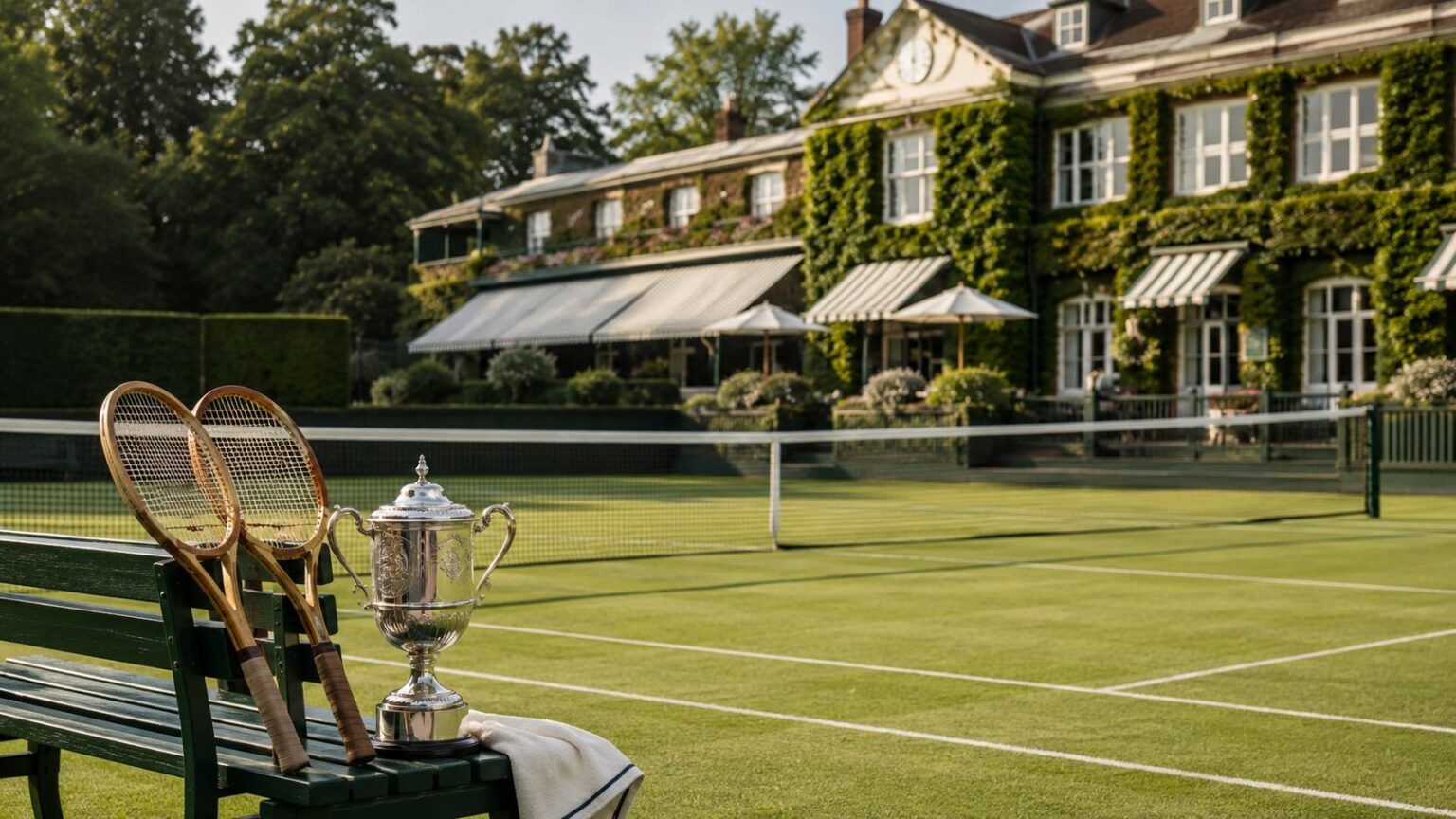
The Grass Is Always Greener on the Club Side
For two weeks every summer, the world’s most watched tennis tournament turns an otherwise ordinary stretch of the SW19 postcode into the sport’s most recognizable stage. The 2026 Wimbledon Championships run June 29 through July 12 — and for private clubs with racquet facilities, that fortnight is less a sporting event than a strategic window. The question isn’t whether to acknowledge it. The question is how deep you let it run through your summer programming. Done well, Wimbledon season functions as a rare natural on-ramp: it gives prospective members a reason to walk onto your property, gives families a reason to enroll their children, and gives your existing members a reason to stay. The clubs extracting the most value from this moment understand something the rest don’t: the tournament is the hook; your programming is the reason they stay. The macro context is unusually favorable. According to the USTA’s 2026 U.S. Tennis Participation Report, U.S. tennis added 1.6 million players in 2025 alone, reaching 27.3 million — the sixth consecutive year of growth since the pandemic-era surge:27.3M
Americans played tennis in 2025 — a record high. Source: USTA 2026 Participation Report
54%
Growth in U.S. tennis participation since 2019
6.5M
Junior players (ages 6–17) active in 2025
53%
Of all players are “core” players — 10+ sessions per year. Source: USTA 2026 Participation Report
The Viewing Event as a Membership Event
The most immediate activation is also the most overlooked: a proper Wimbledon viewing party that functions as a membership cultivation event, not just a member-appreciation social. Structure it deliberately. Wimbledon’s broadcast window (Centre Court typically begins around 8:00 a.m. ET for U.S. audiences) creates natural morning programming — a format that works remarkably well for clubs. Early weekday matches pair with a brunch service, an all-whites dress code request, and strawberries-and-cream in the spirit of the All England Club’s tradition. Weekend finals — the Ladies’ Singles Final is July 11, the Gentlemen’s Final July 12 — merit full-afternoon events with court demonstrations afterward. Invite with intention. The highest-performing clubs treat viewing events as dual-purpose: celebration for members, preview for prospects. One or two dedicated “member-and-guest” tables, with prospective members introduced through existing member referrals, keeps the social temperature authentic. A hard sales pitch inside a tennis party is noise. An elegant afternoon that simply shows someone what life looks like inside the gate is signal. The dress code dimension deserves particular attention. Wimbledon’s all-whites tradition — traced to Victorian-era lawn tennis associations and codified at the All England Club since the Championships’ earliest editions — translates naturally to a club environment. Asking attendees to don whites for a Wimbledon morning isn’t costuming; it’s activating a shared vocabulary that your tennis members already understand and non-members find aspirational.Junior Programs: The Long Game That Pays Immediately
The Wimbledon window lands squarely in the summer youth programming season. That alignment is not incidental — it’s leverage. For clubs building or deepening junior tennis academies, the two-week tournament functions as an external endorsement that makes enrollment conversations dramatically easier. Junior players in the U.S. are playing more frequently than they did pre-pandemic. The USTA data shows that roughly 59 percent of junior players qualify as “core” participants — meaning they’re on a court at least ten times per year. These are not kids who took one free lesson at a municipal park. These are families already investing in the sport, already evaluating where to invest more.Summer Racquet Programming: Member Engagement by Format
The family funnel logic is straightforward: a junior enrolled in a six-week summer tennis academy typically brings two adults who now have a practical reason to be on club grounds five mornings per week. Those adults meet other parents. They try the dining room. They start treating the club as infrastructure rather than an occasional amenity — and they upgrade their membership category accordingly. Club Automation’s industry analysis notes that members who form social ties at a club are significantly more likely to identify as “promoters” who retain their memberships and refer others — a dynamic tennis accelerates naturally because the sport requires at least one other person.
Curriculum matters more than marketing. The clubs seeing the highest junior-to-family conversion aren’t necessarily the ones with the most courts. They’re the ones whose directors of tennis have built a structured developmental ladder — introductory group lessons for ages 6–9, competitive prep for the 10–14 set, and a high-performance track for high-school players pursuing varsity or college tennis. The ladder gives families a reason to stay enrolled year after year rather than treating summer camp as a standalone transaction.
The Round-Robin as a Retention Engine
Internal tournaments and round-robins are among the most cost-efficient programming a club can deploy — low overhead, high social contact, and a built-in reason for members to appear on-property on weekends they might otherwise skip. The format works particularly well against the Wimbledon backdrop. A “Fortnight Championship” — a two-week internal round-robin structured to run in parallel with the Championships, culminating on Finals weekend — creates a narrative arc that elevates an otherwise ordinary club event. Brackets go up the week of June 29. Results are posted daily. The club’s version of a Finals Weekend dinner or mixed-doubles social lands on July 11–12 alongside the live matches. Skill bracketing is critical. Groups formed within roughly half a rating point deliver closer, more competitive matches and substantially better social outcomes. The aim is not to identify your best player — it’s to ensure every member has a match they can win and a group they want to come back to.56%
Higher cancellation risk for members who exercise alone versus those with social ties to fellow club members, per IHRSA research.
IHRSA, via Club Automation
Pro Exhibitions and the Aspirational Dividend
A professional or high-level collegiate exhibition — a visiting USTA-certified pro, a former touring player, a current standout from a regional university program — does something internal programming cannot: it provides an experiential benchmark that recalibrates what members believe is possible on your courts. Positioned correctly, a Wimbledon-week exhibition becomes a campus event. Host it as an evening session after the day’s Centre Court results are in. Open a few spots in a preceding clinic to members who want direct court time. Frame the post-match reception around the Championships — strawberries, Pimm’s or a non-alcoholic equivalent, a replay of the day’s best rally on the clubhouse screen. The event costs a fraction of a gala dinner and generates more member conversation per dollar spent. The aspirational dimension matters for membership development. Non-member guests invited to a pro exhibition leave with a specific, visceral sense of what the club does — not a brochure impression, but a memory. That is a more durable recruitment tool than any direct-mail campaign.Building the Summer Tennis Calendar
Early June
Junior Academy Launch
Six- to eight-week summer programs open enrollment. Tier-based curriculum from introductory through competitive prep. Family membership packages presented at registration.
June 22–28
Pre-Wimbledon Round-Robin Draw
Brackets posted for internal “Fortnight Championship.” Skill groups confirmed. White attire encouraged for all participants through July 12.
June 29
Wimbledon Opens — Viewing Event Launch
Morning brunch + broadcast on clubhouse screens. Member-and-guest format. Strawberries and cream, whites dress code. Pro or tennis director gives brief pre-match remarks.
July 4 Week
Pro Exhibition + Clinic
Evening exhibition match featuring visiting pro or collegiate standout. Limited clinic spots for members before the match. Reception ties back to Wimbledon Finals week narrative.
July 11–12
Finals Weekend — Club Championships Conclude
Internal round-robin finals and mixed-doubles social. Live broadcast of Ladies’ and Gentlemen’s Finals. Awards and membership conversation for prospective members in attendance.
Late July–August
Post-Wimbledon League Play
Capitalize on momentum. Weekly round-robins, inter-club team matches, USTA Junior Team Tennis enrollment for fall season. Junior academy families begin year-round membership conversations.
Free Download
The 2026 Private Club Benchmark Report
The membership, amenity, and pricing data reshaping private clubs — from a 1,200-club analysis. Enter your details and we'll send it to your inbox.