

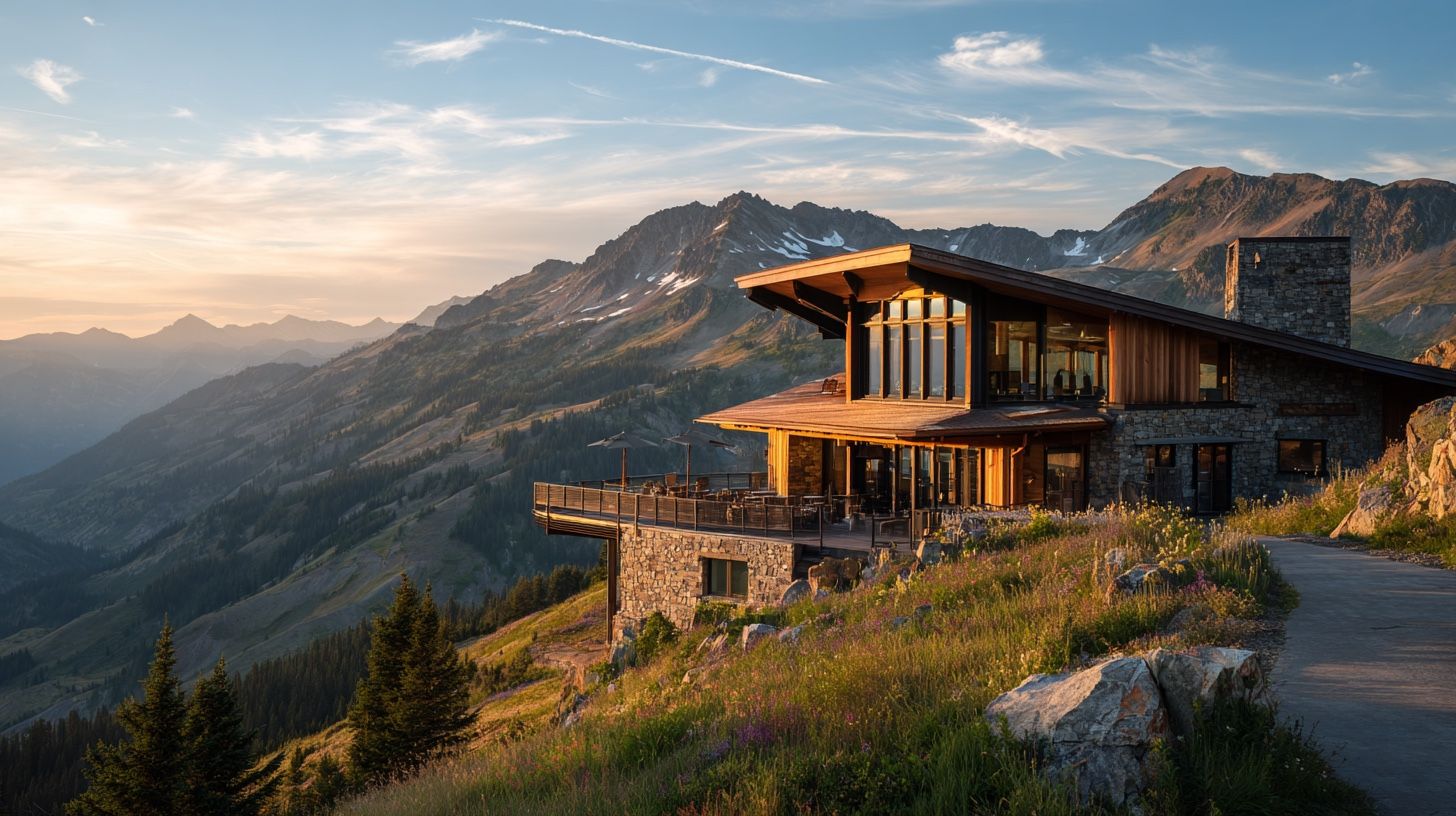
There is a quiet myth in the mountain-club business that winter sells itself. The first storm rolls in, the lifts turn, prospects see the terrain under a foot of fresh, and the memberships follow. It is a comforting story, and it is wrong. By the time the first chair spins, the acquisition window has already closed. The households that will join for the coming season have, in the overwhelming majority of cases, already made their decision — booked their travel, committed their winter, and, if they are buying real estate to access the club, signed months earlier. A mountain club that begins its membership push when the snow flies is not early. It is a full season late.
U.S. ski areas tallied 61.5 million skier visits in the 2024-25 season, up 1.7 percent year over year and the second-highest total since the National Ski Areas Association began counting in 1978, trailing only the record 2022-23 campaign, according to Ski Area Management. Then, in the following winter, 2025-26, national skier visits fell by roughly 14 percent, according to The Ski Guru. Same mountains, same lifts, a wildly different year. The lesson for a membership director is not that snow is unpredictable — everyone in the mountains already knows that. The lesson is that a club whose pipeline depends on conditions is a club that will have a great year and a terrible year in alternating sequence, and never know why. Pre-season marketing is how you decouple your membership results from the weather.
The Window Opens In August, Not October
The private mountain club’s buying cycle runs opposite to its operating cycle. Members ski in January. They decide in September. The gap between those two months is the entire game.
Consider the mechanics of a household evaluating a winter membership. They are weighing a five-figure — sometimes six- or seven-figure — commitment against a season they have not yet seen. They want to tour the property, meet the team, understand the terrain, and, in most residential mountain clubs, evaluate a real-estate purchase alongside the membership itself. None of that happens quickly, and none of it happens well in a January snowstorm when the club is full and the staff is heads-down running operations. It happens in the shoulder season, when a prospect can be hosted properly, walked through the mountain on foot, shown a home site in good light, and given the unhurried attention that a major-commitment sale requires.
This is why the strongest mountain clubs treat August through early November as their primary selling season and the winter itself as fulfillment. The parallel to seasonal DTC businesses is exact: as we have written about wineries running their rosé-season summer wine club push, the most productive acquisition window is the one that precedes the product, not the one that coincides with it. Scarcity and anticipation do the selling. By the time the bottle is open — or the chair is spinning — the transaction should already be closed.
Sell The Season That Isn’t Here Yet
Marketing a mountain club in August requires selling a winter that does not yet exist, to a prospect standing on a green ski run in hiking boots. That is a creative and operational challenge, and the clubs that solve it share a few disciplines.
Lead with the calendar, not the conditions. You cannot promise snow, so do not build your message on it. Build it on the things you can guarantee: the member events already scheduled, the ski-in/ski-out access, the instruction programs, the reserved terrain, the reciprocity, the family programming, the certainty of a place that will be ready when they arrive. A pre-season prospect is buying access and belonging, not a snow report.
Price and package before Labor Day. Initiation structures, dues, guest policies, and any early-commitment incentives should be finalized and in-market by late summer. A prospect who has to wait for pricing is a prospect who drifts. The clubs that convert are the ones that can answer every commercial question in the first conversation.
Host in the shoulder season. The single highest-leverage activity a mountain club can run in September and October is the on-site preview — a hosted weekend, a founder’s dinner, a terrain tour, a real-estate walk. These are labor-intensive and they do not scale, and that is precisely why they work. This is the same lesson private clubs learn every summer about converting seasonal interest into commitment: as we covered in how private clubs capitalize on mid-summer membership momentum, high-touch hospitality in the window before peak season is what turns a curious visitor into a signed member.
Source: NSAA via Ski Area Management and The Ski Guru / NSAA
The Digital Pre-Season: Rebuild The List Before You Buy Attention
Most mountain clubs already possess their best pre-season asset and neglect it: last winter’s data. Every guest who skied on a member’s pass, every real-estate inquiry that toured but did not close, every lapsed member, every event RSVP, and every website visitor who lingered on the membership page is a warm prospect sitting in a system somewhere. The pre-season begins with reassembling that list into a single, prioritized pipeline, ranked by intent. A prospect who requested real-estate information in March and never closed is not a cold lead in August. They are the single most important call the membership director will make all year.
Only after the list is rebuilt does paid acquisition make sense — and it makes far more sense in the shoulder season than in the depths of winter. Advertising a mountain club in January means competing for attention against every resort, every travel deal, and every snow report in the country, at the most expensive and most crowded moment of the year. Advertising in September, when the category is quiet and the high-net-worth buyer is thinking about the year ahead, is cheaper, clearer, and reaches the household while the decision is still open. The mountain clubs that treat late summer as their primary media window, and winter as their fulfillment window, consistently pay less to reach better prospects.
The through-line is that pre-season marketing is a data and timing discipline before it is a creative one. The club that knows exactly who to call, in what order, starting in August, will out-convert a better-funded competitor that waits for the snow and then buys expensive winter attention against a colder list.
The Real-Estate Clock Runs Fastest Of All
For residential mountain clubs, the pre-season imperative is even more acute because the membership is often gated by a property purchase, and property closes on a longer clock than anything else.
The Yellowstone Club near Big Sky, Montana — a private residential ski and golf community — requires members to own property on the mountain. Initiation is reported at roughly $400,000, with annual dues around $60,000, according to a club member’s account reported by the San Francisco Standard. Real estate at the club begins in the millions, according to the San Francisco Standard. Whatever the specific figures at any given club, the structural point holds across the category: when the membership is tied to a home, the sales cycle is measured in quarters, not weeks. A buyer who tours in September might close in November and ski in January. A buyer who first hears from you in December is skiing next year, if at all.
Prime Alpine mountain property is up 23 percent over five years, with wellness and year-round usability — not skiing alone — increasingly cited as a purchase driver, according to Knight Frank’s Alpine Property Report. Top resorts such as Andermatt posted double-digit annual growth, up 14.6 percent, according to Knight Frank. The high-net-worth buyer is in the market year-round, and increasingly for reasons that have nothing to do with the snow. A club that only markets in winter is invisible to that buyer for three quarters of the year.
The Cautionary Tale: Demand Is Not Destiny
Pre-season discipline is not only about capturing upside. It is about survival. The mountain-club landscape is littered with properties that had genuine appeal and still failed, because enthusiasm was never converted into durable, dependable membership revenue.
The Hermitage Club at Haystack Mountain in Wilmington, Vermont — an 838-acre members-only ski and golf resort — closed in 2018 amid a foreclosure action and moved into Chapter 7 bankruptcy proceedings by 2019, according to the Associated Press via Boston.com. The club’s founder defaulted on more than $17 million in loans and was later ordered to pay over $5.4 million in damages for real-estate misrepresentations, according to the Berkshire Eagle. The specifics were unique to that operator, but the broader warning is universal: a mountain club living hand-to-mouth on transactional, weather-dependent, in-season revenue has no margin for a bad winter, a governance failure, or a capital shortfall. The clubs that endure are the ones that convert interest into committed, recurring membership before the season — building a revenue base that a soft snow year cannot erase.
What A Pre-Season Program Actually Looks Like
Translating the principle into a calendar, a disciplined mountain club runs its membership year roughly like this:
- June–July: Finalize pricing, packages, and incentives. Rebuild the prospect list from last winter’s guests, real-estate inquiries, and lapsed leads. Refresh photography — the club shot in summer green sells the lifestyle; the club shot in winter sells the sport, and you need both.
- August: Launch the pre-season campaign. Open the shoulder-season preview calendar. Begin one-to-one outreach to the highest-intent prospects, prioritizing anyone with an open real-estate consideration.
- September–October: Host. This is the conversion engine — preview weekends, founder dinners, terrain and home-site tours. Every high-value prospect should be on the mountain, in person, before the first storm.
- November: Close. Convert hosted prospects, finalize real-estate contingencies, and lock the coming season’s roster before the lifts turn.
- December–March: Fulfill and delight. Winter is when you make members so happy they refer the next cohort — seeding next August’s pipeline while this one skis.
The clubs that follow this rhythm stop living and dying by the snow report. They know their winter roster in November, they carry a real-estate pipeline through the shoulder season, and they treat the operating season as a referral and retention engine rather than a scramble to sell.
Season passes account for 46 percent of total lift revenue industry-wide, according to Ski Area Management — a recurring, pre-committed revenue base that a soft snow year cannot erase.
The Private Club Partnership Opportunity
Pre-season is where mountain-club marketing and Private Club Marketing’s core disciplines converge. The challenge — selling a high-consideration, high-net-worth membership in the months before the product is even visible — is precisely the seasonal, relationship-driven acquisition problem PCM works on across verticals, from wine-country DTC to golf and country clubs to residential communities.
Three areas of that work map directly onto the mountain vertical. First, membership marketing built around a defined acquisition window rather than year-round drift: a real campaign calendar, a rebuilt prospect list, and a conversion path that closes before the season, not during it. Second, seasonal programming and hospitality design — the shoulder-season preview weekends, founder dinners, and terrain tours that do the actual converting, engineered to feel effortless to the guest and to produce a signed membership for the club. Third, cross-club high-net-worth reach: the same households evaluating a Montana ski membership are buying wine allocations, golf memberships, and second homes in the same year, and PCM’s cross-vertical presence lets a mountain club get in front of qualified buyers who are already inside the private-club world — long before a competitor’s winter brochure ever reaches them.
The mountain clubs that win the coming season are not the ones hoping for a big snow year. They are the ones who did the work in August.
Free Download
The 2026 Private Club Benchmark Report
The membership, amenity, and pricing data reshaping private clubs — from a 1,200-club analysis. Enter your details and we'll send it to your inbox.