
When the Calendar Shifts, the Register Opens
Memorial Day weekend arrives and something reliable happens inside the American wine industry: the rosé moves. Coolers restock, tasting rooms fill, and the consumers who’ve been quietly on a winery’s waitlist all winter suddenly have a reason to act. Summer is not incidental to winery revenue — for the wineries managing it deliberately, it is the most productive acquisition and retention window of the year. That window matters more now because the underlying market has tightened considerably. According to the SVB State of the US Wine Industry 2025, direct-to-consumer wine volume fell 9.5% on a trailing twelve-month basis, with value down 4.1%. Global wine consumption has contracted roughly 12% from its 2007 peak (Knight Frank Wealth Report 2025). Yet inside that contraction, a specific channel is still growing its share: the wine club, which now accounts for 39% of all DTC sales — the largest single channel, having surpassed tasting room revenue for the first time in 2022 and widened the gap since (SVB State of the US Wine Industry 2025 / Sovos ShipCompliant). The wineries gaining ground in this environment are not doing it through broader distribution. They’re doing it through seasonal programming, smarter allocation mechanics, and a renewed emphasis on the experiential gap between club membership and a simple retail purchase. Summer is where that gap becomes most legible to a prospective member.$3.94B
US DTC Wine Sales, 2024 · Sovos ShipCompliant
39%
Wine Club Share of DTC · SVB / Sovos ShipCompliant
$56.78
Avg. DTC Bottle Price, 2025 +11% YoY · SVB / Sovos ShipCompliant
$521
Avg. DTC Order Value, 2025 · SVB / Sovos ShipCompliant
The Rosé Calendar Is a Membership Funnel
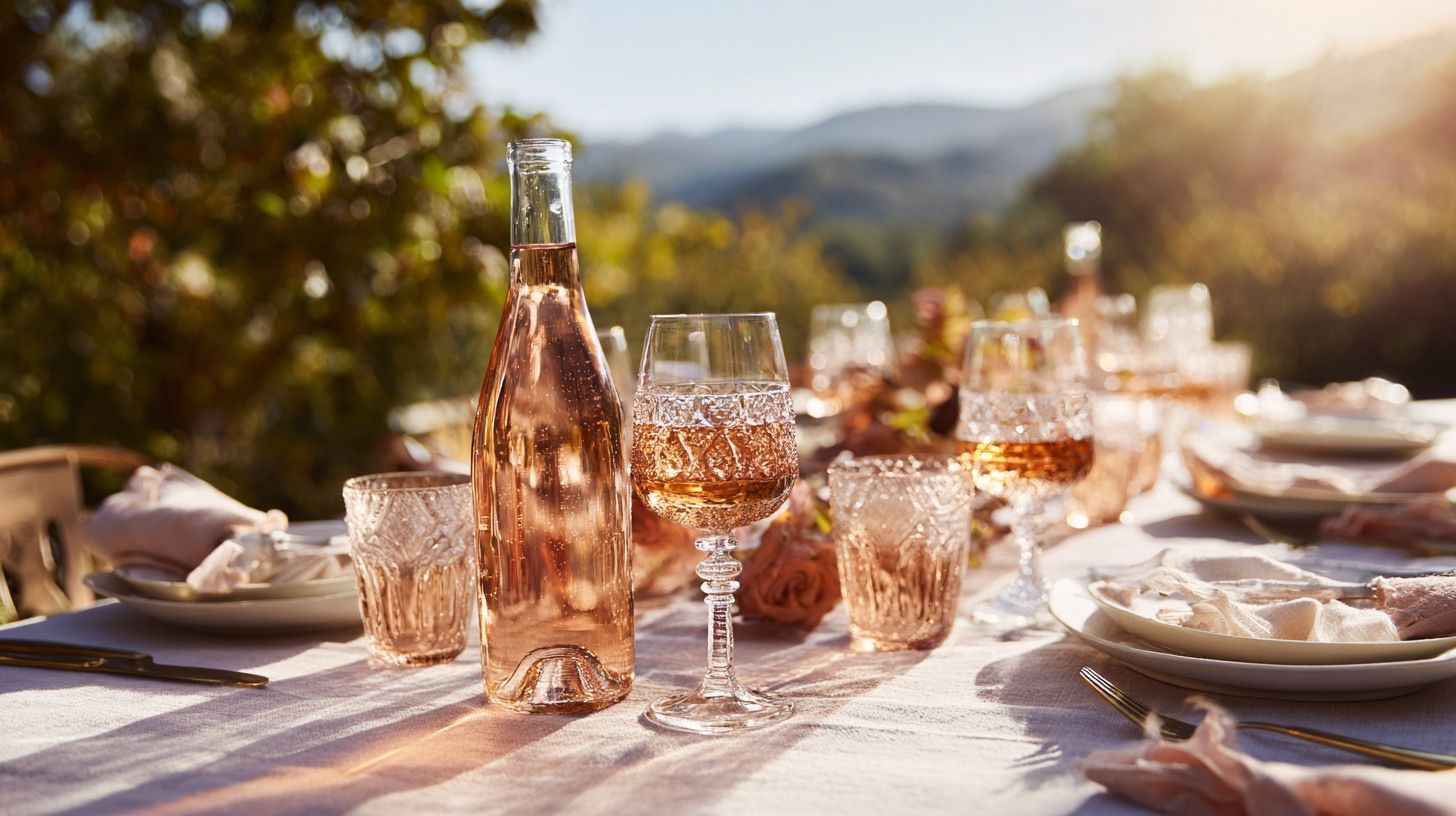
Rosé has become, practically speaking, a seasonal onboarding vehicle. The category carries lower price resistance, broad appeal across age cohorts, and an implicit sense of occasion — all useful properties when a winery wants someone in its tasting room to commit to a recurring relationship rather than a one-time purchase. The mechanics are not subtle: a limited summer rosé, available only through club membership or a waiting list, creates the kind of scarcity that motivates sign-ups the way a standard tasting menu cannot. Across premium American producers, summer release timing — typically April through June for rosé, with club fulfillment preceding any retail availability — functions as the year’s first major acquisition push. The SVB 2025 report notes that tasting room conversion rates run 8–10% industry-wide, with rural and destination properties reaching as high as 25%; summer events are the primary driver of that higher end. Three Sticks Wines in Sonoma has put this into practice in a specific way. Rather than a conventional pickup party, the winery stages intimate rosé receptions followed by five-course wine-paired dinners at El Dorado Kitchen in Sonoma — events capped at 20 guests and, per Sonoma Magazine’s reporting, fully booked the day they’re posted. That kind of event does not just retain existing members; it demonstrates to prospective ones exactly what club access looks like in practice. Sauvignon Blanc and Pinot Grigio posted the strongest volume growth of any varietals tracked in the SVB 2025 data — +8.5% and +8.0% respectively — which points toward the same consumer behavior driving rosé demand: a summer shift toward lighter, colder, and more food-flexible wines. Wineries with club programs built around a summer white or rosé allocation are positioned at the intersection of that trend and the membership funnel.Allocation Waitlists: Scarcity as Retention Strategy
Among the most effective revenue tools in winery DTC is the allocation model, where membership is not simply purchased but earned through a waitlist. When a club is full, the waitlist itself communicates value to existing members — they are holding access to something others are waiting for. That dynamic is familiar from private club membership generally, and it translates directly to wine programs. Kobler Estate Winery in Sebastopol, Sonoma County, keeps its club deliberately small at 150 members, offering shipment customization by varietal preference, complimentary overnight stays in guest suites, and occasional private barrel projects for long-standing members — all on an allocation basis with a standing membership waitlist, per Sonoma Magazine’s reporting. The result is a program where cancellation carries a real cost to the departing member that a mass-market subscription never could. The contrast with industry-average retention is instructive. According to the SVB 2025 data and Wine Market Council research cited by PCM, the typical wine club retains 64–77% of members annually — well below the 92–94% annual retention that well-managed private clubs achieve. The gap is not inevitable; it reflects program design. Clubs running allocation models and tiered access — where a summer release or a winemaker dinner is genuinely reserved for members at a specific level — report retention rates trending toward the high end of that range.39%
OF DTC
According to the SVB State of the US Wine Industry 2025 and Sovos ShipCompliant, wine clubs account for 39% of all US direct-to-consumer wine sales — the single largest DTC channel, surpassing tasting rooms for the first time in 2022.
What Drives Members Out — and What Keeps Them
The cancellation data shapes everything. Among departing wine club members, the leading stated reason is “better deals elsewhere,” cited by 48% of churned members in 2025 — up sharply from 31% in 2022. “Too expensive” follows at 33%, “lack of personalization” at 28%, and “poor communication” at 22% (SVB / Sovos ShipCompliant; PCM analysis). Read together, these numbers describe a member who was acquired on price and never given a non-price reason to stay. Summer programming is one of the clearest non-price reasons to stay. A member-exclusive harvest dinner, a reserve tasting of unreleased library wine, or first-access allocation of a summer bottling that never reaches retail — these benefits are not fungible. They cannot be price-compared to a competitor’s promotional offer. That is precisely their value as retention tools. The SVB 2025 report notes that wineries offering preference-based shipment customization reduce first-year cancellations by approximately 34%, while those providing three or more non-product benefits boost overall retention by roughly 22%. Summer events are the most natural vehicle for non-product benefits: they deliver experience, social connection, and the kind of insider access that wine club members say they are paying for — even when they’re not.Top Wine Club Cancellation Reasons (2025)
The Private Club Partnership Opportunity
One underutilized summer revenue channel sits at the intersection of wineries and private clubs: the curated wine partnership. For a country club or city club with an active food and beverage program, a winery relationship that gives members access to exclusive summer pours — bottles that aren’t on the restaurant list, poured at a member-only event or reserved for a club allocation — imports exactly the kind of scarcity logic that drives winery club memberships into a setting already built for it. For the winery, the equation is equally clear. The SVB 2025 report data shows that 75% of wineries source club members from the tasting room — meaning acquisition is overwhelmingly in-person and experiential. A partnership with a private club that delivers curated bottles to high-net-worth members, accompanied by a winemaker or sommelier presentation, replicates the tasting room dynamic in a controlled, pre-qualified audience. Wine Market Council research shows nearly half of wine club members earn over $200,000 annually, and more than three-quarters belong to more than one club; private club members are already in that cohort (Wine Market Council, 2024 Wine Club Study). Far Niente, the Napa Valley winery established in 1885, structures its club offering across eight distinct tiers — from the Dolce Far Niente Society (four bottles, four shipments annually, $400–$615 per shipment) to the Cave Club, which delivers twelve-bottle allocations twice annually at $1,800–$2,900 per shipment. Each tier includes member-exclusive access to limited releases that never reach retail. That tiered architecture maps naturally onto the membership ladder logic that private clubs already use — and creates a template for how a club’s wine program could be positioned to its own membership as a benefit rather than simply a line on the beverage menu. Gary Farrell Winery in Healdsburg took a different approach in spring 2025, launching its “Sonoma Subscription” — a simplified four-bottle program at a $150 flat rate on a flexible schedule — as a lower-barrier entry point designed to convert event attendees who aren’t yet ready for a full allocation commitment, per Wine Industry Advisor’s reporting on the winery’s March 2025 launch. The flexibility is deliberate: wineries that followed up with event attendees within 48 hours saw the strongest club conversion rates, according to DTC platform data from Orderport (2025).$72
The average reserve tasting fee at US wineries in 2025 — a 200% increase since 2012 — making member-included tastings one of the most tangible and communicable club benefits.
SVB State of the US Wine Industry 2025
Running the Summer Window Well
The operational case for summer investment is not complicated. Tasting room traffic fell approximately 5.1% in 2024 according to SVB 2025 data, and that trend has continued into 2025 — meaning fewer walk-in acquisition opportunities per year. The summer months represent the highest-traffic window for most wine country destinations, and the one period when a prospective member is most likely to be physically present, in a social context, without the friction that a cold digital pitch carries. The wineries converting that traffic into long-term club revenue are the ones treating summer as a structured program rather than a high-season windfall. That means a rosé or summer white release timed to land in club members’ hands before any retail availability; invitation-only events that are genuinely limited and genuinely better than what a non-member can access; and follow-up within the 48-hour window that research consistently identifies as the conversion threshold. For private clubs evaluating their own wine program or a winery partnership, the summer window creates a natural pilot moment: a member-exclusive summer pour paired with a targeted communication, offered at the pool or at a member dinner, is a low-risk test of whether the club’s own membership responds to allocation-style access. The data from wine clubs suggests it will. The DTC channel has spent fifteen years learning that scarcity, experience, and personalization drive retention more reliably than price. Private clubs built their entire model on that same premise.Free Download
The 2026 Private Club Benchmark Report
The membership, amenity, and pricing data reshaping private clubs — from a 1,200-club analysis. Enter your details and we'll send it to your inbox.