
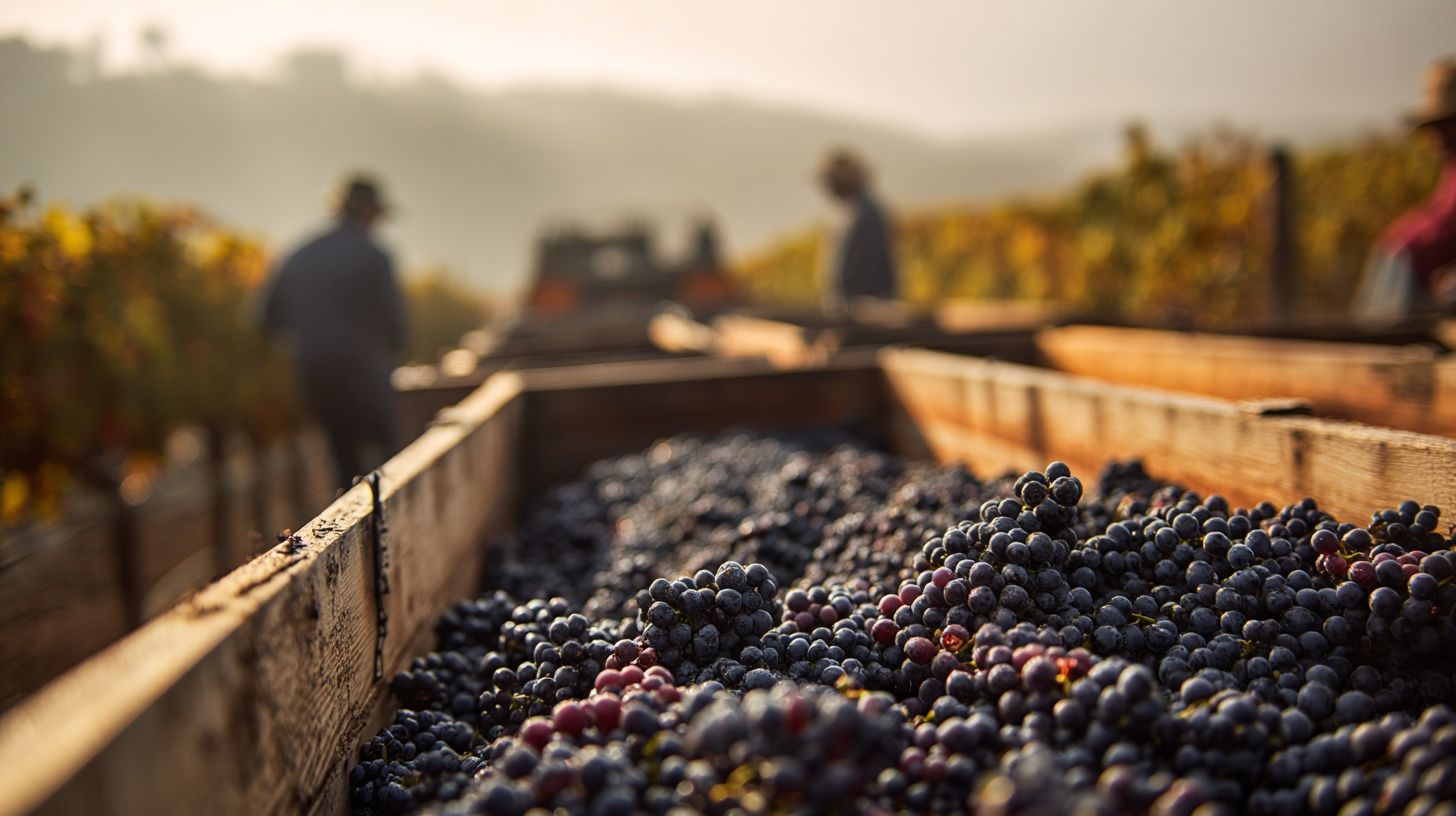
The fruit comes in over roughly six weeks. Somewhere between late August and early October, depending on the block and the varietal, the crush pads run around the clock, the cellar smells of fermenting must, and the entire economic engine of the property is visibly, physically at work. For most wineries this is the busiest operational stretch of the year. For the marketing calendar, it is the single most underused acquisition window on the books.
Harvest is theater with a purpose. A prospective member who watches fruit sorted, presses run, and a new vintage begin its life has been given something no email drip can manufacture: proximity to the making of the thing they are being asked to commit to. In a year when the industry has spent eighteen months in retreat, that proximity is not a nicety. It is the difference between a club that grows and one that quietly bleeds members every quarter.
A contracting market makes the acquisition window matter more, not less
The backdrop is sober. The 2026 Direct-to-Consumer Wine Shipping Report from Sovos ShipCompliant and WineBusiness Analytics found the DtC winery channel contracted by roughly 967,000 cases in 2025, a 15 percent drop in volume and a 6 percent decline in value, which the authors called the most challenging year since the report began in 2010. Silicon Valley Bank’s 2026 State of the U.S. Wine Industry Report put total U.S. wine volume near 329 million cases, down from about 336 million the year prior.
Read those numbers the wrong way and you conclude it is a bad time to sell memberships. Read them correctly and you see the opposite. When the overall pie shrinks, the wineries that win are the ones capturing a larger share of a smaller, more committed audience. SVB’s report is blunt on this point: tasting rooms and wine clubs now account for 53 percent of the average winery’s sales, and in some regions direct-to-consumer channels carry as much as 78 percent of revenue. The club is no longer a loyalty perk bolted onto a wholesale business. For the healthiest producers it is the business.
The performance gap tells the rest of the story. SVB’s 2026 report found top-quartile wineries grew sales roughly 8 percent in 2025 while the bottom quartile declined more than 10 percent. The dividing line was not terroir or scores. It was whether the winery treated its club as the core revenue engine and organized its year around feeding it. Harvest is the richest feeding opportunity the calendar offers.
Why harvest converts when a Tuesday tasting does not
Conversion is the whole game, and most wineries are leaving it on the table. Industry benchmarks put tasting-room-to-club conversion in roughly the 1-to-5-percent range for a typical property, while SVB-linked data shows top-performing wineries converting 8 to 10 percent of visitors. The gap between those two numbers is worth a full membership tier to most estates.
Harvest closes that gap because it changes what the visit is. A standard flight is a transaction. A harvest experience is an initiation. When a guest crushes a bin of fruit by hand, tastes fermenting juice straight from the tank, or eats a grower’s lunch among the vines during picking, the purchase decision reframes from “do I want more of this wine” to “do I want to belong to this place.” That reframing is exactly the shift the SVB report describes when it advises treating DTC as a loyalty engine rather than a sales channel.
It also aligns with who is actually buying. The Wine Market Council’s 2025 U.S. Wine Consumer Benchmark Segmentation Survey found that Millennials now make up 31 percent of U.S. wine drinkers, ahead of Baby Boomers at 26 percent (down from 32 percent in 2023) and Gen Z at 14 percent. These are experience-first buyers who join brands they feel they know. Harvest is the most authentic access a winery can offer, and authenticity is precisely the currency this cohort spends. Our companion piece on rosé season and the summer wine club makes the seasonal-programming case for the warm months; harvest is that argument’s autumn counterpart, and the higher-intent one.
Source: Wine Market Council Wine Consumer Benchmark Segmentation Survey.
Build the harvest calendar as an acquisition funnel, not a party
The mistake is treating harvest events as celebrations that happen to sell some wine. Structure them instead as a funnel with a defined entry point, a conversion moment, and a retention hook.
Entry: the open crush. Pick-and-crush mornings, punch-down demonstrations, and barrel-sample sessions bring prospects onto the property at the exact moment the estate is most alive. These are your top-of-funnel events. Price them as experiences, not tastings, and design every one to seat a membership conversation naturally rather than as a pitch at the register.
Conversion: the allocation offer. Harvest is when the coming vintage becomes real, and it is the honest moment to introduce allocation. Position club membership as the mechanism by which guests secure access to the wine they just watched being born. Scarcity is not manufactured here; the fruit is finite and everyone on the crush pad can see it. That legitimacy is why harvest allocation offers convert better than an off-season email blast promising the same wine.
Retention: the fall release cadence. The 2026 DtC report noted average price per bottle shipped rose 11 percent even as volume fell, meaning the buyers who remained traded up. Your fall release schedule is where you capture that behavior. Sequence releases so new members receive their first allocation within weeks of joining at harvest, closing the gap between the emotional peak of the visit and the first shipment. The longer that gap, the more first-year attrition you invite, and average club tenure has slipped from 36 months to about 30 industry-wide. The first ninety days decide whether a harvest signup becomes a multi-year member.
The fall release calendar is a retention instrument
Most wineries think of releases as sales events. The disciplined ones use the fall calendar as a retention system. A member who joined during the crush should have a mapped sequence ahead of them: the current-vintage fall release, a library or reserve offer timed to the holidays, and an early look at the wine they saw made, delivered the following spring or summer. Each touch is a reason to stay that was promised at the moment of joining.
This is also where allocation discipline protects margin. Sovos found the largest producers, those shipping 500,000-plus cases annually, saw DtC volume fall 23 percent in 2025, while Napa County held DtC shipment value up 1 percent even as its volume slipped 8 percent. The lesson for club operators is that defending price beats chasing volume. A well-run fall allocation, offered first to members and structured so the most sought-after wines require tenure or tier to access, trains members to value the membership itself rather than the discount. That is the mechanism our wine club retention playbook examines in depth, and harvest is where the tenure clock starts.
Start the plan in July, not September
The operational reality of harvest is that no one on the property has spare attention once the fruit is coming in. The crush pad consumes the winemaking team, and the tasting room is fielding walk-ins. If the acquisition program is not built, staffed, and scripted before the first pick, it will not happen, and the window will close with another year’s prospects unconverted.
That means the harvest acquisition calendar belongs to the summer planning cycle. Decide by midsummer which events are top-of-funnel and which are conversion moments, train tasting-room and hospitality staff on the allocation conversation before they are overwhelmed, and pre-build the fall release sequence so a member who joins during the crush receives their welcome allocation on a schedule that is already set. The wineries that treat harvest as a marketing program rather than an operational scramble are, unsurprisingly, the ones capturing the 8-to-10 percent conversion the top performers post, per SVB-linked benchmark data. The advantage is almost entirely in the preparation. SVB’s Rob McMillan framed the coming year by saying the worst is behind the industry; the wineries that act on that with a built harvest funnel, rather than waiting for the recovery to arrive on its own, are the ones who will feel it first.
The Private Club Partnership Opportunity
Harvest is a story that private clubs are unusually well positioned to co-tell, and Private Club Marketing sits at the intersection where that partnership pays off for both sides.
For wineries, the acquisition math is straightforward: the highest-value prospective members are affluent, experience-driven, and already members of something. Private club membership rosters are among the most concentrated pools of exactly that buyer. PCM’s cross-club reach lets a winery place a curated harvest experience in front of high-net-worth members across a national network of golf, city, and lifestyle clubs, turning a regional crush event into a national acquisition channel without the winery building that distribution itself.
For clubs, the harvest experience is premium seasonal programming that members cannot easily arrange on their own. A private crush weekend, an allocation reserved for the club’s membership, or a fall release dinner featuring a winery partner gives the membership director a genuinely differentiated fall event and gives the club a reason to reach dormant members. PCM helps clubs on both the membership-marketing and the waitlist-and-allocation side of this: structuring the invitation so it drives attendance, positioning club-exclusive allocations as a benefit of belonging, and building the seasonal programming calendar so harvest anchors the fall the way a rosé program anchors the summer.
The connective tissue is allocation strategy. Both a winery club and a private club run on the same emotional engine: access that has to be earned and cannot be bought at scale. PCM’s work with membership marketing, waitlist and allocation design, and cross-club high-net-worth reach lets a harvest partnership function as one coordinated program rather than two organizations improvising a dinner. Done well, the winery gains members it would never have met, the club gains programming it could not have built alone, and the member gains proximity to the crush that turns a Tuesday buyer into a multi-year one.
The fruit comes in once a year. The window to convert what it represents into membership is roughly six weeks wide. The wineries and clubs that plan for it in July are the ones still growing when the SVB report says the worst is behind us.
Sources
- Sovos ShipCompliant and WineBusiness Analytics — 2026 Direct-to-Consumer Wine Shipping Report — DtC winery channel contracted by roughly 967,000 cases in 2025, a 15% drop in volume and 6% decline in value, the most challenging year since the report began in 2010; average price per bottle shipped rose 11% year over year
- Silicon Valley Bank — 2026 State of the U.S. Wine Industry Report — total U.S. wine volume near 329 million cases, down from about 336 million; tasting rooms and wine clubs account for 53% of the average winery’s sales, and up to 78% of revenue in some regions; top-quartile wineries grew sales ~8% in 2025 while the bottom quartile declined more than 10%
- Wine Market Council — 2025 U.S. Wine Consumer Benchmark Segmentation Survey — Millennials now 31% of U.S. wine drinkers, ahead of Baby Boomers at 26% (down from 32% in 2023) and Gen Z at 14%
Free Download
The 2026 Private Club Benchmark Report
The membership, amenity, and pricing data reshaping private clubs — from a 1,200-club analysis. Enter your details and we'll send it to your inbox.