
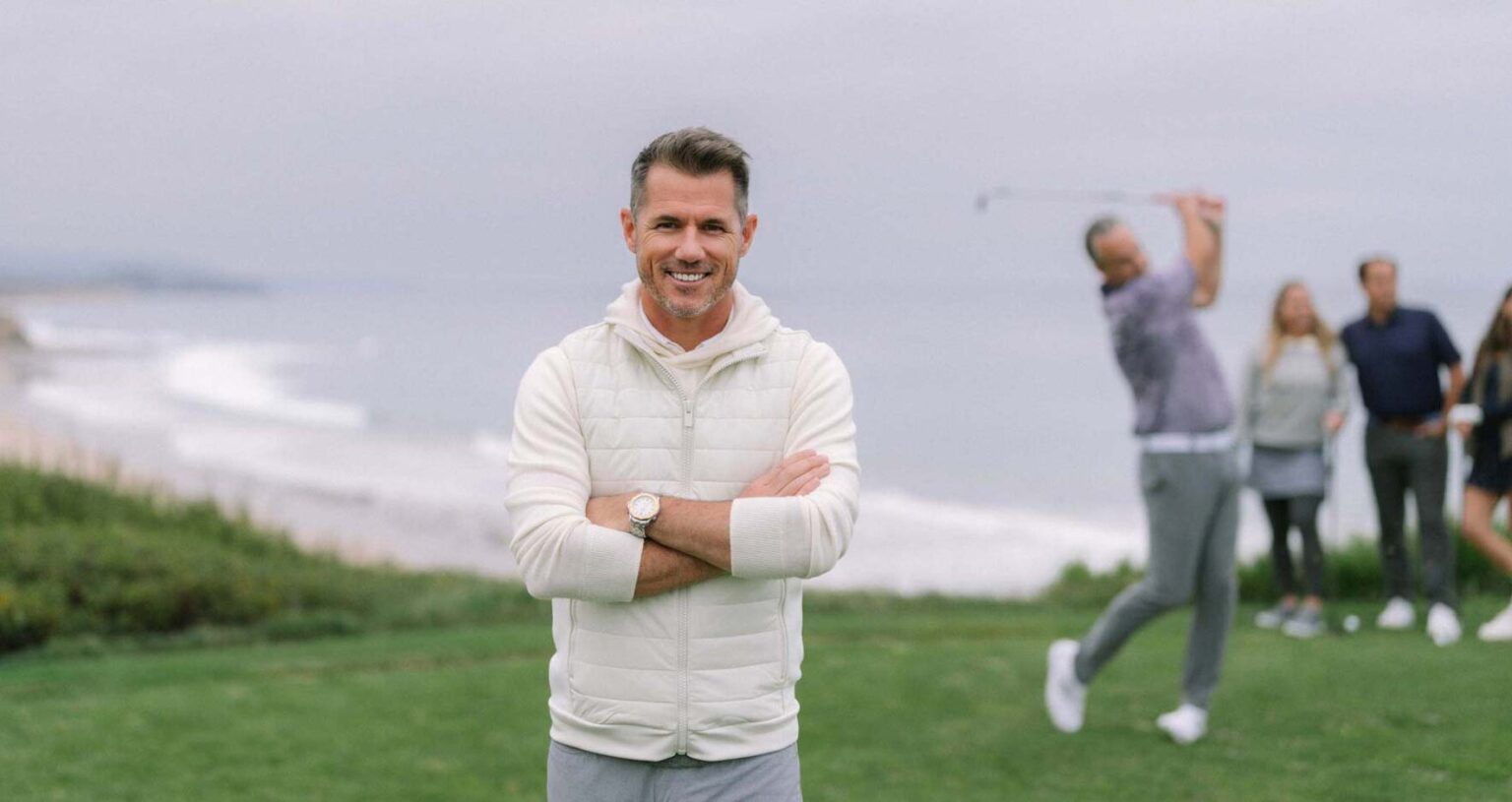
For more than two decades, Zack Bates has been one of the most recognized voices in the private club industry. As our founder, he has led work with more than 200 clubs nationwide, generated over $100 million in membership revenue, and advised on half a billion dollars in capital projects. He has been featured in the Wall Street Journal, the New York Times, Forbes, and the Financial Times, and was named to the Top 25 Luxury Digital People by Verb Brands.
But for all the press mentions and client logos, most of the people reading our emails each week have never heard the full story. So we sat down with Zack and asked him the questions we hear most from club leaders: How did this all start? What have you actually learned? And where is the industry headed?
Here is that conversation.
Let’s start at the beginning. How did you get into the private club industry?
Honestly, by accident. I was 22, in college in Los Angeles, and I didn’t want to go home for the summer. So I applied to be a lifeguard at Porter Valley Country Club. After I dropped off my resume, a gentleman walked out to the parking lot with me and started asking questions — what I was applying for, why I wanted to work there.
I told him I’d won an award in high school working at a waterpark and had been promoted to supervisor at 16 — managing lifeguards who were 18 and 19 years old. He listened, and then told me he was the Western Regional General Manager for ClubCorp. He had another club on the other side of town — Braemar Country Club, recently rebranded as Mulholland Club — and needed someone to run the aquatics program and the summer kids’ camps.
Right there in the parking lot, he explained that he had a $150,000 hole in the summer program he needed fixed. I asked if I could design a brochure to send out to the membership over spring break — well ahead of summer — to promote the swim and camp programs. We sold out the entire summer before it started.
That summer, I got to know many of the members and started referring them to the membership team to upgrade from social or tennis memberships to full golf. I was 22 years old. I had no idea what I was getting into — but I was already selling memberships.
In the off season, I started working weekends answering the phones at the front desk. Then I was assisting the membership and member relations directors. I started the club’s first wine club. Eventually I was designing all of the club’s marketing materials. Nobody asked me to do any of it — I just kept raising my hand.
But I fell in love with the industry — and I had enormous respect for the people running these operations. What I kept noticing, though, was that the marketing never matched the quality of the experience inside the club. You had these beautiful properties, incredible programming, real communities — and the way they were presenting themselves to the outside world was a tri-fold brochure and a classified ad in the local paper. These places deserved better.
How Zack Bates Started Private Club Marketing
So you went from lifeguard to Director of Membership. Then you left to start your own firm?
I worked my way up over the years and ended up as the Director of Membership and Retention at Shady Canyon Golf Club. I loved the work, and I learned everything about how clubs actually sell memberships from the inside. I worked at clubs with initiation fees ranging from $5,000 all the way up to $300,000 — and I kept seeing the same gap at every single one. Incredible experiences, no real marketing infrastructure to match. In 2009, I decided to go build it myself.
So it was me, a laptop, and a list. No clients. No budget. No reputation.
Every night I’d get home around six or seven o’clock and sit at my kitchen table until one, two in the morning — building a database. By hand. I went through every private club I could find in the country, found the general manager, the membership director, the marketing person, and put them in a spreadsheet.
Then I started emailing them. Not pitching them. Not selling them anything. I was sharing best practices. Here’s an event that worked. Here’s a retention strategy. Here’s how we drove 40 new members in a quarter. Just giving it away.
And the phone started ringing.
It hasn’t stopped in 16 years.
Build the list. Share your value. Let the phone ring. That’s not a marketing strategy. That’s a life strategy.
— Zack Bates
That database became 18,000 club professionals. That kitchen table operation became a firm that’s worked with over 200 of the top private clubs and resorts in the world. We’ve partnered with brands like LVMH, Ferrari, Aston Martin, The Macallan. We’ve been covered in the Financial Times, the Wall Street Journal, the New York Times. On one project alone, we generated $25 million in membership sales.
And every bit of it — every partnership, every project, every press mention — traces back to the same thing: I built a network, I nurtured it with intention, and I never once made it feel like a sales pitch.
The recession didn’t slow things down?
It accelerated them. Clubs that had never had to market themselves suddenly needed to. Waitlists evaporated overnight. For the first time, General Managers and boards were asking: “How do we actually attract new members?” That question didn’t exist for a lot of clubs before 2008. It’s been the central question ever since.
The Marketing Problem
You talk about a “marketing problem, not a demand problem.” What does that mean?
There are more qualified, affluent people who would genuinely value a private club membership than most clubs realize. The population is there. The demand is there. What’s missing is the infrastructure to reach them — the right message, the right channels, the right follow-up.
Most clubs are still relying on word of mouth and hoping their existing members will do the selling for them. That works when you have a ten-year waitlist. It doesn’t work when you’re trying to fill 200 spots.
The private club industry doesn’t have a demand problem. It has a marketing problem.
— Zack Bates
How the Industry Has Changed
You’ve worked with over 200 clubs now. How has the industry changed?
Night and day. When I started, most clubs didn’t have a website worth visiting. Email marketing was a PDF attachment. Social media was nonexistent. The idea that a private club would run a digital ad campaign was borderline offensive to some boards.
Today, the clubs that are thriving are the ones that figured out they’re competing for attention like everyone else. Your prospective member isn’t comparing you to the club down the road — they’re comparing their experience of discovering your club to how they discover everything else in their life. If your first impression is a 2012 website with a stock photo of a golf hole, you’ve already lost.
Your prospective member isn’t comparing you to the club down the road — they’re comparing their experience of discovering your club to how they discover everything else in their life.
— Zack Bates
The other big shift is generational. Boards are getting younger. New members are in their 30s and 40s, not just their 60s. They expect a different level of communication, transparency, and digital experience. The clubs that understand that are growing. The ones that don’t are wondering why their average member age keeps climbing.
What PCM Does
Walk us through what PCM actually does for a club.
It depends on where the club is. Some clubs come to us because they need members — they have open spots and they need to fill them. That’s a membership growth engagement: strategy, positioning, digital campaigns, lead nurturing, sales process consulting. We build the entire pipeline from awareness to application.
Other clubs come to us because they’ve already got the members but their communications are stale. Their email open rates are in the single digits. Their website doesn’t reflect who they actually are. Their social media is an intern posting photos of the sunset. That’s a different engagement — more brand, content, and digital transformation.
And then there are the big projects. Capital campaigns, major renovations, rebranding after a merger or acquisition. We’ve advised on over $500 million in club development projects. Those engagements are more strategic — positioning the project to the membership, building community support, managing the narrative.
But the through-line across all of it is the same: we help clubs communicate who they are to the people who should care.
Why Zack Bates Built ClubCRM
You also built a technology platform — ClubCRM. Why build your own software?
Because we kept running into the same problem. We’d build a beautiful marketing strategy for a club, and then they’d have no way to execute it. Their membership director was tracking prospects in a spreadsheet. Their email marketing was going through a tool designed for e-commerce brands. There was no system built for how private clubs actually operate.
Most people in membership sales are reactive. They’re waiting for the phone to ring. They get a lead, they follow up once, maybe twice — and then life gets busy and that lead disappears. There’s no system. There’s no database. There’s no follow-up sequence. And there’s no way to even see where things fell apart — because nothing was tracked.
At a mid-tier private club, one membership is a $50,000 initiation fee. The cost of not having a system isn’t theoretical. It’s five and six figures walking out the door every year — and you don’t even know it’s happening.
At a mid-tier private club, one membership is a $50,000 initiation fee. The cost of not having a system isn’t theoretical — it’s five and six figures walking out the door every year, and you don’t even know it’s happening.
— Zack Bates
So we built ClubCRM. Membership pipeline tracking, email campaigns, website visitor identification, engagement scoring — the operational backbone that makes the strategy work.
Launching LXV
You also launched LXV. It’s a different kind of business than PCM or ClubCRM — why build it?
For 16 years, PCM has worked almost entirely on the B2B side of this industry. We’ve helped clubs acquire members, build brands, modernize how they operate. Hundreds of clubs, billions of dollars in membership revenue and capital projects. But we’ve never had a direct relationship with the people those clubs are actually trying to reach — the members themselves.
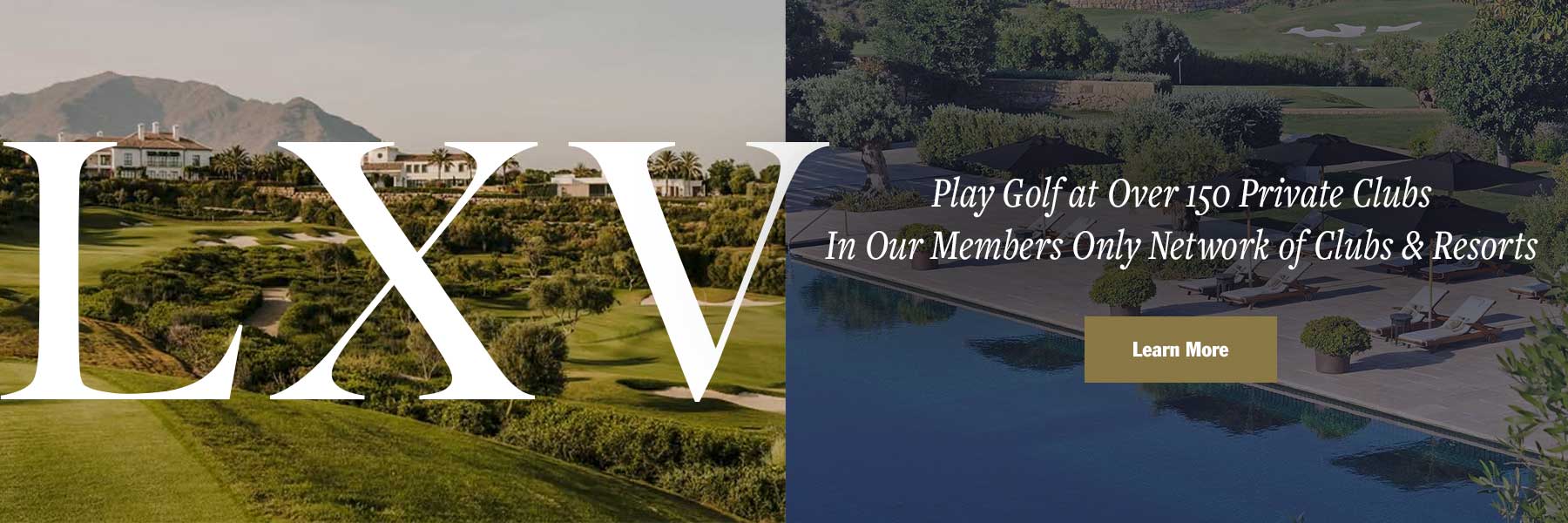
LXV is how we built that relationship. It’s our move into the consumer side of the business — a private membership network that connects affluent individuals to golf, travel, and luxury experiences no single club alone can offer.
The reason that matters: almost all of the innovation in this industry happens behind the scenes. At the board level. In the membership office. In the operations playbook. The members themselves — the actual consumers paying six-figure initiation fees — have very little voice in how the industry evolves. LXV flips that. It’s built for them, not just for the clubs they belong to.
Strategically, it closes the loop for everything else we do. Our club partners get a direct pipeline to engaged, qualified luxury consumers. Our members get access they couldn’t assemble on their own. And for the first time, we’re hearing directly from the consumer side of the table what the next generation of private club members actually wants — which makes every other piece of what PCM does sharper.
For sixteen years we served the clubs. LXV is how we serve the consumer.
— Zack Bates
The Biggest Marketing Mistake
What’s the most common mistake you see clubs make with their marketing?
Talking about themselves instead of talking about the prospect. Most club marketing reads like a Wikipedia entry. “Founded in 1927, our club features an 18-hole championship golf course designed by…” Nobody cares. Prospective members want to know what their life looks like if they join. What their Saturday mornings feel like. Who they’re going to meet. What their kids are going to experience.
The best club marketing doesn’t describe the club. It describes the lifestyle.
The Instinct
Was this always the plan? Did you always know you’d end up building all of this?
I think the instinct was always there. When I was 16, I wanted to run the 1500 meters in the Olympics. But nobody knew who I was. So I went on every college website in the country — Division I, II, III — found the track coach, built a spreadsheet, created a one-page flyer about myself, and emailed every single one of them. Every day.
I didn’t make the Olympic team. But I did get a full-ride Division I scholarship.
Same playbook. Build the list. Share your value. Let the phone ring. I’ve been running that play my entire life — I just didn’t know what to call it until I built a company around it.
What’s Next for Zack Bates and PCM
What’s next for PCM?
More of what’s working, and deeper. We’re doubling down on ClubCRM — building AI tools for lead scoring, send-time optimization, and member health prediction. We’re scaling LXV, our consumer-facing membership network, deepening the partnerships and experiences our members can actually use. And we’re continuing to push the creative standard for what club marketing can look like.
The biggest opportunity I see is that the private club industry is about to go through a massive generational transition — in leadership, in membership, in expectations. The firms and the clubs that are ahead of that curve are going to thrive. We intend to be the ones helping them get there.
If someone reading this wants to connect, what’s the best way?
Just reach out. I read every email that comes in. You can reach me at zack@privateclubmarketing.com or book a call directly — there’s no gatekeeper, no sales team. If you’re running a club and you think there’s an opportunity to do your marketing better, I’d love to hear about it. Even if it’s just a 15-minute conversation to point you in the right direction.
Free Download
The 2026 Private Club Benchmark Report
The membership, amenity, and pricing data reshaping private clubs — from a 1,200-club analysis. Enter your details and we'll send it to your inbox.