

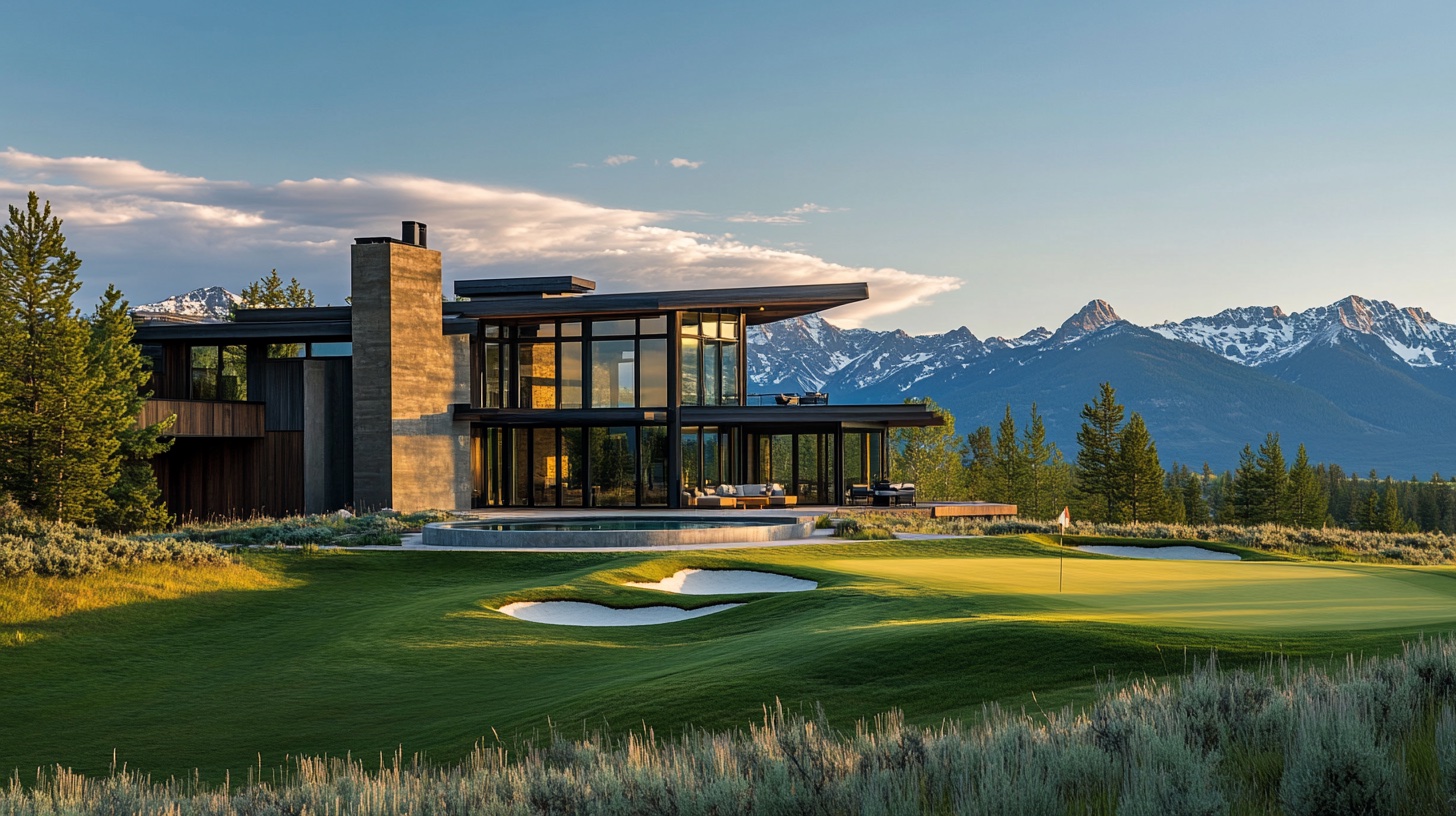
Something unusual is happening inside Montana’s private clubs. Waitlists at Yellowstone Club, Spanish Peaks Mountain Club, and Stock Farm Club have thickened. Membership demographics are shifting younger and more technology-capitalized. And in almost every case, the new applicants share one biographical detail: a California zip code they are in the process of leaving behind.
The pattern is not accidental. The largest single migration of concentrated American wealth in a generation is flowing out of California — and a disproportionate share of it is rerouting through the gates of Montana’s private golf and ski communities. For club operators, this is no longer a coastal anomaly. It is the single most important demographic trend shaping Montana’s private club market between now and 2035.
First 3 years of pandemic
$200K+ taxpayers, 2022
2022–2023 tax year
Since 2020 census
The Migration Is Real — and It’s Concentrated at the Top
IRS migration data tells the clearest version of the story. Between 2019 and 2022, California’s net outmigration nearly doubled, from roughly 170,000 people to approximately 300,000 — with the sharpest acceleration among upper-income filers. California’s outmigration rate for taxpayers earning more than $200,000 per year peaked at 1.7 percent in 2022, according to California’s Legislative Analyst’s Office. That single percentage point represents tens of thousands of high-income households choosing a different state.
Forgone California personal income tax collections from net outmigration peaked at 1.6 percent of 2022–23 revenue — roughly three times the pre-pandemic rate. These are not retirees. The demographic that left fastest was the top 5 percent of earners in their 40s and 50s: technology executives, private equity and venture capital partners, biotech founders, hedge fund principals, and the self-employed professional class.
Where did their wealth go? California and Washington together accounted for the largest share of new in-bound adjusted gross income to Montana in 2022–2023, pushing more than half a billion dollars of new household wealth into the state in a single tax year.
Source: IRS SOI migration data, 2022–2023 tax year. Index relative to Montana’s largest inbound AGI source.
Why Montana, and Why the Clubs
Three structural forces explain why the California-Montana corridor has hardened into a repeatable pattern rather than a pandemic blip.
Tax architecture. California’s top marginal income tax rate reaches 14.4 percent (13.3 percent regular plus a 1 percent mental health services surtax above $1 million). Montana’s top rate is 5.9 percent after the state’s 2024 tax reform. On $5 million of ordinary income, the annual spread is roughly $425,000. On capital gains, where California applies ordinary rates and Montana taxes at 5.9 percent, the spread widens further. For a tech founder anticipating a $100M liquidity event, relocating to Montana before the transaction can result in personal tax savings north of $8.5 million.
Infrastructure that scales with wealth. Montana is one of the only states in the West to have built deep, members-only private club infrastructure capable of absorbing the migration. Yellowstone Club sits on 15,200 acres and remains the only private ski-and-golf community in the world. Spanish Peaks Mountain Club operates 5,750 acres adjacent to the Montage Big Sky and Big Sky Resort — the largest skiable terrain in the United States. Stock Farm Club, founded by Charles Schwab, anchors the Bitterroot Valley with a Tom Fazio championship course and a deliberately small membership roster.
Geography that mirrors the California lifestyle, without California. Outdoor access, microclimate variety, strong dining culture, direct flights from SFO and LAX into BZN and MSO — Montana is one of the few destinations where a relocated family does not have to compromise on what they left behind. The state offers mountains, rivers, and ranch-scale privacy that California’s own interior markets increasingly cannot deliver at a comparable lifestyle cost.
What California Migrants Bring to the Club
The operational profile of a California-origin member is measurably different from a legacy Montana member, and the differences matter for every function of the club — from food and beverage to tee time distribution to capital reserve planning.
Higher F&B and retail capture is the easiest effect to observe. California-origin members are accustomed to the service standards of Los Angeles and Bay Area private clubs — the Hillcrest Country Clubs and San Francisco Golf Clubs of the world — and they expect to find the same wine program, the same dining cadence, and the same digital booking infrastructure waiting for them in Montana.
Less visible but more strategically important: California migrants treat Montana membership as dual-season, not dual-residence. They want the club to be programmed year-round, because they intend to use it year-round. That changes how a Montana club thinks about summer staffing, shoulder-season programming, member-guest cadence, and even capital expenditures on winterized facilities.
The Real Estate Multiplier
Private club membership and real estate are inseparable in Montana — in most of the premier communities, you cannot have the first without the second. Yellowstone Club caps its homeowner count at 864 families and has effectively closed its real estate inventory to the open market. Spanish Peaks and Stock Farm tie club membership to ownership by covenant. The result is that when California capital arrives, it arrives as a land transaction — and the secondary market reflects it.
Since 2020, Big Sky has emerged as the single most expensive residential market in Montana by a wide margin. The median home value now sits at approximately $1.8 million, with active-listing medians above $2.4 million. Bozeman has grown from 53,865 residents in the 2020 census to nearly 60,000 as of Q1 2026 — an 11 percent population increase driven almost entirely by net in-migration. For perspective: Club Estates recently published a deep dive on the three most expensive golf course homes for sale in Montana, where the top listing sits at $26.9 million and the top three combined represent nearly $58 million in asking price. Two of the three are inside Spanish Peaks Mountain Club.
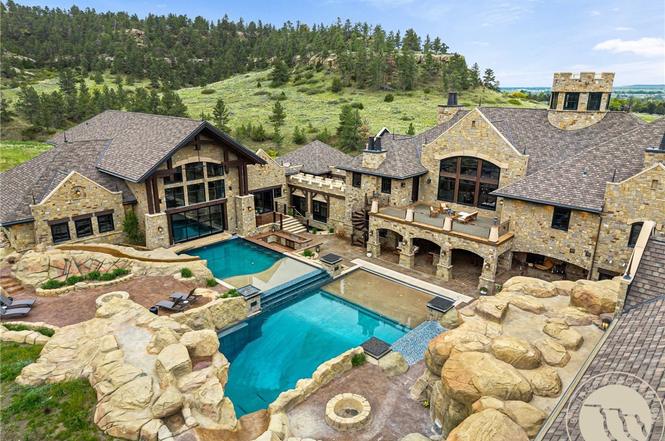
The Three Most Expensive Golf Course Homes for Sale in Montana
See the listings driving the migration math — a $58M triad with two homes inside Spanish Peaks Mountain Club’s Wildridge neighborhood.
View the Listings →The real estate multiplier compounds the club membership dynamic. Every California buyer who closes on an $8 million Wildridge home has also signed membership documents — and become a multi-decade customer of the club’s food, golf, ski, and wellness programs. For operators, each real estate closing is the front end of a $500,000–$2M lifetime-member-value relationship.
Montana Private Club Market: 2020 to 2026
A six-year timeline shows how quickly the market has repriced. Every inflection point from 2020 forward traces back to migration pressure and the willingness of incoming capital to pay top-of-market for scarce inventory.
What Club Operators Should Be Doing
For club management teams in Montana — and for coastal clubs losing members to the migration — the strategic implications split into four operational priorities.
1. Treat dual-residence members as full-time members. The legacy assumption that Montana clubs are “seasonal” is now wrong. A Yellowstone Club member from Atherton is in residence 120 to 180 days per year, across both winter and summer. Programming, staffing, and capital planning should reflect year-round use — not a 90-day summer cycle.
2. Raise service standards to the Los Angeles benchmark. The service floor is no longer “best in Montana.” It is the Jonathan Club, the California Club, the San Francisco Golf Club. Wine programs, digital booking, guest management, and F&B cadence should be benchmarked against coastal peers — because that is what incoming members are comparing you to.
3. Invest in junior programming. The largest segment of California-origin migrants is not retiring households; it is the 38–55 professional with school-age children. Clubs that do not yet have a serious children’s program — golf academy, ski race, tennis and racquets, camp — will see membership applications routed to those that do.
4. Build the referral engine early. California-origin members arrive with dense coastal networks — business partners, extended family, school-friend circles — that will produce referrals at 3 to 5 times the rate of legacy Montana members. Clubs with intentional referral incentives and membership ambassadors will compound the inbound more efficiently than those without.
Coastal Clubs: Where the Migration Hits Hardest
The flip side of the Montana story belongs to the California clubs losing those members. A useful back-of-envelope estimate: if 0.5 percent of the California private club membership base relocated to Mountain West markets between 2020 and 2024, that is roughly 3,500 to 5,000 household memberships moved out of California’s coastal club system. The clubs losing members are not losing them to competitors on the other side of town — they are losing them to Big Sky and Whitefish. That is a very different kind of competitive threat, and it requires a very different retention playbook.
Coastal club leadership teams would do well to analyze their last five years of member-loss reasons with this migration pattern in mind. “Relocation” has quietly become a top-three attrition reason at many Southern California clubs, and the relocation destinations are increasingly concentrated in four or five Mountain West zip codes.
The 10-Year Outlook
Even with Montana’s in-migration rate slowing — from 1.7 percent statewide growth in 2021 to an estimated 0.3–0.4 percent by 2025 — the wealth composition of the migration has not slowed. The flow has simply gotten more selective. The buyers arriving in 2026 are, on average, wealthier and more dependent on private club infrastructure than the buyers who arrived in 2021. For Montana’s premier clubs, this means demand at the top of the market will stay inelastic for most of the next decade, even as broader housing demand cools.
The implication for club operators is straightforward: the growth coming to Montana’s private clubs over the next ten years will be concentrated, high-AGI, dual-season, and almost entirely driven by in-migration from coastal tax jurisdictions. Operators that re-architect their service, programming, and real estate partnerships around that buyer will compound their position. Operators that continue to run the 2015 playbook will find their membership waitlists shrinking quietly, while a newer generation of clubs — or newer generation of membership committees — wins the pipeline.
California’s wealth migration is not a one-year story. It is structural, and Montana is one of only three or four states in America with the private-club infrastructure to fully capture it. The operators who understand that now will own the next decade.
Free Download
The 2026 Private Club Benchmark Report
The membership, amenity, and pricing data reshaping private clubs — from a 1,200-club analysis. Enter your details and we'll send it to your inbox.