

The evidence has been piling up on golf Instagram for a year. A widely shared post put it plainly: young women, one poster reported, now memorize the logos of prestigious country clubs so they can recognize them on men’s polos — and decide from twenty feet away whether the crest merits a conversation. He called it “a new level of espionage.” The comment section split between outrage and admiration, which is how you know it struck a nerve.
A club crest answers the question a job title can’t: not what he does, but what he belongs to — and belonging is the harder thing to buy.
Wall Street got there first. Business Insider reported in the summer of 2025 that the golf shirt — specifically, the logo on it — had become finance’s ultimate seasonal status symbol: “a measure of clout of places that you’ve been,” as one trader described it. The etiquette is unwritten but strict, and the cardinal sin is wearing the crest of a course you haven’t actually played.
What’s changed is who’s doing the reading. Logo literacy has jumped the fence — from members quietly signaling to each other, to the general public decoding members. That’s a remarkable turn for an industry that spent a century being deliberately illegible to outsiders.

The Scale of the Crest Economy
Why This Matters for Club Leadership
1. The crest is the product
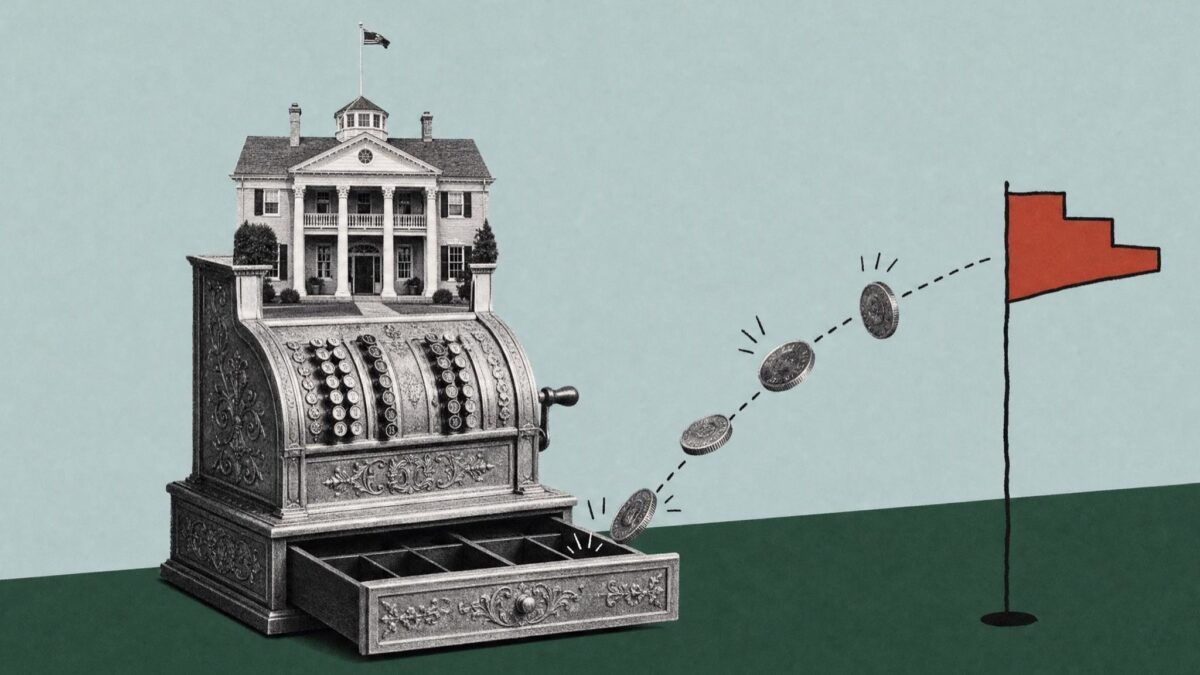
Nobody is memorizing the logos of clubs that let anyone in. Recognition tracks exclusivity: the harder a club is to join, the more its mark is worth on a hat. That is brand equity most consumer companies would pay nine figures to build, and private clubs built it as a byproduct of discipline about who gets in. Boards should understand what they’re sitting on before they redesign it into a generic monogram.
2. Merchandise is media
Every logoed quarter-zip that leaves the golf shop is an impression — and increasingly, an impression on people who know exactly what they’re looking at. Clubs that treat the shop as a member convenience are underpricing their most portable asset. The clubs that understand this run their merchandise program like a brand house: tight distribution, deliberate design, no discount rack.
3. Legibility cuts both ways
The same trend that flatters the Platinum tier flattens everyone else. If the public is learning the hierarchy, the middle of the market has a new reason to invest in brand — because there is now a scoreboard, it is cultural rather than internal, and it is being kept by people your membership committee will never meet.
Think You Can Read the Room?
Our founder started his career at ClubCorp and has spent two decades inside the gates of America’s private clubs — and this trend still made us curious how well anyone actually knows the iconography. So we built the test: Name That Club — nearly 900 real private club crests, four club names per logo, decoys drawn from the same state. No mercy, no pro-shop shortcuts.
If the internet is going to study our industry’s iconography, the people who run the industry should be better at it than the internet. Play a round and see where you land — the game keeps score.
Free Download
The 2026 Private Club Benchmark Report
The membership, amenity, and pricing data reshaping private clubs — from a 1,200-club analysis. Enter your details and we'll send it to your inbox.