
Your Best Prospects Are Already on Property
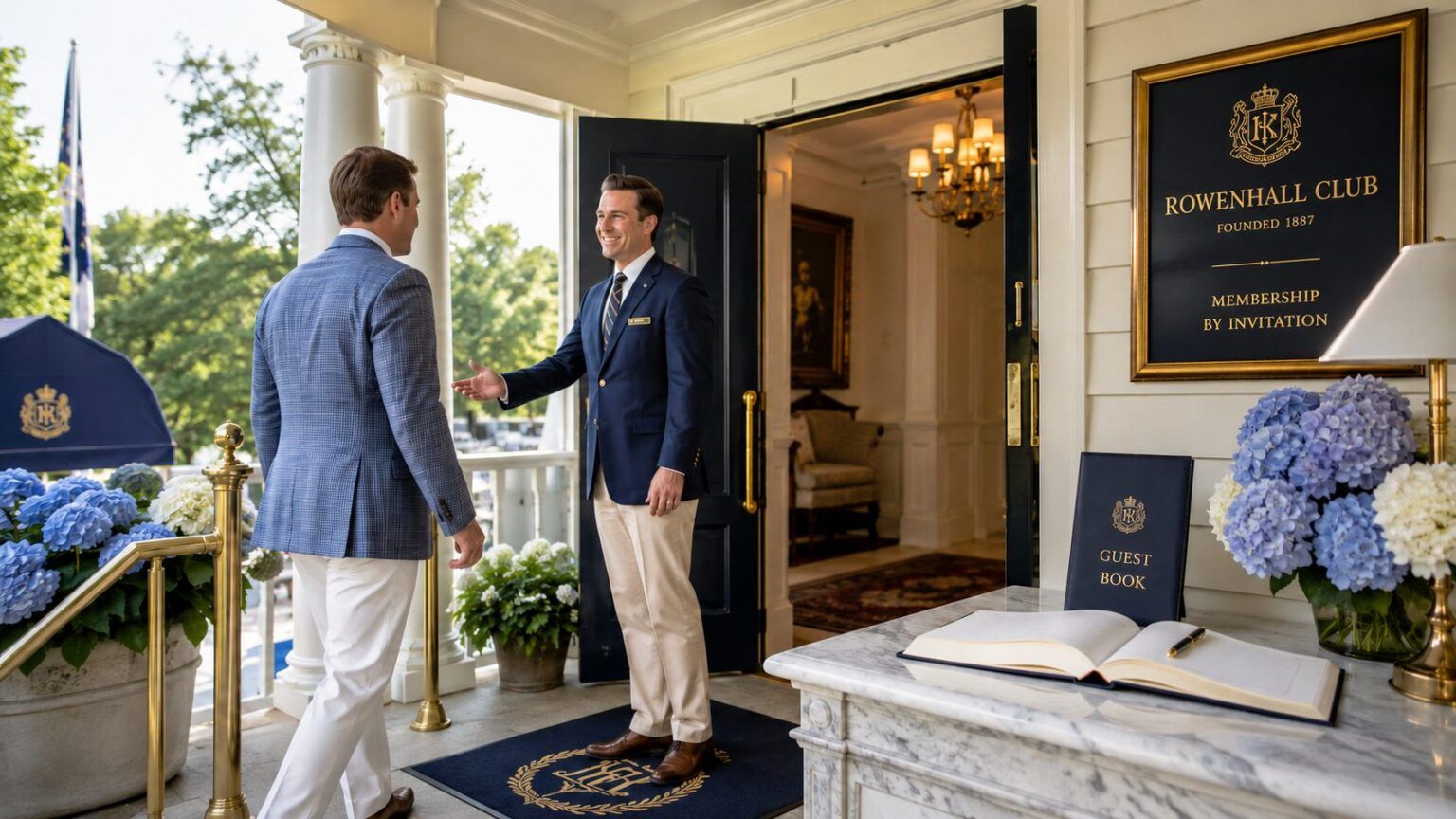
Every weekend from Memorial Day through Labor Day, clubs across the country host a quiet parade of qualified prospects — people who already know a member, already cleared the social bar, and already spent two hours experiencing exactly what your membership delivers. They came as guests. Most will leave as strangers, their contact information unrecorded and their interest quietly cooling by Monday morning.
The member guest represents the highest-intent prospect category in private club acquisition. They arrived pre-screened by someone who vouches for them. They self-selected into a high-end experience. The visit itself is a de facto site tour. What’s typically missing is not the prospect; it’s the system that turns a pleasant afternoon into a fall membership conversation.
With 58% of private clubs reporting membership growth in 2025 and 53% carrying full rosters or a waiting list — up a point from the prior year — the urgency to build a guest-to-member pipeline may not be obvious. But waitlists deplete, economic cycles shift, and the clubs that maintain systematic capture programs during peak enrollment periods are the ones that close new members efficiently when inventory opens. Summer is the best time to fill that pipeline. It just requires treating the guest program as a marketing channel rather than a hospitality courtesy.
Sources: NGCOA Golf Industry Key Trends 2025; Salesforce State of the Connected Customer, 6th ed.
Step One: Capture the Guest Before They Leave
The most common failure point is not conversion — it’s capture. Clubs routinely allow a guest to complete an entire visit without collecting a name, email, or any identifying information. The hosting member’s name is in the system. The guest is invisible. Without a record, there is no follow-up, and without follow-up, there is no pipeline.
A functional capture system doesn’t require aggressive data collection or an awkward sales encounter. The simplest mechanism is a structured guest-registration step at check-in or at the starter’s desk: a brief form — paper, tablet, or QR-code link — that takes less than ninety seconds to complete. At minimum, capture name, email, phone, and zip code. The zip code alone allows a meaningful segmentation of who is local and therefore worth the most direct follow-up investment.
Clubs that have deployed identity-resolution tools on their websites already know that the web visit often precedes the first in-person guest appearance by days or weeks — a prospective member researches the club before the sponsored visit. For those clubs, the on-property capture is a confirmation and enrichment step, appending visit data to a profile that already exists. For clubs still building toward that capability, the in-person form is the foundational record. Either way, the logic is the same: a guest whose data isn’t captured has not entered your acquisition funnel — they’ve simply visited.
Step Two: Structure the Host Incentive Correctly
The member who brings a guest is your most powerful marketing asset and your most under-leveraged one. Most clubs rely on members to self-motivate guest visits with no programmatic support, no incentive structure, and no feedback loop. A guest program that treats the hosting member as a passive conduit produces passive results.
Effective host incentive programs share three features. First, they reward behavior, not outcome — the member gets recognition for bringing the guest, regardless of whether that guest ever applies. This removes friction and embarrassment from the sponsorship relationship. Tying rewards directly to a guest’s application can make members feel like they’re recruiting rather than hosting, which kills the authenticity that makes the visit valuable in the first place.
Second, effective programs are tiered toward repeat behavior. A member who brings three guests in a summer is a significantly different asset than a member who brings one; the incentive structure should reflect that. Credit toward dining minimums, pro shop allowances, or reduced guest fees for a subsequent season are all low-cost mechanisms that drive repeated engagement.
Third, the best programs give the hosting member something to share before the visit — not just a discount code, but context. A one-page member host guide that describes the club’s guest experience, flags upcoming events during the visit window, and explains what happens after the guest departs gives the member language to set expectations without sounding like a sales pitch. That guide also implicitly communicates to the guest that their visit is intentional, not incidental.
The Conversion Funnel: Where Guests Become Members
A typical well-run guest program will see meaningful attrition at each stage — that’s normal and expected. The goal is not to convert every guest; it’s to ensure that every guest who has conversion potential is identified, captured, and nurtured systematically rather than lost to administrative inertia.
Full base → repeat visitors → waitlist inquiries → members
Conceptual diagram of how a club’s guest base typically narrows toward membership. The shape is illustrative, not based on a specific dataset.
Step Three: The Follow-Up Sequence That Doesn’t Feel Like One
Speed matters more than most membership directors believe. Salesforce research consistently finds that 77% of customers expect to interact with an organization immediately when they make contact — and a guest visit is, in effect, a form of contact. The longer the gap between the visit and the first follow-up, the faster the memory of the experience fades and the lower the probability of conversion.
A three-touch follow-up sequence, sent from a named staff member rather than a generic club email address, performs meaningfully better than a single generic “thank you for visiting” message. The structure works as follows: within 48 hours of the visit, a personal note from the membership director acknowledging the specific visit — the round of golf, the dinner, the event — and expressing genuine interest in reconnecting. No ask. Just continuity of the relationship. At seven to ten days, a second message that connects the guest’s experience to upcoming fall programming — the fall member-guest tournament, the wine dinner series, the season’s social calendar — with a soft invitation to discuss the membership process. At three to four weeks, a brief, direct conversation invitation: a 20-minute call to answer questions and walk through membership categories. That final message should come from the same name that signed the first two. Continuity of contact builds the trust that converts interest into application.
Revinate’s 2025 Hospitality Benchmark, drawing on 2.4 billion email interactions across hospitality operations, confirms that personalized, segmented follow-up significantly outperforms batch-and-blast messaging for driving downstream action — a finding that translates directly to the club membership context. The email that mentions the specific round played, the specific member who hosted, or the specific event attended is not a mail merge. It’s a signal that the club noticed and remembered.
The Trial Membership Bridge
For guests who express interest but hesitate at a full initiation commitment, the trial or social membership is the most powerful conversion instrument available. A structured trial — typically 90 to 120 days, priced at a fraction of the full initiation, with access to social facilities and select programming — removes the primary barrier to action: the perceived risk of a large financial commitment to an unknown experience.
The operational logic is straightforward. A guest who completes a trial membership has already developed habits, relationships, and routines at the club. They know the staff by name. They have a preferred table. The psychological cost of not converting to full membership is now real and personal, not hypothetical. Conversion rates from trial to full membership at clubs running structured programs are meaningfully higher than cold applications precisely because the prospect has been conditioned by experience rather than persuaded by marketing materials alone.
The trial structure also creates a natural fall enrollment moment. Guests acquired during summer — June through August — who enter a 90-day trial in September are completing that trial in November or December, exactly when year-end membership decisions are most common. The seasonal sequencing is not accidental; it’s architecture.
Tying It to Your CRM and Identity Layer
A guest program without a CRM is a guest program with no memory. Every captured record, every follow-up touchpoint, every trial enrollment should live in a system that is accessible to more than one person on the membership team. The membership director who built the relationship should not be the only repository of the guest’s interest level, timeline, and objections.
For clubs that have already implemented web-visitor identity resolution — identifying the anonymous visitors who browse the membership or events pages of the club website before their first in-person appearance — the guest program becomes a downstream confirmation layer. The visitor who came to the site three times in April and then appeared as a guest in June is not a cold prospect. They are a warm lead with a documented interest trail. Connecting the on-property guest record to the pre-visit web behavior creates a prospect profile that no brochure or cold inquiry form can replicate.
Even without identity-resolution infrastructure, a basic CRM discipline — a record for each captured guest, with visit date, sponsoring member, follow-up dates, and current status — transforms a summer full of pleasant interactions into a fall pipeline that can be managed, reported on, and closed. The clubs with full rosters and growing waitlists that GGA Partners documented in the 2025 Club Leaders’ Perspectives survey did not achieve that status by accident. They built systems. Summer is the season to use them.
The Practical Summer Checklist
A functional summer guest program doesn’t require a new platform or a budget line. It requires decisions that are made once and then executed consistently. Before the first holiday weekend, clubs should confirm: Is there a guest registration form at every entry point? Is there a named staff owner for guest follow-up? Is there a three-touch email sequence drafted, signed, and ready to send? Is there a trial or social membership offering that can be presented to guests who express interest but hesitate? Is the hosting member briefed and equipped to be an active, intentional sponsor rather than a passive escort?
Those five decisions, made in June, produce a fall pipeline that closes through October. The guests are already coming. The question is whether you’re ready to receive them as prospects or simply thank them as visitors.
Operator Strategy: The Private Club Member Acquisition Funnel — How leading clubs structure the full journey from awareness to application, and where most operators lose qualified prospects along the way.
Free Download
The 2026 Private Club Benchmark Report
The membership, amenity, and pricing data reshaping private clubs — from a 1,200-club analysis. Enter your details and we'll send it to your inbox.