For four days each June, the eyes of the golf world fix on a single piece of ground — and in 2026, that ground is a stretch of windswept Long Island linksland that predates the game’s American institutions. When the 126th U.S. Open arrives at Shinnecock Hills Golf Club on June 18, it returns not merely to a great course, but to one of the founding houses of organized golf in the United States. For those who run private clubs, the week is more than a championship. It is a master class in what enduring prestige actually looks like.
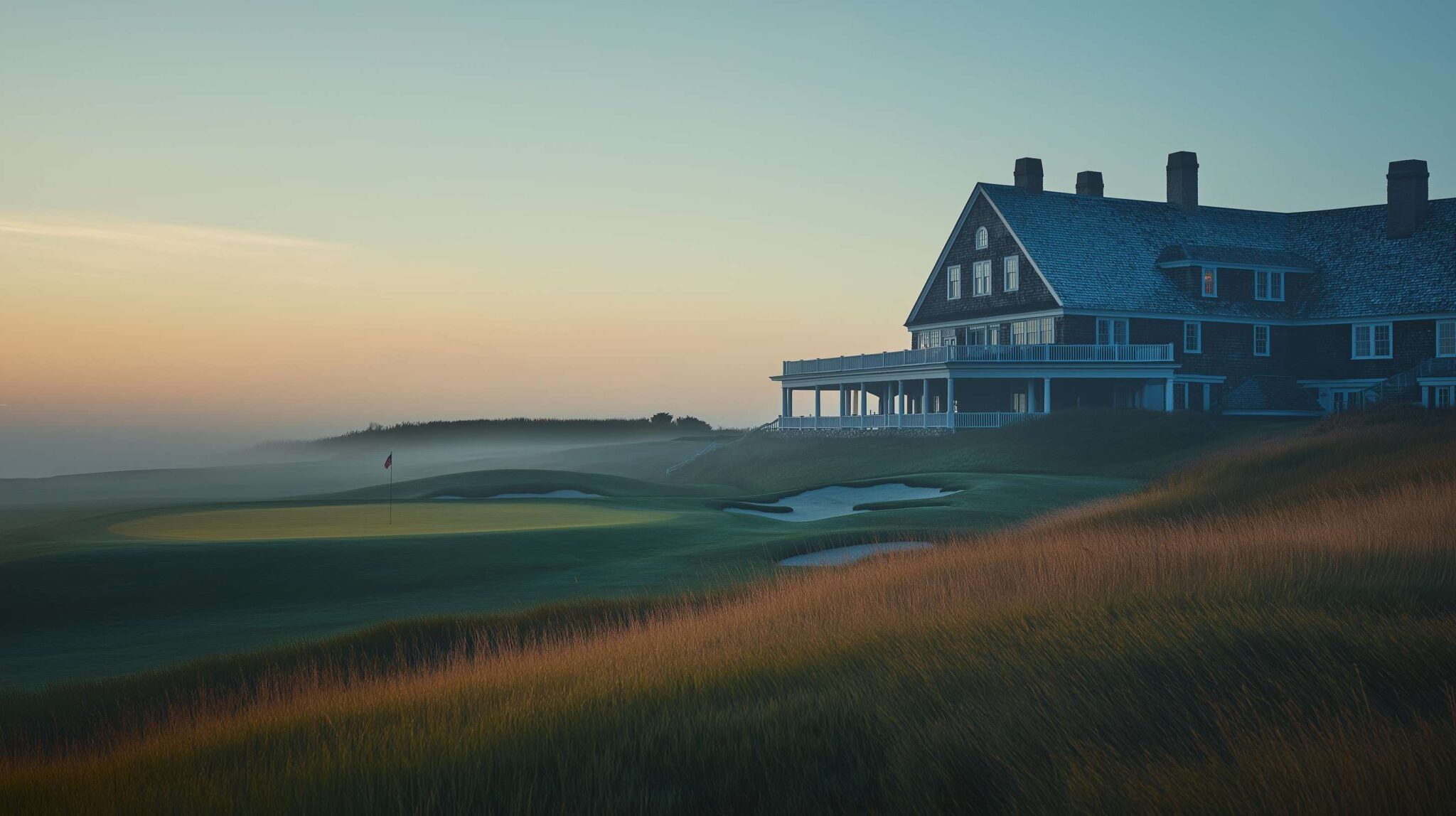
Shinnecock Hills was established in 1891 in Southampton, New York. A year later, a clubhouse designed by the celebrated architect Stanford White opened above the dunes — widely cited as the first purpose-built golf clubhouse in America, and today listed on the National Register of Historic Places. In an era when most American golfers played from converted barns and farm sheds, Shinnecock built something intended to last.
126th
U.S. Open
6th
Open at Shinnecock
1891
Club Founded
5
USGA Founding Clubs
A Founding Member, Not a Guest
On December 22, 1894, representatives of five clubs convened in New York City to create the United States Golf Association. Shinnecock Hills was one of them, alongside Newport Country Club in Rhode Island, The Country Club in Brookline, Massachusetts, Saint Andrew’s Golf Club in Hastings-on-Hudson, New York, and Chicago Golf Club in Wheaton, Illinois. Those five clubs did not simply join the establishment of American golf — they were the establishment. That lineage matters when Shinnecock hosts. This is its sixth U.S. Open, a tenure that stretches from 1896 to the present and makes it the only course to have hosted the championship across three different centuries. The 2026 edition is no exhibition of a borrowed venue; it is a homecoming to a club that helped write the rules everyone else plays by.1896
James Foulis
The second U.S. Open ever contested is won at Shinnecock Hills, two years after the club helps found the USGA.
1986
Raymond Floyd
After a 90-year wait, the Open returns; Floyd’s victory reintroduces Shinnecock to the modern game.
1995
Corey Pavin
Pavin’s closing four-wood to the 18th becomes one of the championship’s defining images.
2004
Retief Goosen
Goosen’s putting holds firm on a famously firm, fast setup.
2018
Brooks Koepka
Koepka claims back-to-back U.S. Open titles on the William Flynn layout.
2026
The Sixth Open
Shinnecock returns as host on June 18–21, its place in the championship rota secure.
The Course Itself
The layout players will face was authored by William S. Flynn, whose comprehensive 1931 redesign produced what is effectively the course played today. Flynn routed the holes to work with the prevailing wind and the natural contours of the land rather than against them — a philosophy that has aged into something close to reverence among architecture purists. In the early 2010s, Bill Coore and Ben Crenshaw led an extensive restoration that removed trees, widened fairways, and reestablished the fescue roughs, returning the course closer to Flynn’s original intent. For the championship it plays to a par of 70 across 7,434 yards, per the USGA’s official 2026 championship fact sheet. What makes Shinnecock punishing is not raw length but exposure: there is little shelter from the wind off the Atlantic, and the firm, tilted greens demand precision that distance alone cannot buy.3
Shinnecock Hills is the only course to have hosted the U.S. Open in three different centuries — 1896, the 1900s, and the 2000s.
USGA · Wikipedia
The Private-Club World That Surrounds Championship Golf
A U.S. Open is staged at a private club, by private-club people, for an audience that increasingly overlaps with private-club membership. That intersection is not incidental — it is the economic engine beneath the spectacle. A landmark study by Club Benchmarking, the Club Management Association of America, and the National Club Association identified roughly 5,659 private clubs in the United States and measured their direct economic impact across revenue, payroll, and employment. The private club is not a relic; it is a substantial industry, and championship venues sit at its apex. That apex is also where demand is most resilient. The NGCOA’s Golf Industry Key Trends research found that private-club membership growth has remained strong even amid broader economic uncertainty, with a majority of clubs reporting membership increases and a meaningful share operating full memberships or wait lists. Scarcity, it turns out, is the most durable luxury of all — and nowhere is it more visible than at a club like Shinnecock.Private Club Membership Growth — Clubs Reporting an Increase
Source: NGCOA, Golf Industry Key Trends, 2025.
What clubs like Shinnecock model — and what membership directors quietly study — is the discipline of restraint. The club has resisted the temptation to modernize away its character. It does not trade on access; it trades on continuity. The Stanford White clubhouse still stands. The Flynn routing still governs play. The waiting list still does its work. For an industry navigating generational shifts in member expectations, that consistency is not nostalgia — it is strategy.
A Rota of the Untouchable
Shinnecock’s place in the championship calendar reflects a broader USGA philosophy: anchor the U.S. Open to a small circle of institutions that need no introduction. The years after 2026 read like a tour of American golf’s aristocracy — Pebble Beach Golf Links in 2027, Winged Foot’s West Course in 2028, Pinehurst No. 2 in 2029, and Merion Golf Club in 2030. These are not venues chosen for novelty. They are chosen because their prestige is, for practical purposes, permanent. For the members, the directors, and the operators watching from across the industry, the lesson is the same one the club has been teaching since 1891: build something worth keeping, and let time do the rest.Free Download
The 2026 Private Club Benchmark Report
The membership, amenity, and pricing data reshaping private clubs — from a 1,200-club analysis. Enter your details and we'll send it to your inbox.