
The Rota Is the Marketing
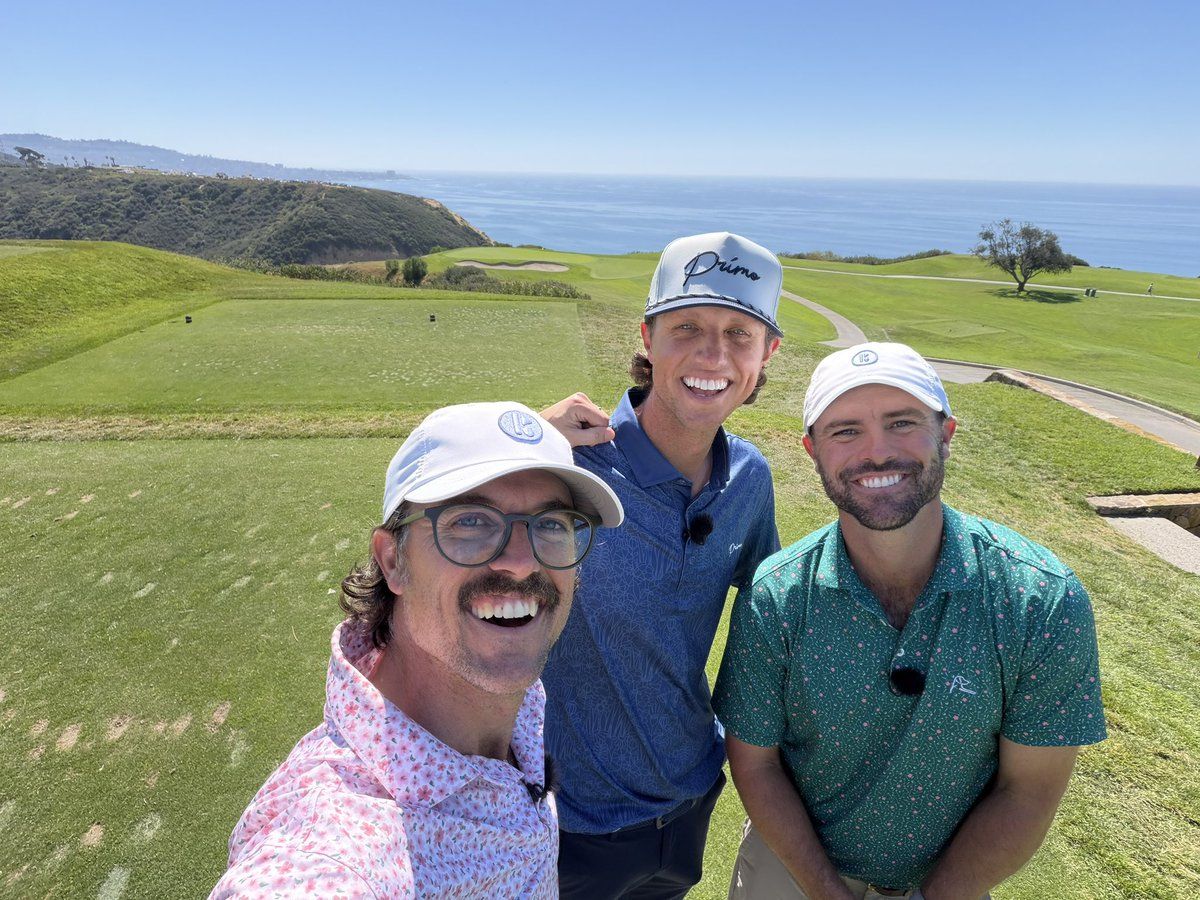
On May 4, four men in golf shirts sat behind a folding table at Pursell Farms and announced where they were taking their cameras for the next twelve months. Pursell Farms in Alabama. Teeth of the Dog at Casa de Campo in the Dominican Republic. Cutalong at Lake Anna in Virginia. Wynn Golf Club in Las Vegas, where the tour will end with a three-day, one-million-dollar individual stroke play championship.
That is the entire Your Golf Tour course rotation. It is also the most important media buy made in the private club industry this quarter, and not one of those four properties paid for it.
If you run a club, sit on a board, or write a marketing budget for a destination resort, the question Wesley Bryan, George Bryan, Grant Horvat and Brad Dalke just answered out loud is the question your operation has been avoiding for three years: where the next generation of paying members is forming their opinion of golf. The answer is no longer Golf Channel. It is no longer the PGA Tour broadcast schedule. It is increasingly not even the major championships. The answer, for the audience that is currently 22 to 38 years old and writing checks for initiation fees somewhere right now, is a YouTube subscription queue with about a dozen names in it.
And as of last Sunday, four private clubs are sitting inside that queue.
The Four Stops
Before getting to what this means for the rest of the industry, the venues themselves deserve to be named clearly, because each one represents a different model of how a club, a resort, or a destination property entered the conversation.
That last point is the one most worth sitting with. Wynn did not stumble into hosting the YGT finale. Wynn has been quietly assembling a private-membership and private-attention strategy for the better part of two years. The Zero Bond outpost inside Wynn Tower Suites. The Delilah dinner reservations that route through the same concierge desk as tee times. And now the closing event of the most-watched non-PGA tournament series of 2026.
The pattern is the play, and the rest of the industry has not noticed it is a pattern yet.
The 27-Million-View Benchmark
To understand why this matters, you have to look at the number that made YGT possible in the first place.
The 2025 Internet Invitational — the loose, six-episode pickup tournament that Grant Horvat and the Bryan Bros ran last year — produced approximately 27 million views on YouTube. Six episodes. No ESPN deal. No network rights fee. No Saturday afternoon time slot. Twenty-seven million views generated entirely by the creators’ own audiences clicking play on their own time.
For comparison, place that against the full-season 2025 PGA Tour broadcasts on the major American carriers. It is not a flattering comparison for a Tour with seventy-five years of institutional momentum. And it is not a comparison anyone inside your club’s marketing committee has been asked to make yet.
That last figure deserves its own paragraph. Grant Horvat sits at roughly 1.5 million YouTube subscribers as of this week. The Bryan Bros are over 850,000. Add Brad Dalke and the leading creator-roster names — Garrett Clark, Peter Finch, Roger Steele, Luke Kwon, Micah Morris — and the combined owned-audience attached to the YGT rotation conservatively crosses ten million subscribers. Each of those subscribers receives a notification the second a new episode posts. Each of them is significantly younger, on average, than the median Golf Channel viewer. And each of them watches with a private club ad-server that nobody has invented yet running silently in the background.
The Sixteen on the Rota
For readers who do not spend their Saturday afternoons inside the YouTube golf algorithm, the names below are the actual product. Combined, the sixteen creators on this roster sit on more than ten million subscribers and a substantially larger cross-platform following. Each card links to the creator’s Instagram so you can see for yourself what your members’ kids are watching.
















This is the part of the story that the trade press has not yet framed correctly. YGT is not a tournament. YGT is a four-stop, three-channel, season-long content distribution agreement between sixteen of the most-watched golfers on the largest video platform on earth. The “tournament” is the surface. The distribution is the asset.
The Authenticity Premium
There is a reason twenty-seven million people watched six YouTube episodes that received zero broadcast distribution, zero rights fees, and zero professional production polish. The reason is not technological. The reason is psychological. The audience that votes for these episodes with their watch time has spent a decade telling marketing departments exactly what it wants, and the data has been there to read since 2017.
This is the part of the conversation the private club industry has been allowed to skip for the better part of two decades, because the existing membership base was old enough to still trust network broadcasts, glossy magazine ad spreads, and tasteful lifestyle photography. The new customer base — the under-50 households writing 250,000-dollar initiation checks — was raised on a different signal entirely. They can read a polished ad in less than half a second and they actively distrust what it is telling them. The market research has been pleading with brands to take this seriously since well before YGT existed.
This is what Grant Horvat and the Bryan Bros have understood for three years longer than the club industry. The reason a YouTube golf episode shot on a handheld rig with no rights deal beats a fifteen-million-dollar PGA Tour broadcast in same-week engagement among viewers under 40 is not technological superiority. It is psychological permission. The audience trusts the creator because the creator is allowed to be wrong, mishit a putt, joke about it, and the camera does not cut away. That is not the production model of a single private club marketing committee in the country. And it is exactly the model that just signed a one-million-dollar finale agreement with a publicly traded resort operator in Las Vegas.
Why These Four Venues, Not Yours
This is the section that is going to make some board members uncomfortable, and it should.
Pursell Farms is family-owned. Casa de Campo is operationally independent and aggressive about its brand voice. Cutalong is small enough to make decisions in a single phone call. Wynn is a publicly-traded operator that has consolidated content, hospitality, and member-experience strategy under a single executive sponsor.
What none of those four properties are: a hundred-club platform owned by private equity with quarterly EBITDA reporting and a centralized marketing approval queue.
If you run a private club today and you are wondering why the Bryans and Grant Horvat picked the four venues they picked, the answer is partially aesthetic, partially relational, and entirely structural. The four properties on the rota all could say yes. Most of the institutional private club industry, including the largest operator in the country, structurally cannot.
That is not a criticism of platform-owned clubs. It is an observation about what consolidation costs in an attention economy. When a creator with two million subscribers calls a club and says “we want to film an episode here in eight weeks,” the club that says yes wins the audience. The club that routes the request through a regional VP, a legal review, and a quarterly marketing planning cycle simply does not exist in the next episode.
Luxury marketing is the discipline of controlling who tells your story. Influencer marketing is the discipline of trusting someone else to tell it for you. The private clubs that learn to do both — at the same time, on the same property — will own the next generation of members. The clubs treating those skills as opposites are already losing.
Zack Bates, Private Club Marketing
The Wynn Pattern
This is the third time in five years that Wynn Las Vegas has shown up at the center of a private-club industry conversation, and the rest of the resort industry has not yet noticed it is a pattern.
Since 2022, Wynn Golf Club — the only golf course on the Las Vegas Strip — has hosted Justin Timberlake’s 8AM Invitational, a celebrity-stacked, no-phones, premium-attention event that has welcomed Patrick Mahomes, Travis and Jason Kelce, Michael Phelps, Matthew Stafford, Jimmy Fallon and Michelle Wie West onto the property across five editions. The event has raised more than a million dollars for the American Skin Association in the process. Last year, Wynn opened the West Coast outpost of Zero Bond — the most-discussed private social club brand expansion of the decade — inside Wynn Tower Suites. This year, Wynn landed the YGT championship and a million-dollar broadcast event inside its golf operation.
Three distinct attention-acquisition channels — celebrity, private membership, creator — all routing through the same property, and through what increasingly looks like the same executive sponsor. Each of those moves on its own would be a coup. Together they describe a strategy that no other casino-resort operator on the Las Vegas Strip is currently running, and that exactly zero traditional destination clubs have copied.
“Our vision is to create a structure for top players to perform under real pressure with significant stakes while remaining authentic to the YouTube format that we know and love.”
Your Golf Tour organizing statement, March 2026
Read that quote with a club operator’s ear. The phrase that should land is not “real pressure” or “significant stakes.” It is authentic to the format. The creators are telling Wynn, and the rest of the rota, exactly what the deal is. The creator-tour audience does not want a corporate-broadcast feel. The creator-tour audience wants the property to function as a co-author, not a sponsor logo.
Wynn appears to understand this. The rest of the destination club industry is still selling sponsor logos.
What Club Boards Should Do By Monday
If you sit on a private club board, run a destination resort, or hold the marketing budget at any property that markets to high-net-worth households under the age of 50, the next conversation at your operations meeting needs to address three questions.
The optimistic case for the private club industry is that YGT is one tour, four venues, sixteen creators, and one Vegas finale. The honest case is that YGT is the third major creator-led golf property to launch in the last eighteen months — following Good Good’s championship circuit and the Source Media Group’s YouTube Golf Network, recently launched with Bryson DeChambeau and Grant Horvat — and that the trajectory is now clear. Institutional sports representation is buying creator-economy assets. Wasserman, now operating as The Team, recently acquired the agency that represents Horvat and the Bryans. The capital sees what the audience already knows.
The audience is no longer choosing between the PGA Tour and YGT. The audience is being raised on YGT. The PGA Tour is what some of them might watch later, if they have time, on a second screen.
That is the real “rota” being decided this year, and it is not a list of golf courses. It is a list of which private club operators understand what just changed, and which ones are still buying ads in a magazine the audience never picks up.
Pursell Farms understands. Casa de Campo understands. Cutalong understands. Wynn very obviously understands. The other 4,000 private clubs in America have a board meeting this month. The agenda for that meeting just changed.
Zack Bates is the founder and CEO of Private Club Marketing. He started his career at ClubCorp and has spent two decades advising private clubs on member acquisition, brand strategy, and operations. PCM publishes weekly to over 12,300 club leaders.
Free Download
The 2026 Private Club Benchmark Report
The membership, amenity, and pricing data reshaping private clubs — from a 1,200-club analysis. Enter your details and we'll send it to your inbox.