
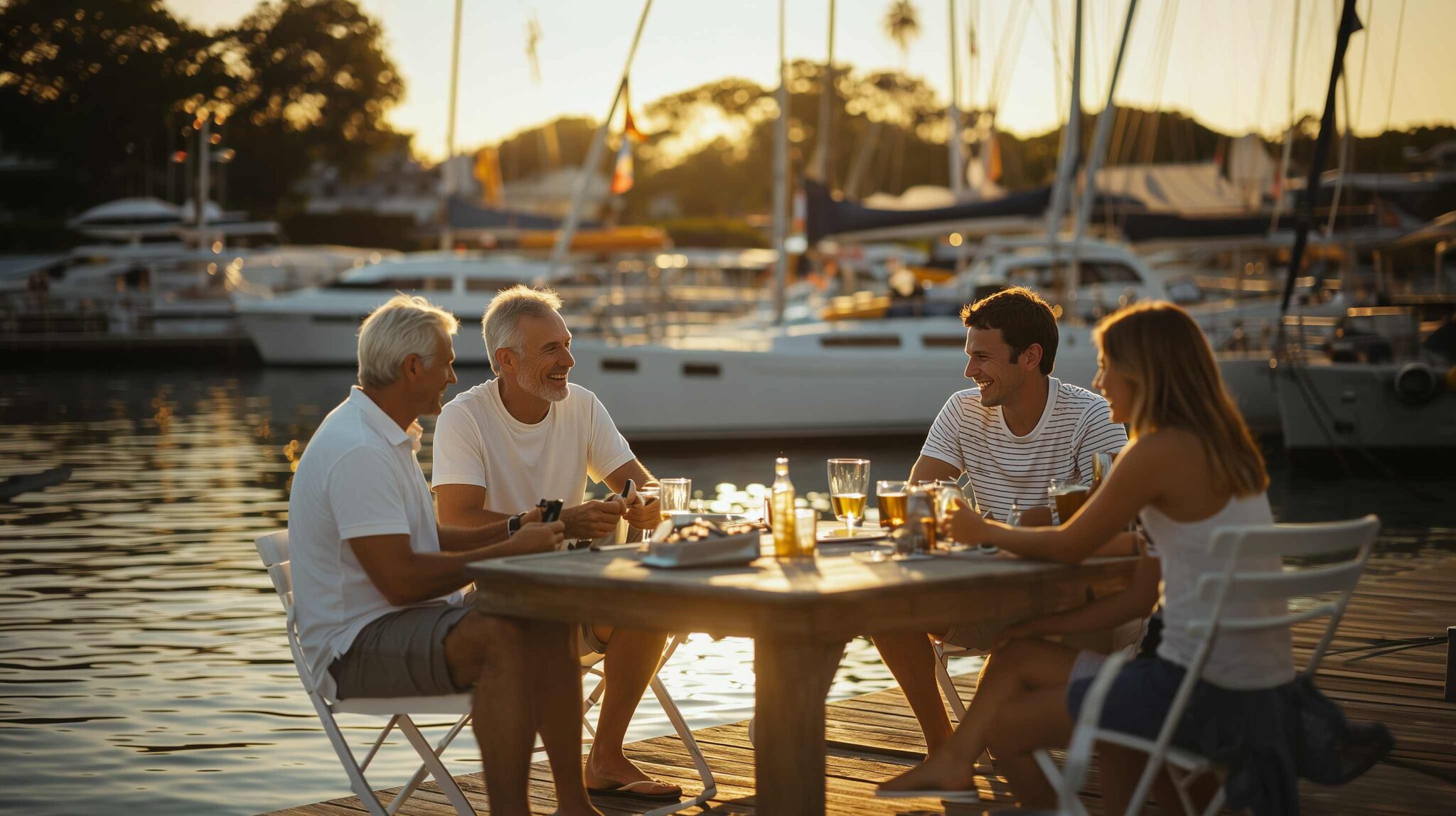
The salt spray catches the morning light as a commodore stands on the weathered deck, watching a scene that would have been unimaginable just five years ago. Young families gather on the dock while teenagers prep their sailing dinghies, their laughter mixing with the traditional sound of halyards slapping against masts. This transformation did not happen overnight. It required delicate navigation between honoring century-old maritime traditions and embracing the cultural shifts necessary for modern relevance. Today’s yacht clubs face a complex challenge: how to evolve their culture to attract new generations while maintaining the maritime heritage that defines their identity. Success requires understanding that tradition and innovation are not opposing forces, but complementary elements that, when balanced correctly, create stronger, more vibrant club communities.
Understanding the Cultural Crosscurrents
Yacht clubs occupy a unique position in the private club landscape, where maritime tradition runs deeper than mere amenity preferences. These institutions carry forward centuries of nautical heritage, from formal flag ceremonies to time-honored racing protocols. Yet modern members increasingly seek experiences that reflect contemporary values: inclusivity, family engagement, and community connection. The challenge lies in recognizing which traditions serve as foundational pillars versus those that may inadvertently create barriers to membership growth. According to CMAA & Club Benchmarking (2024), clubs reported a 23% decrease in clubs experiencing membership growth, with smaller clubs particularly affected.
The most successful transformations begin with comprehensive cultural audits that identify which traditions enhance member experience versus those that may feel exclusionary to prospective members. Smart yacht club leaders distinguish between core maritime values such as seamanship, safety, and respect for the sea, and peripheral customs that may need refreshing. This nuanced approach allows clubs to maintain their essential character while opening doors to broader community engagement.
Modernizing Membership Pathways Without Losing Exclusivity
The traditional yacht club membership model, often characterized by lengthy waiting lists and complex sponsorship requirements, requires careful recalibration in today’s market. While exclusivity remains a valued characteristic, clubs are discovering that accessibility and inclusivity can coexist with maintaining high standards. Progressive yacht clubs are reimagining their membership pathways by creating tiered options that allow families to engage at different levels while preserving the commitment and investment that serious boating communities require. Private club initiation fees continued to grow with an average increase of 8.7%, according to CMAA & Club Benchmarking (2024), yet clubs must balance pricing strategies with accessibility goals.
South Shore Yacht Club in Milwaukee illustrates how this balance can be achieved without sacrificing identity. Founded in 1913, the club has built one of the largest and most inclusive memberships on Lake Michigan by deliberately removing barriers to entry: parents do not need to be club members or own boats to enroll children in the junior sailing program, need-based scholarships are offered through the South Shore Sailing Foundation, and junior membership fees are kept at just $50 per year. The result is a community defined by shared love of the water rather than social gatekeeping, where welders, surgeons, and sailors alike gather without pretense.
Revitalizing Programming for Multi-Generational Engagement
Traditional yacht club programming often centered on formal racing schedules and adult-oriented social events, but today’s successful clubs recognize the need for programming that engages entire families and multiple generations simultaneously. The transformation involves expanding beyond competitive sailing to include recreational boating education, environmental stewardship programs, and community outreach initiatives that resonate with modern values. Youth sailing programs are being reimagined as pathways to lifelong membership rather than seasonal activities, with progressive clubs integrating STEM education, environmental conservation, and leadership development directly into sailing instruction.
Chicago Yacht Club demonstrates what happens when a club commits fully to this programming philosophy. For more than 90 years, the club’s sailing school at Belmont Harbor has been a leader in on-water education, running a year-round program that spans learn-to-sail courses for beginners through advanced racing teams that travel to compete in warmer climates during winter months. The school serves all ages and experience levels, with competitive Opti, Laser, and high school teams keeping junior members engaged across every season. By treating youth programming as a permanent, multi-season commitment rather than a summer amenity, the club has built a pipeline of members who grow up inside its culture and carry that connection into adult membership.
Embracing Technology While Honoring Maritime Heritage
The integration of modern technology in yacht clubs presents both opportunities and potential cultural conflicts, requiring thoughtful implementation that enhances rather than replaces traditional maritime practices. Smart yacht clubs are discovering that technology can actually strengthen connections to maritime heritage when applied purposefully. Digital sailing instruction tools complement rather than replace hands-on learning, while weather monitoring systems enhance safety without diminishing the importance of traditional seamanship skills. Mobile apps can streamline reservations and communications while maintaining the personal relationships that define club culture.
Forward-thinking clubs use technology to document and share maritime traditions, creating digital archives of club history while using social platforms to celebrate seamanship achievements and community milestones. The goal is not to modernize everything, but to use technology strategically to remove friction from administrative processes while preserving the authentic maritime experiences that members treasure. The sound of wind in sails, the feel of spray on face, and the satisfaction of manual boat handling remain irreplaceable elements of yacht club culture.
Building Bridges Between Old Guard and New Members
Perhaps the most delicate aspect of cultural transformation involves managing the relationship between longtime members who embody institutional memory and newer members who bring fresh perspectives and energy. Veteran members possess invaluable knowledge about seamanship, local waters, and club traditions, while newer members often bring diverse backgrounds, innovative ideas, and renewed enthusiasm for maritime pursuits. According to CMAA (2024), 79% of club members expect their spending at the club to remain the same or increase, suggesting strong member commitment when cultural balance is achieved successfully.
The New York Yacht Club offers a compelling case study in how a storied institution can evolve without abandoning its foundations. Founded in 1844 and long associated with formal traditions, the NYYC has made attracting younger members—particularly sailors in their 20s and 30s—a clear priority. That effort is especially important because, as Commodore Clare G. Harrington notes, “Since we do not offer family memberships, the traditional legacy pathway to membership doesn’t exist at the New York Yacht Club.” In response, the club has developed a range of initiatives aimed at younger members. As Harrington explains, “To ensure our membership stays vibrant, we have put in place many incentives for young adults, including a team racing program that participates in upwards of 40 regattas a year both here and abroad, an active Young Members committee that gathers regularly at both clubhouses and facilities young member participation in our Annual Cruise—the Club’s oldest tradition—and a regatta schedule that embraces classes favored by younger sailors. The club’s 20-boat fleet of IC37 yachts—available for charter to any member—has also proven a great draw for athletically-minded sailors.”
Much of this activity is made possible by the club’s 1988 purchase of the waterfront Harbour Court property in Newport, R.I., which transformed what was once primarily a Manhattan social institution into an active on-water community. The 44th Street clubhouse, built in 1901 on property donated by Commodore J.P. Morgan, remains a pillar of tradition and the spiritual home of the club. Members who join for the sailing often find themselves spending just as much time in those wood-paneled Midtown rooms as they do on the water — a testament to the power of a culture that honors its heritage while making room for the next generation.
Sources
- CMAA & Club Benchmarking (2024), Club Benchmarking Survey 2024
- CMAA (2024), Club Leader’s Perspective Survey 2024
- Growth Market Reports (2024), Private Club Industry Market Analysis
- NCA, CMAA & Club Benchmarking (2024), Private Club Industry Economic Impact Report