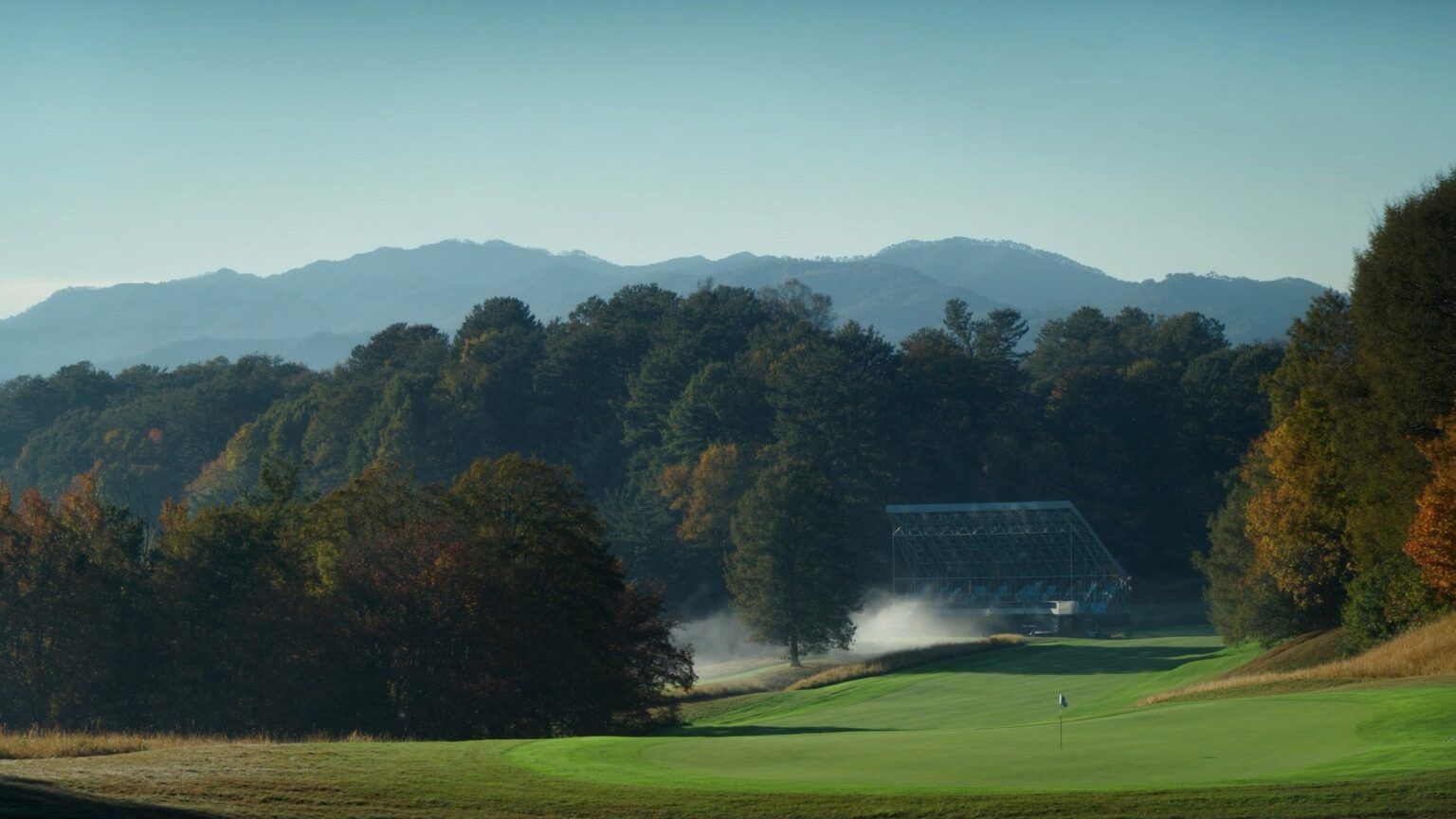
This week, a private club does something private clubs almost never get to do: host the biggest professional golf tour in the world. The Biltmore Championship at The Cliffs at Walnut Cove tees off September 17–20, bringing the PGA Tour’s fall series to Asheville, North Carolina — the first time the Tour has stopped in the city in more than eight decades, according to the PGA Tour and Explore Asheville. For four days, a members-only community tucked into the Blue Ridge Mountains becomes a broadcast set, a search term, and a national brand.
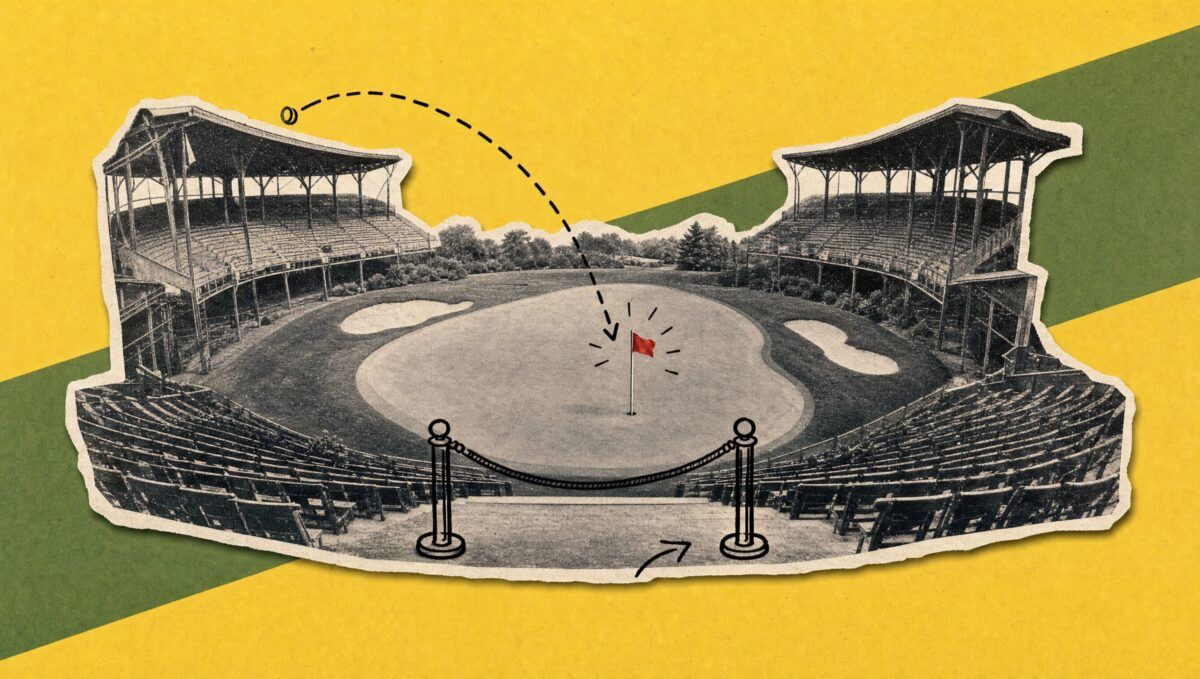
Most clubs will never host a Tour event, and that’s fine — that isn’t the lesson here. The lesson is what happens to a private club’s brand when it steps, briefly and deliberately, into public view. Championship hosting is the most extreme version of a strategy every club can run at its own scale: borrow a moment of public attention, convert it into lasting brand equity, and return to exclusivity with your market position permanently upgraded.
Why a Members-Only Club Wants a Public Moment
The instinct at many private clubs is that visibility is the enemy of exclusivity. The opposite is closer to the truth: exclusivity without awareness is just obscurity. Prospective members can’t aspire to something they’ve never heard of, and a waitlist is built on the people outside the gates knowing exactly what they’re missing.
Clubs like Shinnecock Hills and Merion have proven this model for a century. Both are among the most private clubs in America, and both are household names in golf — precisely because they open their doors to championship golf every decade or so. The championship-host identity does double duty: it validates the golf course at the highest competitive level, and it generates a durable stream of search interest, media references, and cultural cachet that no ad budget can replicate. When someone in a pro shop three states away says “that’s a U.S. Open venue,” that’s brand equity compounding year after year, tournament or no tournament.
The Cliffs is now running the modern version of that play. And the economics of attention have never favored it more. Luxury brands broadly have reached the same conclusion: in the Deloitte Global Powers of Luxury 2026 study, 26.2% of executives identified strengthening marketing, brand positioning, and market expansion as their top investment priority — the single largest category, ahead of digital transformation and omnichannel investment. Desirability is built, not assumed, and the most sophisticated luxury operators are spending accordingly.
The Biltmore Championship at The Cliffs at Walnut Cove: A Blueprint for Brand-Building
The Biltmore Championship at The Cliffs at Walnut Cove didn’t happen by accident, and neither did the brand payoff that other private clubs have already banked from similar moments. Four clubs make the pattern explicit.
Quail Hollow Club in Charlotte spent decades executing a deliberate strategy, driven by longtime club president Johnny Harris, to build tournament-grade infrastructure specifically to attract major championships — a bet that paid off with the 2017 PGA Championship, the 2022 Presidents Cup, and the 2025 PGA Championship, on top of the PGA Tour’s annual Wells Fargo/Truist Championship. As Harris put it, “we’re going to make the club enjoyable for members, feel like a small, home club in Charlotte, but also we’re going to be able to be big enough and infrastructure built well enough to host the biggest events in golf.” That combination made Quail Hollow one of the only private clubs in the country to host a PGA Championship twice and a Presidents Cup within a single decade.
Southern Hills Country Club in Tulsa ran an even longer version of the same play. After hosting the 2022 PGA Championship — the club’s sixth time hosting the event — Southern Hills was awarded the 2032 PGA Championship, which will make it the first venue in history to host the Championship six times, according to the PGA of America. “Hosting this Championship for a record sixth time underscores our club’s rich tradition and commitment to the game of golf,” the club said at the announcement. Club leadership had been explicit about the strategy behind it: “I think it solidifies our stature in major championship golf and hosting majors. We’re honored.” Stature, in other words, isn’t a byproduct of hosting — it’s the point.
Liberty National Golf Club in Jersey City took the boldest version of the approach, building a course and clubhouse — at a construction cost of more than $250 million, according to Forbes and Golf Digest, with roughly 90% of that sum tied to Superfund site cleanup — explicitly designed to host major PGA Tour events, including multiple FedEx Cup Playoff stops and the 2017 Presidents Cup. Liberty National, which founder Paul Fireman once said he envisioned eventually reaching a full membership around 300, used its Manhattan-skyline television presence during nationally broadcast events to become one of the most recognizable private club brands in golf, drawing members from the highest tiers of business, sports, and entertainment. The infrastructure was the strategy — built once, at enormous cost, to generate broadcast equity for decades.
The Cliffs doesn’t need Liberty National’s budget or Southern Hills’ century of major-championship history to take the same lesson: a public moment, handled deliberately, becomes a permanent credential.
The Industry Behind the Broadcast
When the cameras pan across Walnut Cove this week, they’ll be showcasing one club — but implicitly, they’ll be showcasing an industry that rarely gets national airtime. The scale of that industry surprises even people who work in it.
According to the Club Benchmarking, CMAA, and National Club Association Economic Impact Report, the 3,887 identified private clubs with revenues exceeding $1 million generated an estimated $32.6 billion of revenue in 2023 and employed 573,000 people, generating $17.4 billion of payroll. The same report estimates the total economic impact of the club industry on the United States at $157 billion of revenue, $65 billion of total payroll, and 1.5 million jobs across the economy. Golf and country clubs make up 82% of those clubs — and the South, where the Biltmore Championship at The Cliffs at Walnut Cove is being played, is the industry’s largest region at $66.7 billion in revenue and more than 573,000 jobs, according to the CMAA Economic Impact Executive Summary.
That context matters for how you frame a public moment. A Tour event at a private club isn’t a curiosity — it’s a window into an economic engine that most communities dramatically underestimate. Clubs that host anything public-facing, from a state amateur to a charity pro-am, should tell that story to local officials, media, and neighbors while the window is open. You are not just a gated amenity; you are one of the region’s significant employers and economic contributors, and a public event is the rare moment when people are actually listening.
The Search Window: Why Timing Beats Volume
Here’s the tactical part most clubs miss. An event like the Biltmore Championship at The Cliffs at Walnut Cove creates a narrow, high-intensity search window — the days surrounding the tournament when “The Cliffs,” “Walnut Cove,” “Asheville golf,” and “Biltmore Championship” spike in news and search interest. Content published inside that window rides demand that already exists. Content published three weeks later is a press release nobody queried.
This is more urgent than it used to be, because the search landscape itself is shifting under everyone’s feet. In HubSpot’s State of Marketing 2026 research, 49% of marketers agree that web traffic from search has decreased because of AI answers — but 58% note that AI referral traffic has much higher intent than traditional search. In the same report, 41% of marketers say the top trend they’re exploring is updating SEO strategy for changes in search. The practical translation for clubs: fewer casual visitors will stumble onto your website, but the ones who arrive — whether from Google or from asking ChatGPT “what’s the club hosting the PGA Tour event in Asheville?” — are further along and more serious. Being the authoritative, quotable source about your own moment is how you show up in both kinds of results.
For any club with a public-facing event on the calendar, the playbook looks like this:
- Publish on opening day, not after. News-cycle search interest peaks while the event is live. Your recap can come later; your authority piece cannot.
- Own the questions people are actually asking. “Is The Cliffs private?” “Can you play Walnut Cove?” “How do you join?” A club that answers these on its own site controls the narrative; a club that doesn’t cedes it to forums and third-party aggregators.
- Build the evergreen asset. The tournament ends Sunday, but “host of the Biltmore Championship” belongs in the club’s positioning permanently — on the website, in membership materials, in every media kit.
- Don’t chase every angle. As the 2025 Sprout Social Index puts it, marketers should stop “jumping on every trend” and instead focus on content value over content volume. One authoritative piece inside the window beats ten thin ones after it.
What This Looks Like at Clubs That Will Never Host the Tour
The Cliffs’ moment is instructive precisely because the mechanism scales down. The underlying move — a controlled public moment that validates the club and feeds aspiration — is available to nearly every club, and the strongest operators already treat brand as ongoing work rather than a logo decision made once. In HubSpot’s research, 85% of marketers revisit their brand identity quarterly or annually. Clubs should hold themselves to the same discipline. Ask what your version of a championship moment is:
- Competitive hosting at your level. A USGA qualifier, a state amateur, a top junior event. Each one attaches a credential to the golf course and generates coverage in outlets your prospects actually read.
- Signature charity events. A marquee pro-am or gala puts community leaders inside the gates on your terms — and positions the club as a civic institution, backed by the economic-impact story above.
- Culinary and cultural moments. A guest-chef dinner series or speaker event that earns local press does for a city club what a championship does for a golf club.
- Strategic media access. A course renovation, a centennial, a new signature hole, or a notable member achievement is a legitimate news hook. Pitch it — don’t wait for a reporter to find it.
Your Championship Moment Starts With a Plan
Quail Hollow spent decades building toward its major-championship moments. Southern Hills turned one PGA Championship into a promise of five more. Liberty National built its entire physical plant around broadcast equity. The Biltmore Championship at The Cliffs at Walnut Cove is Asheville’s version of that same long game, compressed into four days in September — and the clubs that benefit most from moments like it are the ones that had a content and PR plan in place before the cameras arrived, not after.
If your club has a public-facing moment on the horizon — a tournament, a renovation, an anniversary, a charity event — the time to build the content plan is now, not the week of. Private Club Marketing helps private clubs turn these moments into durable brand equity: authoritative content published on the right day, SEO built for how members and prospects actually search, and a positioning strategy that outlasts the event itself. Talk to us before your next moment arrives.
Free Download
The 2026 Private Club Benchmark Report
The membership, amenity, and pricing data reshaping private clubs — from a 1,200-club analysis. Enter your details and we'll send it to your inbox.