

A Six-Story Mansion Where a Wire Transfer Gets You Nothing
Walk east from Central Park on 70th Street and you pass the current center of gravity in American membership: buildings where the product is a room, a door policy, and the promise that nobody inside will photograph you. Aman Club New York charges a $200,000 initiation fee and $15,000 in annual dues, according to the South China Morning Post’s reporting on the club — figures that sit at the top of what the most exclusive private clubs charge in 2026, according to Private Club Marketing. San Vicente Bungalows, the West Hollywood template for the whole category, charges $1,800 to join and $4,200 annually, according to The Hollywood Reporter’s profile of the club, with admission built on member nomination rather than price. Maxime’s does not publish numbers at all, which is its own kind of number.
At 46 East 70th Street there is a six-story Jacobean Revival mansion, built in 1910 for a Singer Sewing Machine heir, that none of that money opens. The Explorers Club has been screening applicants since 1904. It costs less to join for a year than dinner for four at most of the clubs above. And it is, by any honest measure, the hardest room on the block to get into.
The reason is the gate. Every club in the new wave gates on capital, taste, and proximity. The Explorers Club gates on documented fieldwork.
The club’s own numbers tell the same story, according to The Explorers Club’s official history and current chapter reporting:
The Gate, Written Down
Most clubs describe their admission standard in language engineered to be unfalsifiable: people of accomplishment, aligned values, the right fit. The Explorers Club wrote its standard so it can be checked.
To be admitted as a Member, an applicant must show sustained participation in field exploration and a real contribution to the world’s scientific knowledge — leading or joining expeditions that produced something. To be elevated to Fellow, the club’s senior class, the applicant must have participated in or substantially contributed by research to field exploration of recognized scientific purpose, and have the output to prove it: papers, books, reports, or data published under their name or accepted by an accredited scientific institution.
Two structural details matter more than the prose:
Sponsorship carries weight. An applicant needs written letters from two members in good standing, and only Fellows and Members — the classes that actually cleared the field bar — may sponsor. Nobody sponsors their way in on the strength of a Friend’s enthusiasm.
The club assigns the tier, not the applicant. Membership category is determined by the Membership Committee. You do not apply to be a Fellow. You apply, and the club decides what your record makes you. That single rule removes the negotiation that erodes standards at most clubs.
Below the two field classes sit Term Members for graduate students and instructors, capped at five years, and Student Members aged 16 to 30. Both are cheap, both waive initiation, and both exist to catch people before they have a record — a farm system for the classes that require one. And for everyone who admires the mission but has not done the work, there is a category called Friend, which comes with the building and the programming and none of the pretense that a check equals an expedition.
What Members Get: Artifacts, and an Obligation
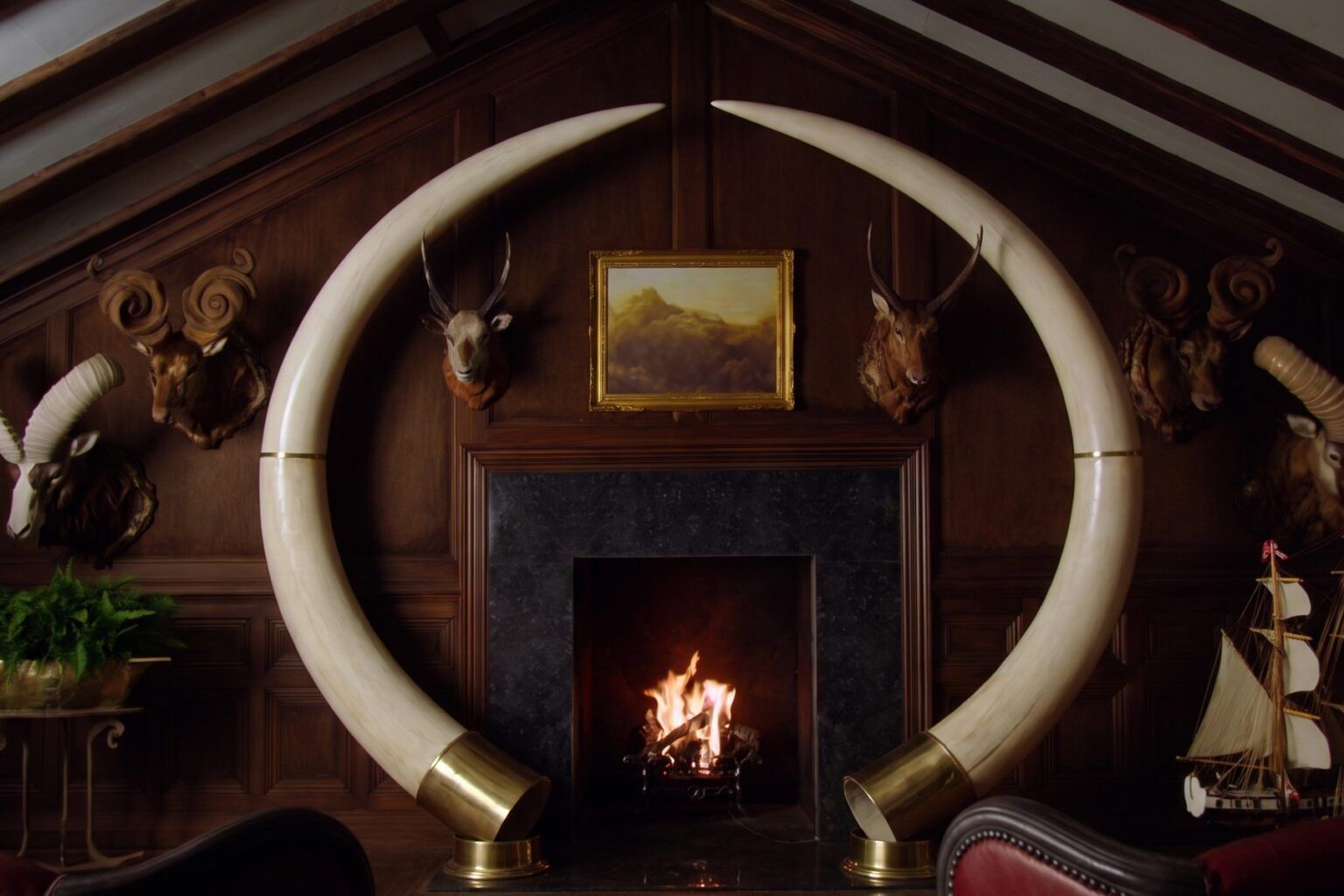
The clubhouse itself is the kind of amenity no design budget can buy. The globe Thor Heyerdahl used to plan the Kon-Tiki voyage sits in the foyer. A sledge Robert Peary took toward the North Pole hangs in the dining room. There is a woolly mammoth tusk, a purported yeti scalp, a map room named for Sir Edmund Hillary, and the James B. Ford library and archive holding a century of expedition records.
One clarification worth making, since it circulates constantly: the club’s annual dinner earned its reputation on a cocktail hour of tarantulas, goat eyeballs, and assorted protein that no restaurant would plate. That era is largely over. As the club’s conservation posture hardened, the exotic-animal menu gave way to conventional cuisine, with insect hors d’oeuvres surviving at the reception for anyone who wants the old story. The legend outlived the practice — which is itself a lesson in how club mythology works.
The real membership benefit is not a perk. It is an assignment.
Since 1918, the club has maintained a set of numbered expedition flags — more than 200 of them, each with its own service history. A member may petition to carry one, and the flag is granted only to expeditions with genuine scientific promise. Carry it, and you owe the club a written Flag Report documenting what you found. These flags have flown at both poles, on the summit of Everest, on the surface of the moon, and at the bottom of the Mariana Trench.
Read the flag program as a membership mechanic and it is remarkable: the club’s most coveted benefit is a duty. You apply for it, you are judged on merit, you carry the institution’s name into the field, and you file a report when you return. Access creates obligation, and the obligation generates the next generation of proof that the standard is real.
This Is Not a Novelty. It’s the Older Tradition.
The achievement gate is not an Explorers Club eccentricity. It is what serious clubs did before the category discovered bottle service.
The Royal Geographical Society was founded in London in 1830 to advance geographical science, and its Fellows — Darwin, Livingstone, Shackleton and Scott among them — carry the post-nominal FRGS. Election still requires a proposer and seconder, or documented evidence of a body of relevant work, and a vote of Council.
America has its own versions. The Cosmos Club in Washington admits people who have done meritorious original work in science, literature, or the arts. The Century Association in New York restricts membership to those distinguished in letters and the fine arts, or serious amateurs of them. Both require nomination, seconding, and a committee that can say no.
The modern business analogue is YPO, which gates on verifiable operating scale: top operational leader with full P&L authority, under 45 at entry, and a company clearing employee and revenue thresholds — with an independent third party auditing the numbers before admission. Whatever one thinks of the format, YPO solved the hardest problem in achievement-based membership: it made the claim checkable and put the checking outside the room.
What Operators Can Actually Steal
Very few clubs should try to become the Explorers Club. Almost every club should steal its architecture. Five mechanisms travel.
1. Write a gate that can be verified. Replace one unfalsifiable admission criterion with one that has evidence attached. Not “leaders in their field” — a threshold, a body of work, a role, an audited number. If nobody on the committee could ever be shown to be wrong, the standard is decorative.
2. Make sponsorship cost something. Two written letters, from members who cleared the same bar, with the sponsor’s name attached to the outcome. Sponsorship that carries no reputational weight is a referral program wearing a blazer.
3. Let the club assign the tier. The applicant submits a record; the committee decides where that record lands. This is the single cheapest reform available to most clubs, and it kills the quiet negotiation that turns a standard into a starting offer.
4. Build a ladder, and a farm system. Member to Fellow gives accomplished people something to climb after they join — the rarest thing in a market that treats admission as the finish line. Student and Term tiers bring in people before they have a record, at prices that cost nothing, and convert them once they do.
5. Make the best benefit an obligation. A flag, a fellowship, a research grant, a speaking slot, a named expedition or project — awarded on merit, requiring something back. Clubs spend fortunes manufacturing belonging with programming. Obligation manufactures it for free, and permanently.
The Scarcity Nobody Is Selling
The economics here are worth sitting with. A club charging under a thousand dollars to join has a harder door than a club charging two hundred thousand — because the price was never the barrier. The standard was. Money-gated clubs have to keep raising initiation fees and dues to preserve scarcity, which means their exclusivity is an inflation problem. Achievement-gated clubs get scarcity for free and keep it forever, because the supply of people who have actually done the thing does not expand when the market gets hot.
That is the arbitrage sitting in front of every membership operator right now. The new wave has saturated the market with rooms — beautifully built, well-programmed, staffed to a standard the old clubs can’t match, and increasingly interchangeable. What almost none of them have is a reason to be in the room that a prospective member could not simply buy somewhere else next quarter. The clubs that have held their scarcity longest — the ones on our list of America’s most exclusive private clubs — are almost all gating on something other than the fee.
A 122-year-old brownstone on 70th Street, full of dead men’s sledges and a globe used to plan a raft voyage across the Pacific, still has the thing the whole category is trying to purchase. It never sold it in the first place.
Free Download
The 2026 Private Club Benchmark Report
The membership, amenity, and pricing data reshaping private clubs — from a 1,200-club analysis. Enter your details and we'll send it to your inbox.