
The Weekend the Club Earns Its Keep
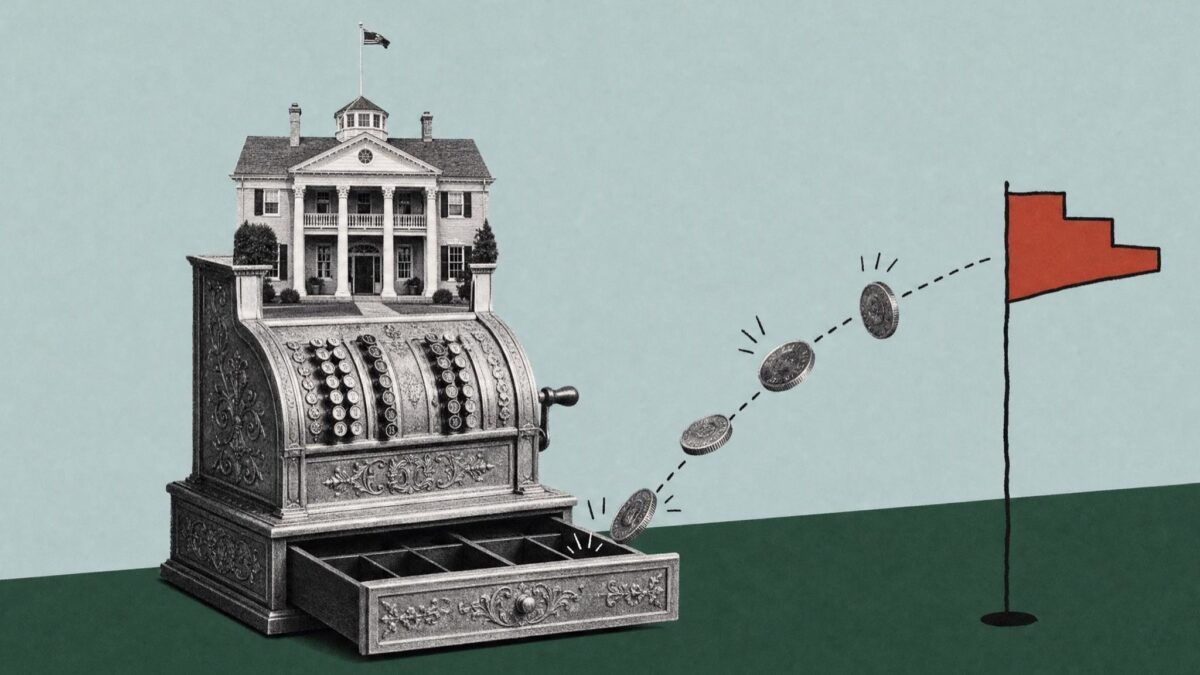
Father’s Day does not arrive quietly at a well-run private club. It arrives three weeks early — in the form of a sign-up sheet at the pro shop, a menu tasting in the kitchen, and a tournament bracket on the GM’s desk. By the time Sunday, June 21 rolls around, the staff knows where every father-son duo will tee off, what bourbon is being poured at the cigar station, and how many covers the dining room has committed to. That level of preparation is not coincidence. It is the difference between a club that fills its calendar and one that watches its members drive past the gate to a steakhouse. Father’s Day has become one of the most productive Sundays of the year for clubs that program it intentionally. Americans spent a record $24 billion celebrating fathers in 2025 — up more than 7 percent year-over-year and up 50 percent since 2019, according to the National Retail Federation. According to the National Retail Federation, the single largest spending category was the special outing at $4.8 billion, overtaking clothing, gift cards, and every other traditional category. Fifty-three percent of celebrants planned a special outing; 30 percent specifically chose a gift of experience. The private club, at its best, is both of those things at once.$24B
Father’s Day spending, 2025 (NRF record)
$199
Average spend per person (NRF, 2025)
$4.8B
Spent on special outings — the #1 category
53%
Of celebrants planned a special outing (NRF, 2025)
The Tournament as Anchor Event
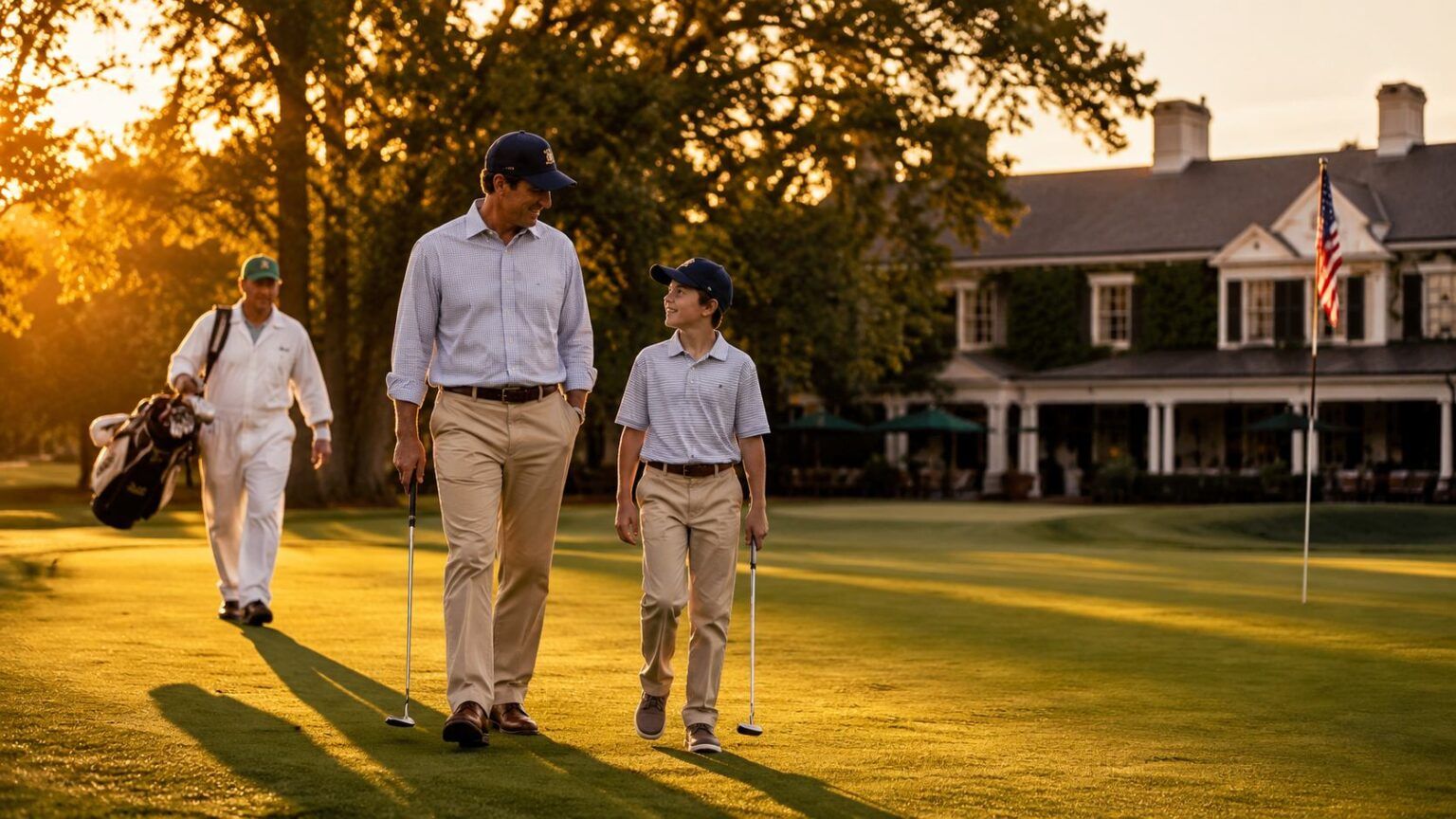
The most durable Father’s Day program at any golf club is a format that puts fathers and children on the course together. Father-child scrambles, two-person best-ball competitions, and closest-to-the-pin contests on a par-3 create the kind of on-course memory that no gift card replicates. Clubs that run these events well treat them as anchor programming — the round is the reason the family comes, and everything else (brunch reservation, pro shop voucher, cigar station at the 19th hole) flows from that commitment. Format matters more than most clubs acknowledge. A full 18-hole stroke-play event intimidates newer players and younger children, and a scramble with flights organized by age pairing — say, under-12, teen, and adult — creates competitive equity without diluting the experience for serious golfers. Closest-to-the-pin and longest-drive contests on designated holes give every foursome a moment of individual focus inside the team format. On-course beverage stations are standard; a cart serving chilled beer and a single signature cocktail keeps pace of play smooth while deepening F&B revenue without table pressure. The National Father & Son Team Classic — the world’s largest event of its kind, held annually over 54 holes — draws roughly 800 players from more than 40 states annually. Its longevity underscores what the format already proves at the club level: fathers and sons (and daughters) will plan around a golf event they can share.Father’s Day: Most Popular Club Program Elements
⚠️ Bar chart reflects estimated prevalence among clubs that run dedicated Father’s Day programming, based on industry event planning sources and CMAA Idea Fair submissions. Not a formally surveyed dataset.
Brunch, BBQ, and the F&B Opportunity
The kitchen is where clubs make or miss the day. Full-service restaurant transactions run roughly 16 percent above a typical Sunday on Father’s Day, and the average check runs 16 percent higher — with same-store gross merchandise volume up 35 percent at full-service locations nationally, according to Toast’s Father’s Day 2023 analysis. Steaks, which clubs already do well, surged 53 percent on Father’s Day versus the average Sunday in June. These are not figures unique to commercial restaurants; they reflect where consumer appetite is running on this specific day. The best club F&B programs for Father’s Day choose a lane and execute it cleanly. A brunch format — an elevated prix-fixe with carved stations, a Bloody Mary bar, and a dessert table the children remember — suits clubs whose member average skews toward multi-generational families. A BBQ-and-lawn format works when the club has outdoor space and wants a more casual, high-attendance feel that appeals to younger members and recent joiners. The most successful clubs separate the two seatings intentionally: early golfers eat after the round; non-golfers anchor the midday seating; families with young children arrive at noon and linger into the afternoon. What kills the day is indecision — trying to run a full brunch menu, a buffet, and à la carte simultaneously with the same kitchen team. Experienced club operators pre-sell a fixed number of covers per seating, communicate pricing in advance, and staff for the count. The 70 percent of clubs that subsidize their F&B operations year-round have an opportunity on Father’s Day to reduce that subsidy — not by charging more, but by filling the room and managing covers tightly (Club Benchmarking).The Cigar and Spirits Station: High Margin, High Visibility
The cigar and whiskey pairing has become a fixture at clubs that understand what Father’s Day actually signals: a day when dads get to do what they enjoy, with permission. A post-round cigar station near the 18th green or on the terrace — stocked with a curated selection of four to six cigars at different price points and paired with two to three bourbons or single malts — requires minimal infrastructure but delivers outsized member satisfaction. Clubs that run these events well treat them as ticketed add-ons rather than complimentary perks. A $45 ticket covering one cigar and two pours is a reasonable ask; a $75 ticket that adds a flight comparison of three bourbons with tasting notes from the beverage director elevates it to a genuine experience. The key is pairing selection — not defaulting to the cheapest cigar in the humidor, but curating a short list with staff knowledge behind it. Members notice the difference. For clubs with outdoor terrace space, pairing the cigar station with a lawn games activation — cornhole, bocce, oversized chess — extends dwell time on property and keeps non-golfers engaged while rounds finish. The goal is keeping the family together on-site, which directly correlates with F&B spend per head.30%
of Father’s Day gift-givers in 2025 chose a gift of experience — nearly double the rate from 2019. The private club is uniquely positioned to deliver exactly that.
National Retail Federation, Father’s Day Consumer Survey 2025
The Pro Shop Play: Gifting Without Guesswork
Golf is Father’s Day’s native language. Golf balls are the perennial top gift-giver choice for golfing dads — the gift requires no sizing, no returns, and no explanation. A well-run pro shop uses Father’s Day as a merchandising moment without manufacturing pressure. Standard industry practice calls for a curated “Father’s Day” display — not everything on the floor repriced and relabeled, but a considered edit of four to six items across three price tiers: an accessible tier (balls, a sleeve of tees, a ball marker), a mid-range tier (branded gear, a head cover, a quality glove), and a premium tier (a range finder, a custom hat, or a lesson package). The most effective clubs pair the physical display with a “lesson as gift” option — a single lesson with the head pro, or a father-junior session. Experience-as-gift purchases grew from 23 to 30 percent of Father’s Day gift budgets between 2019 and 2025 (NRF); the pro shop is the right place to sell that shift. A gift card toward a lesson series, printed in an envelope with a handwritten card from the professional, costs almost nothing to produce and carries genuine perceived value. Clubs that sell out of merchandise on Father’s Day weekend didn’t stumble into it. They emailed members two weeks out with a simple message: “The pro shop is stocked. Families, come in and we’ll help.” That prompt — aimed at spouses and adult children, not golfers — is the most underused Father’s Day marketing move in the industry.Making It a Weekend, Not Just a Sunday
The clubs that win Father’s Day weekend do not wait for Sunday. They launch the event on Saturday morning. A pre-event scramble or practice round on Saturday, combined with a club dinner or barbecue Saturday evening, builds attendance for Sunday while spreading F&B load across two kitchen services. Saturday guests who stay through dinner are far more likely to return Sunday for the main event. Communication is the quiet differentiator. The clubs that fill their Father’s Day events send three touchpoints: an announcement six weeks out, a registration reminder with deadline two weeks out, and a day-before logistics note (tee times, brunch reservations, the cigar station location). They do not rely on the clubhouse bulletin board. They use email, text, and a brief member app notification. Given that the 2025 Club Leaders’ Perspectives report found clubs continue to struggle with passive communication channels, Father’s Day is a concrete opportunity to build a communications cadence that works the rest of the year, too.Programs That Fill Up
FormatPre-sold covers / ticketed events
GolfScramble with flights by age pairing
F&BFixed seatings, prix-fixe menu
Add-onsTicketed cigar & spirits station
Comms3 touchpoints starting 6 weeks out
TimelineSat + Sun programming
Programs That Underdeliver
FormatWalk-in only, no sign-ups
Golf18-hole stroke play, no flights
F&BFull à la carte + buffet simultaneously
Add-onsComplimentary only, no upsell
CommsBulletin board notice the week before
TimelineSunday-only, scramble for lunch capacity
What Members Remember
Father’s Day is, at its core, a family event. The golfer who shoots 84 in the scramble and then watches his daughter sink a par putt on 17 does not forget it. The father who sits on the terrace with a Pappy Van Winkle and a Padrón while his kids throw a bocce ball across the lawn has found the afternoon he was looking for. The private club’s competitive advantage on this day is not price, exclusivity, or prestige — it is the ability to deliver a contained, curated, genuinely enjoyable family experience that no restaurant or resort replicates with the same intimacy. That advantage is squandered when the day is treated as routine. The clubs that treat Father’s Day as a revenue event — fully programmed, pre-sold, and staffed to match — discover something beyond the F&B uptick: they discover that the members who showed up with their families that Sunday are also the members who renew without hesitation, refer guests, and show up again next year. Programming is membership retention by another name.Free Download
The 2026 Private Club Benchmark Report
The membership, amenity, and pricing data reshaping private clubs — from a 1,200-club analysis. Enter your details and we'll send it to your inbox.