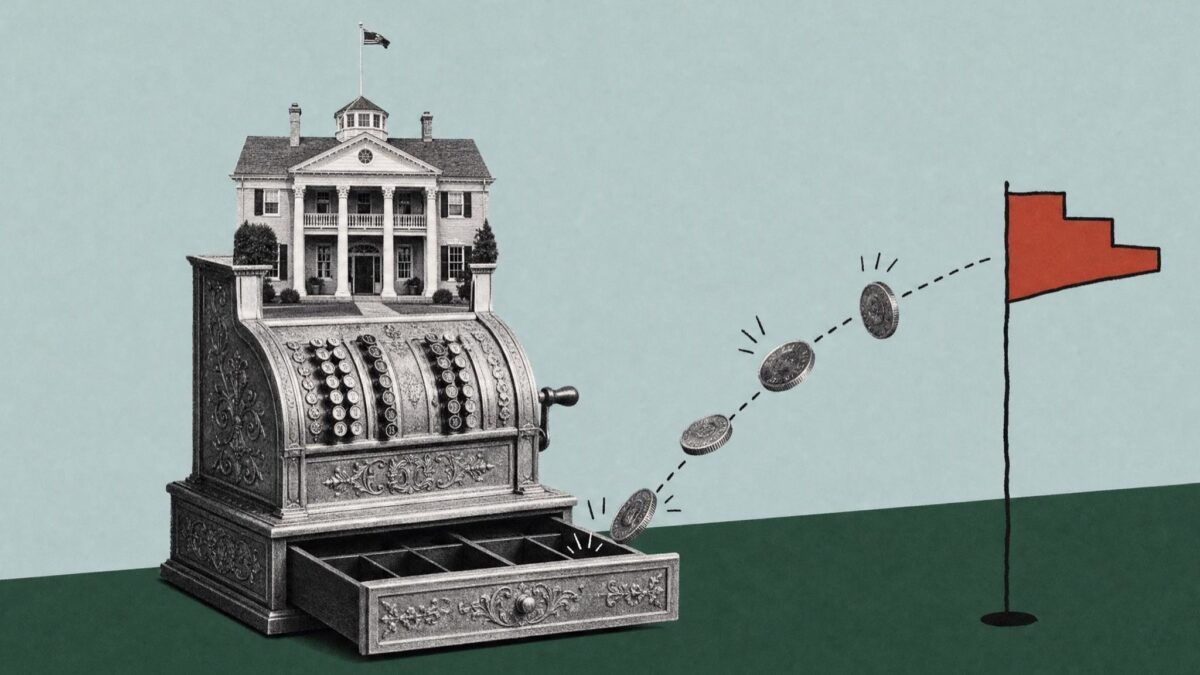

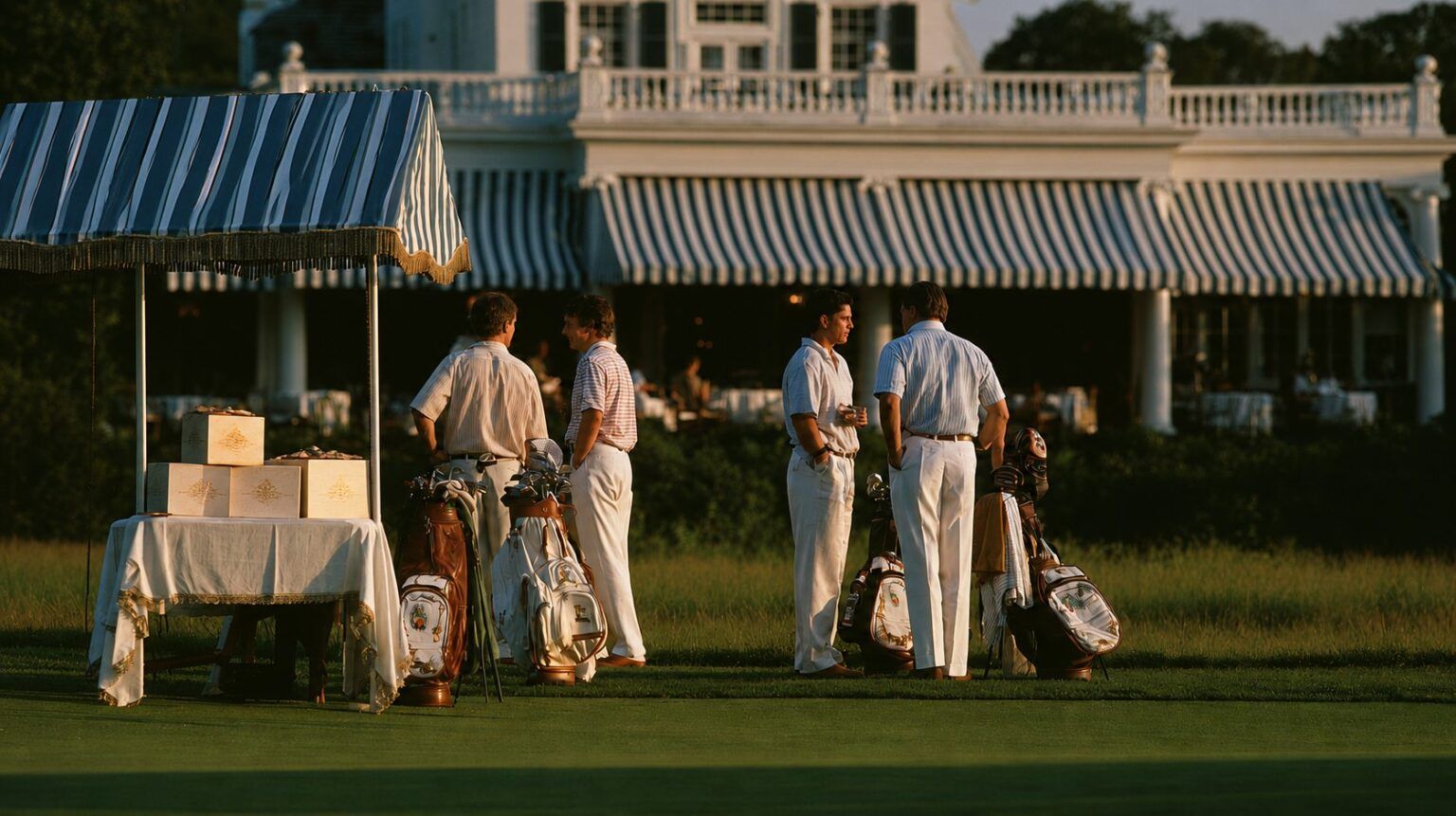
Every summer, private clubs stage the most expensive marketing event on their calendar and then treat it as a cost center. The signature member-guest invitational — the one with the custom tee gifts, the Calcutta, the closing party your members plan their year around — fills the property with qualified, pre-vetted strangers who already golf, already carry the household income, and already have a friend inside the gates vouching for them. Then the last putt drops, the trophies get handed out, and the guest list goes into a drawer.
That guest list is the single richest membership lead source your club will produce all year. GGA Partners reports that more than half of all member leads come from referrals, and that “friends and family who are members” ranks among the top three reasons anyone joins a private club. A member-guest is a referral event by construction. Every guest in the field was hand-picked by a member willing to spend a weekend and a few hundred dollars a team to bring them onto the property. You will never buy a colder-to-warmer prospect that cheaply again.
The clubs that understand this stop accounting for the invitational as a tournament and start accounting for it as lead generation. The math forces the reframe.
The guest list is the lead list
Run the referral numbers and the invitational stops looking like hospitality and starts looking like a pipeline. GGA puts prospect-to-member conversion at roughly 8 to 12 percent, against typical annual attrition of 20 to 35 members. To simply stay flat, GGA estimates the average club needs to move about 200 qualified prospects through its funnel every year.
A single member-guest with a 104-player guest field — 52 teams of a member and a guest — delivers a meaningful slice of that annual target in one weekend. At an 8 to 12 percent conversion rate, that one field mathematically contains eight to twelve future members. Not suspects pulled from a purchased list. Golfers who already spent two days on your golf course, ate in your grill, met your members, and left impressed enough to answer a phone call.
The operational failure is almost never the event. It is the 72 hours after it. Guest information sits on a paper sign-up sheet or a pro-shop spreadsheet and never reaches the membership office. The right treatment is unglamorous and decisive: capture every guest’s name, contact information, sponsoring member, and handicap; import the list into your CRM the way you would import any lead source; tag it “2026 Invitational — Guest”; and sequence a follow-up within three days while the weekend is still a warm memory. The sponsoring member is your warm introduction already made — the follow-up is a thank-you and a soft “your guest seemed to love the place,” not a cold pitch. This is the same discipline that governs a well-run summer guest-pass program: the acquisition value is in the structured follow-up, not the day itself.
Seen this way, the tee gifts and the caviar are not tournament expense lines. They are brand marketing spent against a membership whose initiation and dues can run into six figures. Which is precisely how the most aggressive operators in the country already treat them.
The invitational as brand engine
No club has weaponized the member-guest as a marketing asset more completely than Scottsdale National Golf Club. Owner Bob Parsons’ “Wild West Invitational” — run in both men’s and women’s editions — is, per 2017 Forbes reporting, an escalating spectacle: designer tee gifts (Jimmy Choo, Louboutin and Valentino at the women’s event), champagne towers and caviar, tequila tastings, $500 cigars, and a closing “Stampede.” The guest book has included George W. Bush, Dan Quayle and Lance Armstrong.
The economics behind the spectacle explain the spend. Scottsdale National carries, per those 2017 figures, a $150,000 initiation and $36,000 in annual dues against a target of 250 to 300 members, on a property into which Parsons had invested roughly $250 million. Against a member lifetime value measured in the hundreds of thousands of dollars, a lavish member-guest is not extravagance — it is customer acquisition cost, and a rational one. The event exists to make guests want in and to make members proud to bring them. Every dollar of the production is aimed at the referral it manufactures.
Most clubs cannot and should not try to out-spend Scottsdale National. But the principle scales down cleanly: the invitational is your most-photographed, most-talked-about, most-referral-dense moment of the year. Budget it, staff it and measure it like the acquisition channel it is — and capture the leads it generates.
The second invitational: engineering demand
The most instructive move in the member-guest economy right now is not spending more on one event. It is reading the waitlist on your existing event as a product signal — and building a second one.
The Club at Rolling Hills in Golden, Colorado did exactly that. Its flagship member-guest, “The Stampede,” had built a waitlist of five to seven years — a clear sign of demand the club had no way to satisfy. Rather than let that demand sit unmet, Club + Resort Business reported that Rolling Hills created “The Rattler”: a co-ed, four-day member-guest capped at 52 teams at $1,100 per team, deliberately restricted to members 45 or younger or within their first five years. The field grew from 36 teams to 46 to 52. The club framed it explicitly as both a revenue event and a younger-member engagement tool — the second invitational absorbs overflow demand from the first while pulling exactly the demographic every club says it is trying to reach.
A five-to-seven-year waitlist for an event is the same market signal as a five-to-seven-year waitlist for membership: unmet demand you are currently declining to monetize. Golf Life Navigators finds that 70 percent of prospects will not join a club carrying a 12-plus-month membership waitlist, and half pivot to another club entirely. The lesson translates to events: demand you cannot serve is demand a competitor eventually serves. A second, differently-positioned invitational is how you serve it — and how you put your youngest members and their peer networks at the center of the referral engine.
The heritage apex: why the format endures
At the top of the market, the member-guest is not a marketing tactic at all. It is the club’s identity.
The Seminole Pro-Member in Juno Beach, Florida is what Golf Digest called “an elite club’s elite member-guest.” Its Calcutta origins trace to 1937; the modern Pro-Member has run since 2004; Ben Hogan partnered in it as far back as 1950; and the 2026 edition drew national coverage from Golf.com. At Seminole, the event is not designed to sell memberships — the club has no such problem. It endures because the format itself, a member bringing a guest into a shared competition, is the most durable expression of what a private club is for. That is the deeper reason the format persists at every tier: it is belonging, made into a scorecard.
That standing hasn’t gone unnoticed: Seminole is reportedly on the PGA Tour’s shortlist to host the Tour Championship when the season finale begins rotating beyond East Lake after 2027 — alongside Pine Valley and Cypress Point, per ESPN’s Mark Schlabach. It would be the first official Tour event in the club’s history.
The heritage clubs prove the format’s staying power. The growth-minded clubs prove its pipeline value. Both are working the same asset — a member, a guest and a golf course — toward different ends. For most clubs, the goal is squarely the pipeline, and the guest and greens fees the format generates are already meaningful money: the CMAA reports that greens and guest fees together account for roughly 28 percent of golf-operations revenue at private clubs. The membership upside sits on top of that, unclaimed, in the guest list.
What operators should do now
The member-guest economy rewards clubs that treat their signature invitational as the highest-density prospecting event on the calendar. Five moves capture that value:
- Import the guest list as a lead source. Within 72 hours of the final round, load every guest’s name, contact, sponsoring member and handicap into your CRM, tag them as invitational guests, and start a sequenced follow-up. The referral is already made — do not let it cool.
- Budget the invitational as acquisition, not hospitality. Tee gifts and F&B are marketing spend against a six-figure member lifetime value, not tournament expense lines. Measure cost-per-qualified-prospect, not cost-per-cover.
- Read your event waitlist as a product signal. A multi-year wait for your flagship member-guest is unmet demand. Rolling Hills’ Rattler shows the answer is a second, differently-positioned event — ideally one targeted at members under 45.
- Route follow-up through the sponsoring member. Referrals are the most cost-effective growth channel in 2026, and the sponsor is your warm introduction. A member-assisted follow-up converts far better than a cold membership call.
- Track the season, not the event. Roughly 200 qualified prospects a year keeps the average club flat. Report what share of that number each invitational delivers, and the member-guest stops being a line item and becomes a pillar of the plan — the exact discipline that defines a working acquisition funnel.
Private clubs generate an estimated $24 billion in annual economic activity. The clubs that grow inside that number in 2026 will be the ones that stop letting their best lead list walk out the gate on Sunday afternoon.
Sources
- GGA Partners — Inspiring Member Introductions — >50% of leads from referral; 8–12% conversion; ~200 prospects/year needed to stay flat
- Forbes — Bob Parsons’ Wild West Invitational — Scottsdale National event details and 2017 club economics
- Club + Resort Business — Colorado club’s new member-guest twist — Rolling Hills’ The Rattler format and growth
- Golf.com — Inside the 2026 Seminole Pro-Member field — Seminole Pro-Member history and 2026 edition
- Golf Digest — History of the Seminole Pro-Member — “elite club’s elite member-guest,” Calcutta origins, Hogan
- Palm Beach Post — PGA Tour targets Seminole for Tour Championship rotation — post-2027 rotation shortlist, per ESPN’s Mark Schlabach
- CMAA Board Brief (2021) — greens + guest fees ≈28% of golf-operations revenue
- Golf Life Navigators — Private club waitlists — 70% won’t join with a 12+ month waitlist; 50% pivot
- Golf Inc — Private clubs generate $24 billion in economic activity — industry economic scale
- Club + Resort Business — Membership growth strategies working in 2026 — referrals as most cost-effective 2026 channel
Free Download
The 2026 Private Club Benchmark Report
The membership, amenity, and pricing data reshaping private clubs — from a 1,200-club analysis. Enter your details and we'll send it to your inbox.