
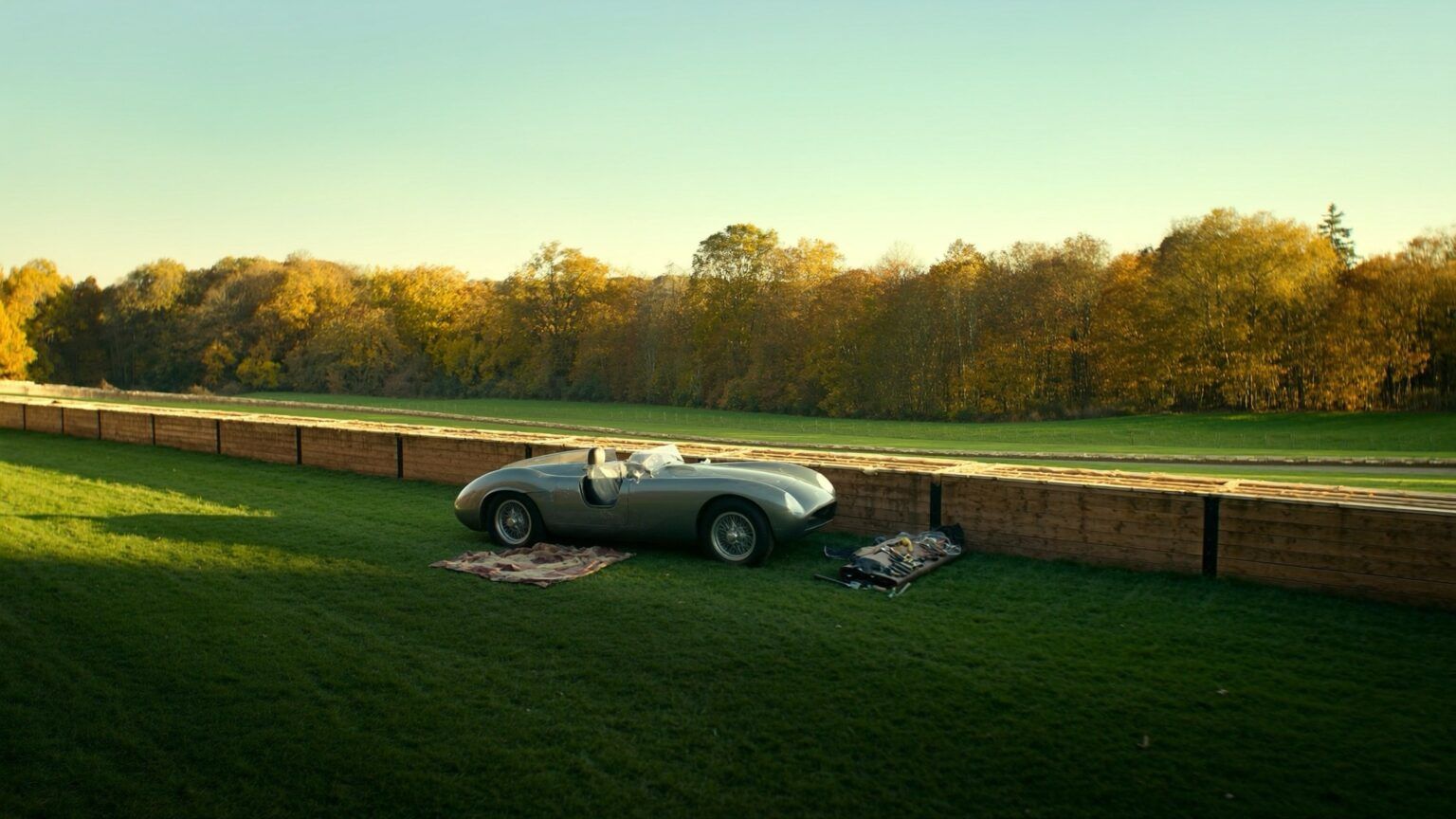
For three days in mid-September — the 18th through the 20th this year — the Goodwood Revival will do something no amount of horsepower can: it will make 150,000 people dress up. Tweed, seamed stockings, RAF uniforms, victory rolls. The Duke of Richmond’s estate in West Sussex doesn’t merely host vintage racing; it enforces a world, and that world has become the most studied piece of programming in the motoring-club universe, because it converts nostalgia into waitlists, and waitlists into pricing power. With Chantilly Arts & Elegance running September 13 outside Paris and the Audrain Newport Concours following October 1–4 in Rhode Island, the next month is a rolling masterclass in heritage programming — and club leaders should be taking notes, whether or not they own a single racetrack.
The Market Has Voted for Heritage — With Money
Heritage programming isn’t a sentimental indulgence. It sits at the intersection of three documented shifts in how affluent consumers spend. Experiences are eating objects: the BCG–Altagamma True Luxury 2025 study found Design & Fine Arts spending among top-tier luxury clients growing 4% historically with 8% expected future growth, and Deloitte’s Global Powers of Luxury 2026 names the shift toward experiential luxury a top consumer behavior for the next 12–18 months, cited by 20% of luxury executives globally. Heritage itself has become a philanthropic priority: Knight Frank’s Wealth Report 2025 found 22% of family offices already support arts, culture and heritage preservation, with 21% planning to going forward — and the broader base agrees, with 72% of Americans telling NGCOA’s Golf Industry Key Trends 2025 study that unique experiences matter to them, against an $84 trillion generational wealth transfer over the next twenty years.
That appetite shows up in the receipts. The Amelia — the concours now operated by Hagerty on Amelia Island, Florida — opened in 1996 with 163 cars and 2,200 attendees; it now draws more than 20,000 attendees a year, with an annual economic impact close to $30 million, according to Jacksonville Today, citing event officials. Heritage, done well, is a growth business, not a nostalgia project.
What the Goodwood Revival Actually Gets Right
Most clubs that attempt a “heritage day” get it half right: some old cars on the lawn, a swing band, done by 4 p.m. The Goodwood Revival’s genius is structural, and it breaks down into four decisions any club can study.
- Total immersion, not decoration. The Revival is the world’s only major historic race meeting staged entirely in period dress — spectators included. A member who invests effort in an event becomes an advocate for it; one who merely attends becomes a critic.
- A hard scarcity frame. One weekend a year, on a circuit that otherwise sits quiet. The calendar itself does the marketing — unlike clubs that dilute a signature event by cloning it until it means nothing.
- The event feeds the membership, and vice versa. The Revival’s parent club, the Goodwood Road Racing Club, gives members priority access and year-round track experiences. The public spectacle is the funnel; the club is the engine underneath.
- Authenticity as an operating standard. Right down to the signage and mechanics’ overalls, the estate polices period accuracy. Deloitte’s Global Powers of Luxury 2026 is blunt that Gen Z consumers demand authenticity, sustainability, and seamless digital-to-physical engagement — and detect its absence instantly.
Chantilly Arts & Elegance, staged September 13 in the gardens of the Château de Chantilly, makes a complementary point: heritage programming doesn’t require racing at all — concours judging, haute couture, and lawn picnics are a garden party with provenance. The Audrain Newport Concours, October 1–4 across Newport’s Gilded Age mansions, goes a step further than Goodwood: it fuses the public concours with a private membership club, Audrain Motorsport, paired directly with the Audrain Automobile Museum. The 2025 event was named Motoring Event of the Year at the International Historic Motoring Awards, and has since struck a multi-year partnership with Broad Arrow Auctions.
Why Driving Clubs Specifically — and Why Now
We covered the private-track boom in our August 13 piece: motorsport country clubs are being built and expanded across the U.S., selling garage condos and track days the way golf clubs once sold fairway lots. Our August 27 article on founders’ memberships and waitlists looked at how new clubs manufacture early demand. Heritage programming is where those threads meet — a new track has asphalt and adrenaline, but no story. Heritage events let a young club borrow a century of romance the Goodwood Revival spent seven decades perfecting.
Two American clubs already prove the model at a fraction of Goodwood’s scale. Ten Tenths Motor Club in Charlotte, North Carolina, hosts its Heritage Invitational each year at its private facility inside Charlotte Motor Speedway — historic race cars on display, demonstration laps by racing legends. Now in its fourth year, it has drawn Petersen Museum founding member Bruce Meyer, Amelia Island Concours founder Bill Warner, and NASCAR Hall of Famer Mark Martin, with Vintage Indy debuting in 2026. “Racing is life,” as one member put it. “Anything before or after is just waiting.” In Pontiac, Michigan, M1 Concourse built a private motorsports country club around member garages and track access, then layered on the Classic Car Club of America’s Grand Classic and the American Speed Festival, which regularly draws 250-plus vehicles. Neither club owns a Sussex estate; both understood the racetrack is the amenity, and the heritage event is what makes members proud to belong.
The demand backdrop makes this a well-timed investment, not a gamble. According to GGA Partners’ 2024 Club Leaders’ Perspectives Report, 40% of clubs reported member numbers increased and more than one-third said waitlists grew, with larger clubs ($10–25 million in revenue) sustaining demand better than clubs under $5 million. The same report found clubs raised initiation fees by an average of 8.7%, operating dues by 6.2%, and capital dues by 12.5% — absorbed while satisfaction held. Demand consolidates around clubs that can justify premium pricing with distinctive experiences, and a signature heritage weekend is exactly that justification. Anecdotally, club leaders report members of all ages sharing a balanced interest in socializing across generations — the 70-year-old who remembers the cars and the 30-year-old who found them through film and video games standing at the same fence rail.
Heritage Programming Isn’t Just for Driving Clubs
The clearest proof this playbook travels beyond motorsport clubs sits on a golf course. Port Royal Golf Club on Hilton Head Island hosts the Hilton Head Island Concours d’Elegance & Motoring Festival — a Car Club Jamboree pairing member car clubs with judged competition, scheduled back-to-back with the Savannah Speed Classic. 2025 was a record year, and its Charitable Fund has raised more than $1 million in grants, scholarships, and in-kind donations since the event’s inception, according to the Hilton Head Island Concours Charitable Fund. A golf club didn’t need to build a racetrack to borrow the Goodwood Revival’s formula — it needed a fairway, a charitable hook, and a reason for car people to show up twice in one weekend.
Building Your Own Revival Weekend: A Practical Framework
You don’t need a Sussex estate. You need discipline about five things.
- Pick one era and commit. “Vintage” isn’t a theme, it’s an excuse to under-deliver. Pick a decade or a discipline and let it dictate the music, dress code, and guest list.
- Borrow authority you haven’t earned yet. Ten Tenths invited Bruce Meyer and Bill Warner; Audrain paired its club with a museum. A young event needs a marque historian or a racing legend willing to lend a name before members lend their trust.
- Build a hard scarcity frame. One weekend, once a year, on grounds that otherwise sit quiet. Resist the urge to run it twice — that’s what kills the mystique.
- Let the public event fund the private club, not the reverse. Goodwood’s spectacle sits atop the members-only Goodwood Road Racing Club; Hilton Head’s ties directly to a charitable fund. Brand halo outward, membership pipeline inward.
- Measure what actually moved. Track waitlist growth, initiation-fee tolerance, and cross-generational attendance before and after the first event — the GGA numbers above are the benchmark to beat.
Goodwood didn’t build the Revival to sell memberships — but sixty-plus years of doing it right is exactly why every club above now studies it. If your club has the story but not yet the stage, Private Club Marketing helps driving clubs and traditional clubs turn heritage into headcount: positioning, member communications, and the campaign work that carries a signature weekend into a waitlist. Talk to us before next season’s calendar is set.
Free Download
The 2026 Private Club Benchmark Report
The membership, amenity, and pricing data reshaping private clubs — from a 1,200-club analysis. Enter your details and we'll send it to your inbox.