

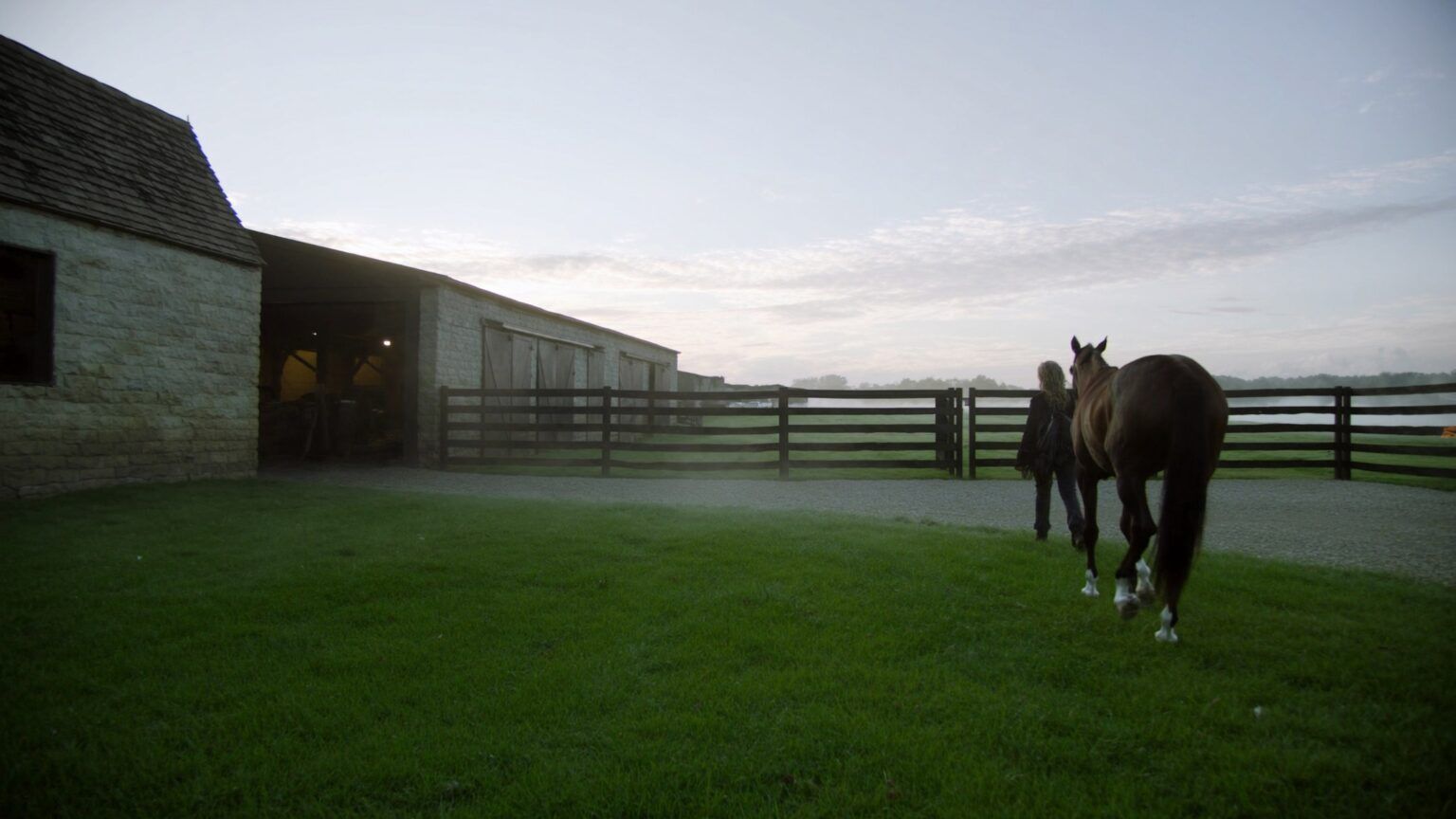
From September 14 through 26, 4,635 yearlings are cataloged to pass through the sales ring at Keeneland in Lexington, Kentucky, across 12 sessions of the Keeneland September sale — the largest Thoroughbred yearling auction in the world, according to Keeneland’s own sale catalog announcement. A meaningful share of the buyers, sellers, consignors, and syndicate partners in those pavilions hold memberships at private clubs: country clubs in the Bluegrass, city clubs in New York and Chicago, golf clubs in Florida and Southern California. In the same month, the show-jumping world converges on Calgary for the Spruce Meadows Masters, September 9–13, drawing an overlapping population of equestrian owners and sponsors.
Most clubs treat these members the way they treat everyone else in September: a fall golf calendar, a wine dinner, maybe a football watch party. That’s a missed opportunity. The bloodstock owner is one of the most distinctive — and most underserved — member personas in club hospitality, and the two weeks of the Keeneland September sale are the single best window of the year to serve them visibly.
Who the Bloodstock Member Actually Is
Thoroughbred ownership sits at the intersection of passion investing, agriculture, and high-stakes commerce. A yearling purchase is an illiquid, high-variance asset bought largely on judgment and relationships — closer in spirit to acquiring art or a vineyard than to buying a security. That places bloodstock owners squarely inside the “beyond money” luxury ecosystem that BCG and Altagamma’s True-Luxury Global Consumer Insight maps out: a world where auctions, private clubs, concierge services, exclusive events, and wealth management all compete for the same consumer’s attention and loyalty. Your club is not adjacent to that ecosystem — it is a node in it, whether you program for it or not.
The financial backdrop favors this cohort. According to Knight Frank’s The Wealth Report 2025, the US led the world in wealth creation during 2024, with a 5.2% expansion in its population of high-net-worth individuals. Risk appetite among the wealthy has broadened, and confidence in transacting high-value passion assets online continues to climb. Bloodstock is part of that pattern: sales are streamed, bidding is remote-enabled, and owners follow their consignments from anywhere. Which means your member may be physically in your dining room while economically at Keeneland — and a club that understands that can build the experience around it.
Behaviorally, bloodstock members share a few traits worth designing for:
- They travel on a fixed circuit. The Keeneland September sale and the spring and fall race meets, the major two-year-old sales, Saratoga in August, Spruce Meadows and the show-jumping calendar for sport-horse owners. Their absences from your club are predictable — and so are their returns.
- They entertain professionally. Syndicate partners, trainers, bloodstock agents, and prospective co-owners all need to be hosted. Every one of those dinners is either happening at your club or at a competitor’s table.
- They are storytellers with content. A member whose yearling just sold for a headline price, or whose homebred is entered in a graded stakes, has a story the rest of your membership genuinely wants to hear.
Why the Keeneland September Sale Is the Moment
The sale compresses the entire Thoroughbred economy into a twelve-session window. Owners are buying, selling, or watching intently — and the outcomes are emotional. A record sale is a celebration; a buyback is a commiseration. Either way, the member returns home wanting to talk about it.
Lexington itself shows what purpose-built bloodstock hospitality looks like. The Thoroughbred Club of America has operated out of a 19th-century manor on Keeneland’s own grounds since moving there on land leased from the Keeneland Association in June 1986, open to breeders, owners, and industry professionals worldwide, with club rooms set up for pari-mutuel wagering and simulcasting during sales and race meets. It grew from 15 charter members who organized at a Lexington hotel in 1932 into a membership the club describes as spanning Europe, South America, Canada, Mexico, and the entire United States — proof that a club built around bloodstock identity, not geography, can hold relevance for nearly a century. A few hundred yards away, the Keeneland Club takes the model further: an invitation-only members’ organization tied directly to the Clubhouse and sale-week access, with new memberships limited to the number of members who resign each year. The waitlist itself is the marketing — scarcity signals seriousness to exactly the audience a bloodstock program wants to attract.
The broader industry context makes the stakes clear. Club Benchmarking’s 2024 Economic Impact Report, produced with CMAA, counted 3,887 private clubs generating $32.6 billion in revenue and employing roughly 573,000 people nationally — and found that the South is the largest regional club market in the country. Clubs in racing geographies are competing inside the deepest, most amenity-rich part of the industry. Differentiation doesn’t come from having a nicer grill room; it comes from being the club that understood the sale mattered.
City clubs shouldn’t sit this out either. The Louisville Thoroughbred Society was built around exactly this insight: a city social club, an hour from Lexington, offering pari-mutuel wagering conducted by Churchill Downs, race simulcasting, concierge services, and a dedicated “Traveler” tier for members based more than 100 miles from downtown Louisville. Its four-tier membership structure — Premier, Corporate, Young Professional, and Traveler — is a template any city club can borrow: you don’t need to be in the Bluegrass to own the racing conversation, you need a room, a screen, and a reason for out-of-town members to show up. A Manhattan or Chicago city club with even a handful of racing members can own the “watch it together” experience — premier sessions of the Keeneland September sale streamed in a private room with a bourbon program and a bloodstock agent walking the room through what the bidding means. Growth Market Reports’ research on the global private members’ club market projects the sector nearly doubling from $31.7 billion in 2024 to $59.1 billion by 2033, pointing to experience-led programming — cultural calendars, business salons, curated events — as a primary growth vector for clubs trying to stay relevant across generations. An equestrian salon is exactly that kind of programming: niche enough to feel exclusive, social enough to pull in the merely curious.
The Concierge Play: What Great Clubs Do for Sale Week
The luxury consumer’s expectations are being set outside the club industry. The Coldwell Banker Global Luxury Trend Report 2025 describes buyers gravitating toward residences with “24/7 concierge services and resort-caliber amenities” — concierge is no longer a hotel differentiator, it’s the baseline for how affluent people expect to be supported. Applied to sale week, that looks like:
- Pre-sale intelligence and logistics. Before the sale opens, the membership or concierge team confirms which members are attending, arranges car service and dinner reservations in Lexington through reciprocal club relationships, and flags Books 1 and 2 dates on the member’s calendar unprompted.
- Reciprocal-club choreography. If you’re a city club with members heading to Lexington, your job is to make their landing seamless at a partner club. If you’re a Bluegrass club, your job is to be that landing — with guest privileges, a sale-week prix fixe, and staff briefed on who’s arriving.
- The results ritual. When a member’s horse sells well, the club knows before the member has to tell them. A note from the GM, a bottle sent to the table on their return, their consignment’s result mentioned by name. This costs almost nothing and is remembered for years.
- Hosting infrastructure. Private dining holds during late September and early October for syndicate dinners and “meet the trainer” evenings. The member brings the guests; the club supplies the stage.
The economics justify the effort. GGA Partners’ 2024 Club Leaders’ Perspectives Report found clubs continuing to raise initiation fees (+8.7%), operating dues (+6.2%), and capital dues (+12.5%) to cover rising costs. Members absorbing those increases are recalibrating what the club is worth to them. High-touch recognition of a member’s defining passion is among the cheapest, most durable answers to that question — far cheaper than the capital projects clubs typically reach for.
Programming the Equestrian Calendar, Not Just the Sale
One sale-week gesture is a nice touch. A year-round equestrian thread is a retention strategy. The racing and sport-horse calendar gives you natural anchors: Keeneland’s spring meet in April, the Fasig-Tipton and Keeneland fall sales, Saratoga in August, the Keeneland September sale itself, Spruce Meadows and the fall show-jumping circuit, and the Breeders’ Cup and National Horse Show closing out the year. Each is a legitimate excuse for a themed evening, a simulcast watch, or a member spotlight.
Clubs without a Bluegrass address can still build a real program around it. Tampa Yacht and Country Club runs Perennial Farm, an in-house hunter/jumper riding academy with a team of instructors and a stable of lesson horses and ponies, open to members and the public, complete with its own home show circuit — proof that a traditional yacht and country club, a thousand miles from Lexington, can make equestrian sport a core amenity rather than a side note. The club has held Platinum Club of America recognition in past years and is ranked among the nation’s top private yacht clubs. For clubs with sport-horse members watching Spruce Meadows the same week Keeneland is in session, that’s the model: don’t wait for a racing pedigree in the membership roster, build the infrastructure and the members with equestrian ties will find it.
Where to Start
You don’t need a farm, a simulcast license, or a manor house on Keeneland’s grounds to serve this member well this September. You need a list of who’s attending the sale, a plan for how they’re welcomed home, and one evening on the calendar where the rest of your membership gets to hear about it. Start there, and expand toward the model The Thoroughbred Club of America, the Keeneland Club, the Louisville Thoroughbred Society, and Tampa Yacht and Country Club have each proven in their own way: bloodstock and equestrian members reward the clubs that treat their passion as a program, not a footnote.
If your club has bloodstock or equestrian owners in the membership and no plan for sale week, that’s a gap worth closing before September 14. Private Club Marketing helps clubs build the concierge programs, member communications, and event calendars that turn a niche member passion into a retention and referral engine — reach out to start planning your Keeneland September sale hospitality before the sale opens.
Free Download
The 2026 Private Club Benchmark Report
The membership, amenity, and pricing data reshaping private clubs — from a 1,200-club analysis. Enter your details and we'll send it to your inbox.