
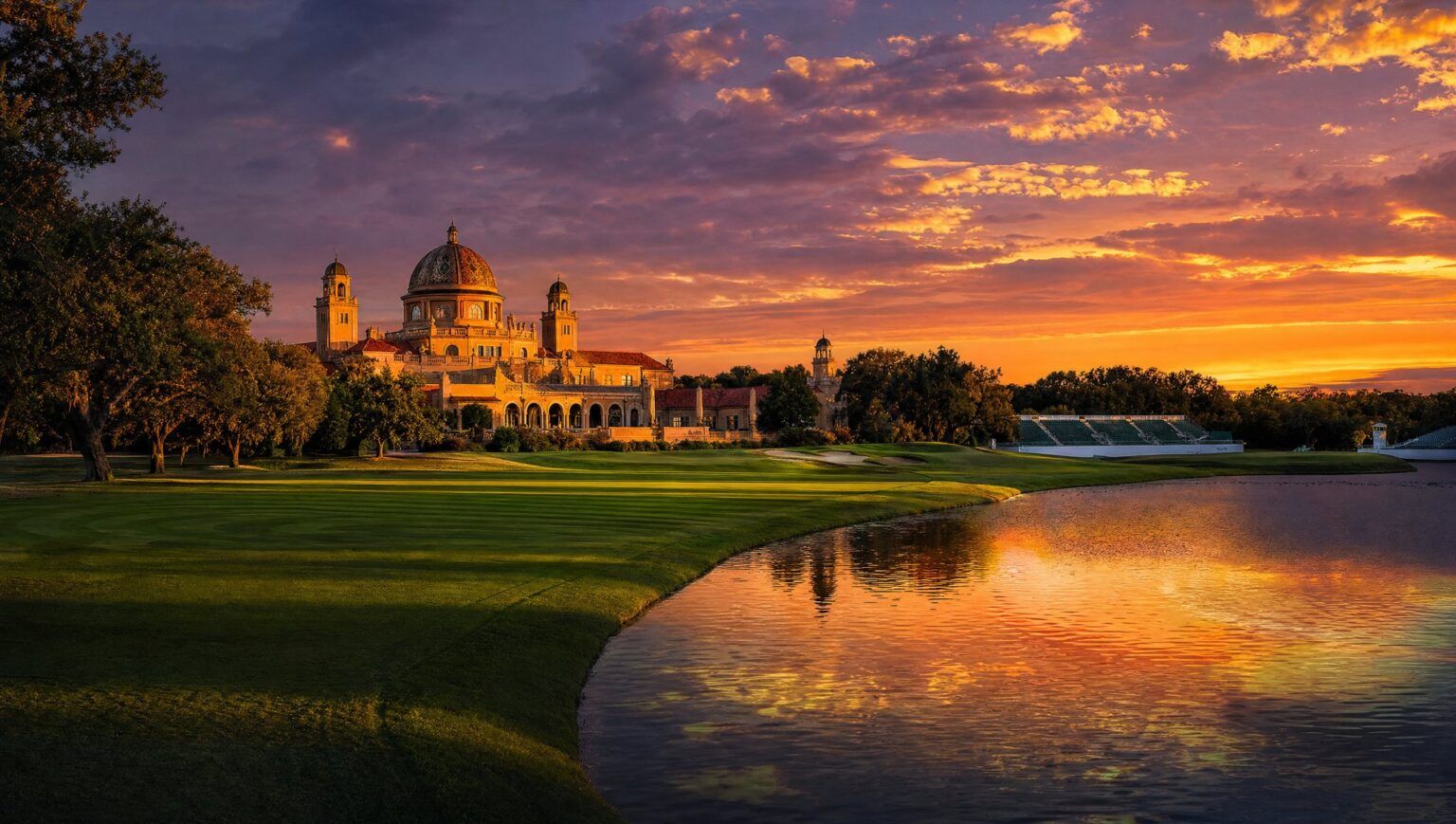
The Presidents Cup 2026 at Medinah begins this week. Practice rounds start September 22, competition runs September 24–27, and for six days Course No. 3 stops being a private amenity and becomes the center of the golf world — twenty-four of the best players alive, a global broadcast audience, and tens of thousands of spectators moving through grounds that, the rest of the year, belong to members.
That last part is the story most coverage will skip. The golf will take care of itself. The harder championship — the one every general manager watching this week should study — is the one Medinah’s leadership has been playing for years: delivering a global sporting event while keeping the people who pay the dues feeling like it was done for them, not to them.
Why Presidents Cup 2026 at Medinah Is a Membership Story Before It’s a Golf Story
Medinah is not improvising. This is a club that has hosted three U.S. Opens, two PGA Championships, a BMW Championship, and the 2012 Ryder Cup — the “Miracle at Medinah” that remains one of the most-watched moments in team golf. Less remembered: within 13 hours of that Ryder Cup’s final putt, Medinah closed its companion Course No. 1 and began a 21-month Tom Doak renovation, using the tournament’s own calendar window to schedule construction it had wanted to do anyway rather than let a member-course project collide with a separate season. The reopened Course No. 1 helped re-establish Medinah as a repeat major host — a track record that led directly to Course No. 3 being selected for the 2026 Presidents Cup.
That distinction matters because championship hosting is a membership decision before it’s an operational one. Among the 5,659 private clubs identified in Club Benchmarking’s 2024 Economic Impact research with CMAA, only a handful will ever stage an event of this scale, and the ones that do it well share a trait that has nothing to do with agronomy: members who understand, years in advance, exactly what they’re trading and exactly what they’re getting back.
The trade is real, and Medinah’s peers on the major-championship calendar show how differently it can be paid. Bellerive Country Club in St. Louis restricted member play in the run-up to the 2018 PGA Championship — closing the course to golfers on days when temperatures topped 90°F and running temporary greens for months to protect the putting surfaces, including through the club’s own member-guest tournament. Director of grounds and agronomy Carlos Arraya built a crew of roughly 50 people, nearly triple his normal staff, to get the course tournament-ready through a St. Louis heat wave. Arraya later said he had been given “free reign from the membership to take the course to the edge to create the best championship possible.” Quail Hollow Club in Charlotte took a different hit: to host the 2022 Presidents Cup, it gave up its own PGA Tour event, the Wells Fargo Championship, relocating it to TPC Potomac for the year so grounds staff could focus on one setup instead of two. Hazeltine National went further, asking members to voluntarily surrender the course after Labor Day 2016 for Ryder Cup conditioning and building a 4,000-person volunteer corps — drawn from more than 16,000 applicants — staffed heavily by its own membership.
A club that treats those costs as fine print hears about it at the annual meeting. A club that treats them as the visible price of belonging to a place that matters in the history of the game converts disruption into pride — and, as Hazeltine found, into future business: its 2016 Ryder Cup led directly to the 2019 KPMG Women’s PGA Championship and a return Ryder Cup awarded for 2029.
The Value Gap: Members Don’t Feel What You Don’t Communicate
Here is the industry’s uncomfortable baseline. According to GGA Partners’ 2025 Club Leaders’ Perspectives Report, while most club leaders believe they provide the value members expect, only 48% believe they do a good job of measuring that value, and just 45% believe they communicate it well.
For Presidents Cup 2026 at Medinah, that gap is the entire ballgame. A club can spend heavily on conditioning, infrastructure, and staffing that members benefit from for a decade — and if the communication muscle is weak, all members experience is the closure, the fencing, and a guest-of-a-guest crowding their locker room. GGA’s research is blunt: clubs that neglect measuring and delivering member value miss the chance to show how capital projects support strategic priorities.
The clubs that get championship hosting right run the communication play relentlessly: they name the trade explicitly, so members can recite what the event costs and what it returns without checking a newsletter; they report during the event, not just after, comparing outcomes to strategic objectives and peer benchmarks rather than just budget; and they give members a role — a volunteer corps, hospitality zones, first-access ticket windows — because a member with a credential is an ambassador, while a member behind a fence is a complainant.
Championship-Week Communication Is a Segmentation Problem
During an event week, a club’s instinct is to blast: one email, everyone, everything. The data says that instinct costs you exactly when attention matters most.
Revinate’s 2025 Hospitality Benchmark Report, drawn from 2.4 billion emails sent across hospitality in 2024, found unsegmented sends hover around a 30% open rate — while in North America, filtering audiences into segments under 5,000 recipients produced a gain of roughly 15 points. For a private club, whose entire membership is already smaller than that threshold, the lesson is to segment further, not less: golfing members need tee-sheet and access logistics; social members need dining, parking, and viewing information; families need transportation and kids’ programming; volunteers need shift operations. Same week, four different messages.
Operators are voting this direction with their budgets. The NGCOA’s Golf Industry Key Trends 2025 report found 61% of golf operators rated email marketing “very important” in 2024, up from 52% the year before — tied with social media at the top, while newspaper advertising fell to 2%. GGA Partners’ August 2024 report shows member engagement technology is the rare category still gaining momentum: 35% of clubs have implemented it and another 37% plan to within three years.
The takeaway for any club with a big event on the calendar — a member-guest, a state amateur, a course reopening — is to build segments and a message calendar before the event, sequence communications from “what’s changing” through “what to do today” to “what we accomplished,” and not let clubhouse message boards and rumor fill the vacuum. GGA’s 2025 research flags those passive channels as among the least effective ways members receive information.
Protect the People Wearing the Club’s Logo
A championship doubles the audience your staff serves and squeezes the resources they serve it with. Members displaced from routines get short-tempered; tournament guests don’t know the house rules; employees absorb the friction from both directions.
GGA Partners’ 2025 Club Employees’ Perspectives Report found member behavior toward staff is an industry-wide challenge — and that Gen Z and Millennial employees already view the work environment less favorably than Gen X and Boomer colleagues.
Clubs that host well treat championship week as a staff event too: clear escalation paths so a line employee never has to adjudicate a dispute between a member and a spectator, visible leadership on the floor, credentials and moments that let staff experience the championship rather than merely survive it, and a genuine debrief afterward. GGA’s research puts it plainly — leaders must actively involve members in protecting a positive working environment.
What Every Club Can Take From Presidents Cup 2026 at Medinah
Whatever your club’s version of hosting week turns out to be — a major championship, a state amateur, a course reopening, or a member-guest with more moving parts than usual — the lesson from Medinah, Bellerive, Quail Hollow, and Hazeltine is the same: the disruption isn’t the risk. Silence about it is. Members will forgive closed holes, rerouted parking, and a season spent behind a grounds crew’s fencing. They won’t forgive finding out about it from a spectator instead of their own club.
If your club has a major event, a big capital project, or a gap between what leadership knows and what members feel, Private Club Marketing builds the segmented communication systems, event playbooks, and value-measurement frameworks that turn disruption into pride instead of complaints. Talk to our team about building your club’s plan before the next big week arrives.
Free Download
The 2026 Private Club Benchmark Report
The membership, amenity, and pricing data reshaping private clubs — from a 1,200-club analysis. Enter your details and we'll send it to your inbox.