
No American course has been asked back by the USGA more often than Merion Golf Club. The U.S. Amateur 2026 at Merion adds another line to a hosting record no other club can claim — and it belongs to a compact property outside Philadelphia that would fail a modern site-selection checklist. There is no acreage for a corporate village, no room for sprawling hospitality, and a routing that crosses a public road. Merion keeps getting the call anyway.
For general managers and membership directors, that is the part worth studying. This is less a golf story than a case study in institutional identity: a club that decided a century ago what it was for, built the governance and capital discipline to sustain it, and never chased a trend to stay relevant. The operating lessons, drawn in part from GGA Partners’ and the Club Management Association of America’s 2024 Club Leader’s Perspective Report, apply whether your club is in the USGA rotation or will never host anything larger than a member-guest.
A Record Built on Refusing to Renovate Away Its Problems
The East Course opened in 1912 to a routing by Hugh Wilson, a member with no formal design training. Four years later it hosted its first U.S. Amateur, won by Chick Evans. Bobby Jones won his first U.S. Amateur there in 1924 and completed the Grand Slam there in 1930. Ben Hogan hit the most photographed 1-iron in golf history into the 18th in 1950, sixteen months after a bus nearly killed him. Lee Trevino beat Jack Nicklaus in a playoff in 1971. Edoardo Molinari won the Amateur there in 2005, the Walker Cup followed in 2009, and Justin Rose won the U.S. Open in the rain in 2013.
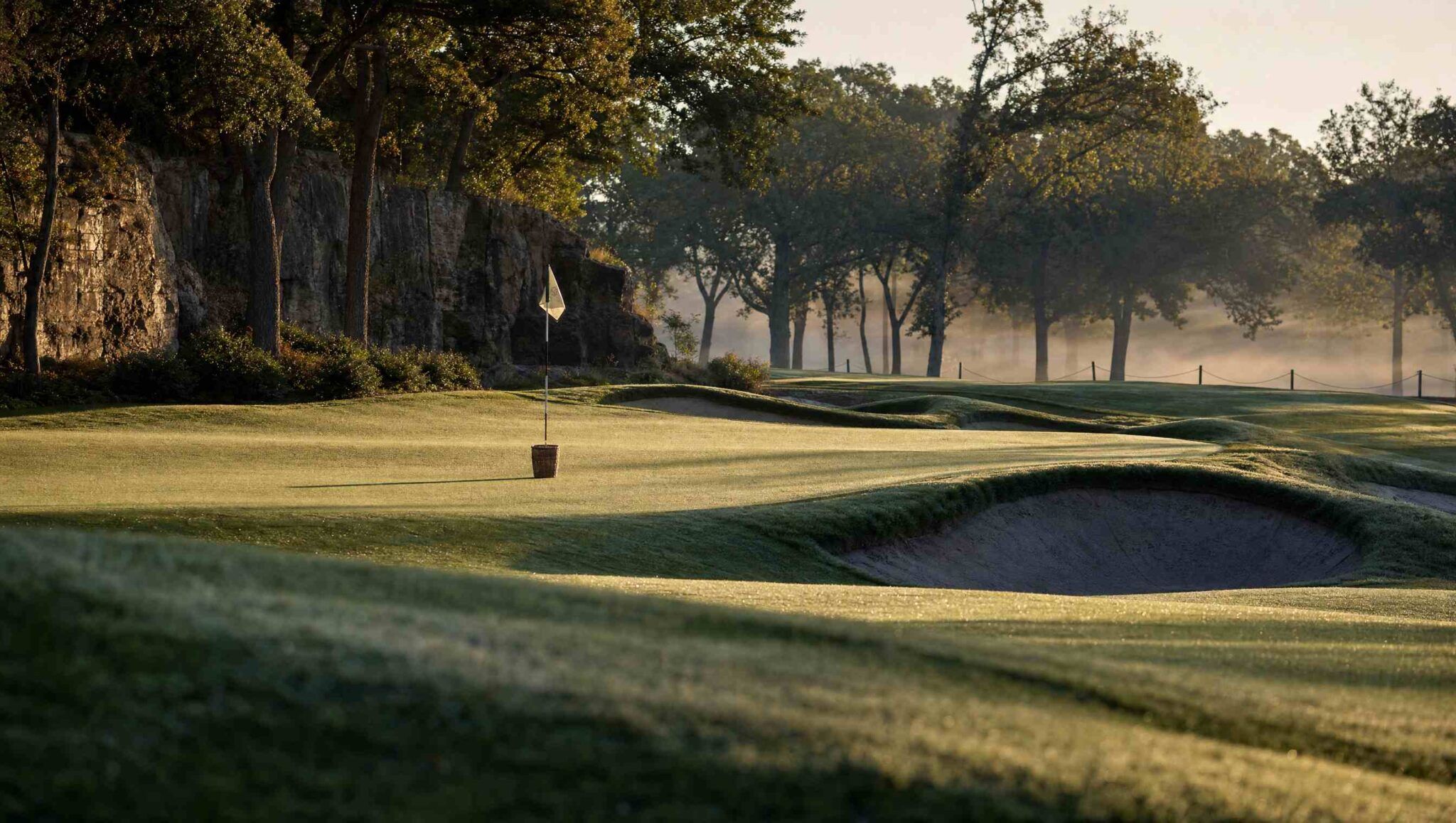
What connects those events is not scale. It is that Merion never renovated away the features that make it difficult to host — the quarry holes, the wicker baskets on the flagsticks instead of flags, the short par fours that demand a decision rather than a swing. The club’s competitive advantage is precisely the inventory a consultant would have flagged as liabilities.
That instinct has a direct parallel in adjacent luxury sectors. Kerry Turpin, global head of spa and wellness at Corinthia Hotels, describes what happened to operators who chased every new service category:
Spas lost their identity and concepts became muddied as the spa journey took a back seat in order to offer the latest, on-trend services. It is not possible for your business to be everything to everyone.
Swap “spa” for “club” and you have a fair description of the last decade at a great many private clubs. Compare the venues the USGA returns to most often — Pinehurst No. 2, Oakmont, Shinnecock Hills, Winged Foot — and none of them won that position by adding amenities. They won it by protecting a specific character long enough that the character became the asset.
What the U.S. Amateur 2026 at Merion Costs Before It Earns Anything
Hosting a national championship is a capital decision dressed up as a marketing decision. Club Benchmarking puts the underlying reality plainly in its 2025 Club Governance Survey: clubs are extremely capital intensive, and the cost of keeping a campus current is substantial. A championship compresses years of deferred capital into a single immovable deadline — bunker restoration, drainage, tree work, cart paths, locker rooms, and the temporary infrastructure that broadcast and spectator movement require.
That collides with the operating picture GGA Partners documented in the 2024 Club Leader’s Perspective Report, produced with the Club Management Association of America. Clubs are already raising dues to keep pace, with capital dues rising at the highest rate of operating dues, capital dues, and initiation fees. The same report found 51% of club leaders reported labor expenses exceeding budget, and 48% flagged food and beverage revenue as a line that exceeded budget. Layer a championship’s labor demands onto a payroll line that already misses at half of clubs, and the exposure is obvious.
Size compounds it. In the same 2024 GGA Partners/CMAA Club Leader’s Perspective Report, the average performance score across all clubs was 8.11 out of 10, and the report’s “Overall Club Performance” breakdown found clubs with fewer than 75 total employees scored 7.7 and clubs under $3.5 million in revenue scored 7.8 — both below average — while clubs with more than 250 employees scored 8.5, per that same GGA Partners/CMAA breakdown. Championship hosting is a staffing-depth problem before it is anything else. A club without bench strength does not get invited back, because the first event exposes what the second one would require.
Why the Experience Economy Makes Hosting a Better Bet
The case for hosting has strengthened, and the best evidence comes from outside golf, in McKinsey’s State of Luxury 2025 report. McKinsey found that roughly 80% of high-net-worth individuals expect to shift part of their spend toward experiential luxury and wellness. One HNWI told researchers: “If I have to spend €10k, I’ll do it on wellness, no longer fashion — without hesitation.” An aspirational shopper in the U.S. described wanting “memories that last.”
The concentration is what should get a membership director’s attention. McKinsey projects that top-spending clients will create 65 to 80 percent of global luxury market growth through 2027, with ultra-high spenders representing 0 to 1 percent of individuals but 15 to 20 percent of market volume. Growth is coming from a very small number of people who want access, not merchandise.
McKinsey’s recommended play is what it calls “money-can’t-buy” experiences, and the examples are instructive: Mytheresa invited 30 top customers to Brunello Cucinelli’s private 70th birthday celebration; Cartier extended invitations to its masquerade ball at Vienna’s Belvedere palace; Max Mara hosted a dinner in the courtyard of the Doge’s Palace in Venice.
A club hosting a USGA championship already owns the asset those brands spend millions manufacturing. Three ways to convert it:
- Build the member-only tier first. Practice-round access, a locker-room reception with the championship committee, a course walk with the superintendent explaining the setup. These cost almost nothing and cannot be bought at any price.
- Treat the event as a prospect pipeline, not an ad campaign. A curated, well-targeted invitation list to qualified prospects is a stronger use of a championship than broad-based advertising.
- Extend the halo past event week. The setup, the archive, the restoration story — that is three years of programming and content, not seven days of it.
The Trap: Members Rate Access Above Everything Else
Here is where hosting clubs get hurt. GGA Partners asked members and leaders to rate what matters most to the member experience, and the top-ranked dynamic for both groups was the ability to access and use the club and its amenities — 4.48 out of 5 from members and 4.61 from leaders. It outranked overall culture (4.15 members / 4.51 leaders), personal comfort and service (4.05 / 4.43), and social networks at the club (3.85 / 4.23).
A championship year is, by its nature, an access-reduction year: course closures for grow-in and setup, clubhouse space surrendered to officials and broadcast, parking lots turned into operations compounds. Clubs that have absorbed this well — Oakmont and Olympic Club among them — do it by treating access as a budget line rather than an afterthought: a published closure calendar issued a year out, reciprocal play arranged with neighboring clubs, and a credible plan for restoring conditions afterward. Clubs that skip that step spend the following season answering for it in the survey.
If Your Club Will Never Host a USGA Championship
Most won’t, and the lesson survives intact. Seminole and Cypress Point are among the most sought-after memberships in the country without a modern championship rotation between them. What they share with Merion is not an event calendar — it is refusal to dilute. The transferable move is to identify the two or three things your club does better than anyone within 200 miles, fund those to a standard nobody can match, and stop apologizing for what you are not.
Then build your own money-can’t-buy asset. A member-guest with decades of continuity, a caddie program, a junior program that produces college players, an archive nobody else has — each of those is closer to what McKinsey’s top spenders are buying than any renovation of a dining room.
The Editor’s Take
Merion’s record is the byproduct of a decision, not the reward for a strategy. The club knew what it was, priced the capital required to protect it, and staffed deeply enough to be trusted with the hardest weeks in American golf. Every club can make the first of those decisions this year.
Private Club Marketing works with clubs on the membership positioning, capital storytelling, and CRM infrastructure that turn a defining asset into demand. If you are planning a championship, an anniversary, or a repositioning, start a conversation with our team — we will tell you honestly whether the event is worth what it will cost you.
Free Download
The 2026 Private Club Benchmark Report
The membership, amenity, and pricing data reshaping private clubs — from a 1,200-club analysis. Enter your details and we'll send it to your inbox.