
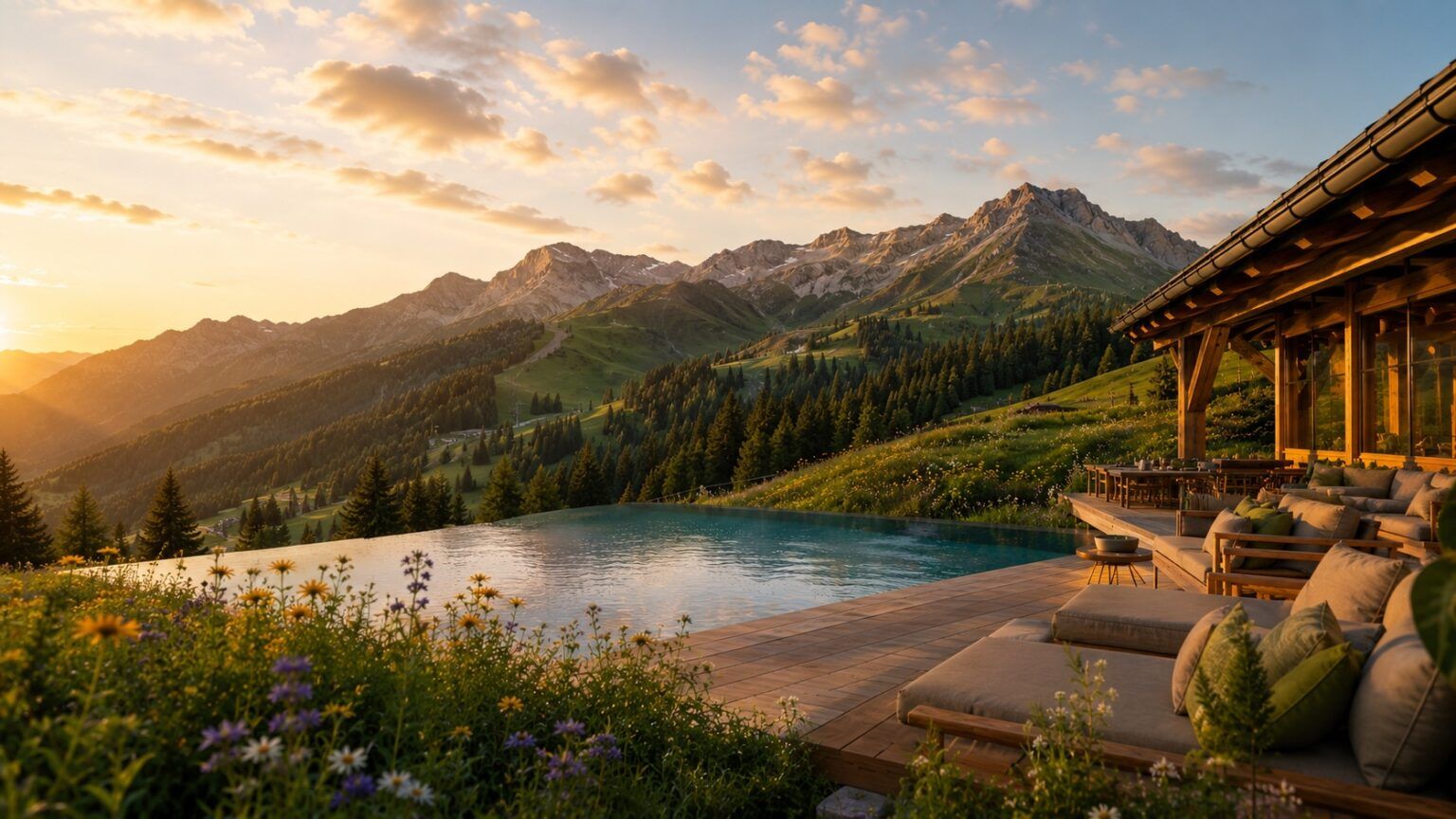
A ski season is about 120 days. In a good year, with a cooperative snowpack, a mountain club can stretch it toward 150. That leaves somewhere north of 200 days a year when the lifts that define the club are still, the terrain that justifies the membership is green, and the asset that cost tens of millions to build and operate is producing a fraction of its potential. For decades the mountain-club business simply accepted this — winter was the business, and summer was the off-season, a period to be endured, deferred, and discounted.
That model is over, and the clubs still running it are quietly losing the argument for their own value. The most sophisticated mountain clubs no longer think of themselves as ski clubs that happen to sit empty in July. They think of themselves as four-season mountain communities where winter is the marquee season and the other three quarters of the year carry equal weight in the membership proposition. The shift is not cosmetic. It changes what the club sells, who it sells to, how much a membership is worth, and — most importantly — whether members stay.
The Industry Already Voted With Its Capital
The move to four-season operation is not a theory PCM is proposing. It is a structural shift the ski industry has already made, and the numbers are decisive.
88 percent of U.S. ski areas offered summer activities as of the 2024/25 season, according to NSAA’s Kottke End of Season & Guest Experience Report, and those operations made up an average of 11.4 percent of industry revenue in 2023-24 (Travel Weekly). The trajectory is steeper than the snapshot suggests: 109 ski areas operated in summer 2023, up from 84 in 2014, and average summer revenue per area rose 71 percent over that span, from $3.8 million to $6.4 million, per NSAA’s 2023-24 Economic Analysis of U.S. Ski Areas (Ski Area Management). Mountains that once boarded up in April are now building out on-mountain programming to match: hiking trails are offered by 76 percent of summer operators, scenic lift rides by 68 percent, and lift-served or cross-country mountain biking by more than half, alongside weddings, conferences, and festivals (Travel Weekly).
The most instructive figure for a club operator is this one: about 54 percent of summer 2023 revenue at ski areas came from existing facilities that already support winter operations — lodging, food and beverage, groups and weddings, retail, and rentals — rather than from purpose-built summer attractions, according to NSAA’s Economic Analysis (Ski Area Management). In other words, the majority of the summer opportunity does not require a new capital project. It requires activating assets the club already owns and staffs. For a private mountain club, which already has the clubhouse, the dining, the lodging, and the events infrastructure, that ratio is even more favorable. The four-season pivot is less a construction problem than a programming and marketing one.
Summer Is Where Retention Is Won
The instinct is to justify summer programming on its own revenue. That is real, but it undersells the strategic point. Summer is not primarily a revenue center for a private mountain club. It is a retention engine.
A member who only uses the club 120 days a year, and only for one activity, holds a fragile relationship with it. Every renewal is a fresh cost-benefit calculation, and a single bad snow year or a busy winter can tip it. A member whose family spends summer weekends at the club — hiking, biking, at the pool, at dinner, at the kids’ camp, at the wedding of a friend’s daughter — holds a relationship with an entirely different center of gravity. The club is no longer a place they go to ski. It is where their summer lives. That member does not run a renewal calculation. That member belongs.
There is a demographic dimension to this as well. A ski-only membership skews toward the winters of a member’s life — the years when the whole family skis hard and often. But families age out of that phase in stages: a member in their sixties may ski less each year while their appetite for golf, wellness, dining, and grandchildren-friendly summer weeks only grows. A club that is winter-only effectively asks those members to renew a product they use less every season. A four-season club gives them somewhere to go as their needs evolve, and in doing so extends the member lifecycle by decades rather than losing the member the year the knees give out. Retention math over a twenty-year membership favors the club that has something to offer in every phase of a member’s life.
This is the same dynamic that drives retention across every private-club vertical, and it is worth borrowing the playbook. As we outlined in membership marketing strategies for private clubs in 2025, the clubs that retain best are the ones that build year-round engagement, flexible programming, and multiple reasons to show up — not the ones relying on a single seasonal hook. A mountain club that only exists in winter is, structurally, a single-hook club. Four-season programming is how it escapes that trap.
Source: Ski Area Management / NSAA
The Fragility Of A Winter-Only Club
To understand why four-season value matters, look at what a single-season club is actually exposed to. Its revenue, its member satisfaction, and its renewal rate all ride on roughly 120 days of weather it cannot control. When national skier visits can swing from a record 65.4 million in 2022-23 to a 14 percent decline a few seasons later, a club whose entire value proposition is compressed into winter is a club whose fortunes are compressed into the same narrow, volatile window (Ski Area Management; The Ski Guru). A warm, dry January does not just dent revenue. It dents the member’s sense that the membership was worth it — and that sentiment is what shows up at renewal.
Four seasons diversify that risk the way a balanced portfolio diversifies a concentrated position. A member who has already spent forty summer days at the club, hosted a family reunion there in September, and booked the wellness retreat for October does not re-underwrite the entire membership on the strength of one thin snow year. The winter is one season among four, and the other three have already earned their keep. This is the quiet financial argument for four-season operation: it is not only additive revenue, it is variance reduction. It turns a weather-dependent business into a lifestyle-dependent one, and lifestyle is far more durable than snowpack.
The Real-Estate Flywheel Runs Twelve Months
For residential mountain clubs, four-season value is not a nice-to-have. It is increasingly the entire basis of the real-estate proposition that funds the club.
Knight Frank’s Alpine Property Report captures the shift precisely: prime mountain property is up 23 percent over five years, and the leading driver of demand is no longer skiing but health, wellness, and year-round usability, with summer usage rising sharply — summer lift passes in Chamonix, for instance, climbed 46 percent over two years (Knight Frank; Euronews). The high-net-worth buyer purchasing a mountain home is underwriting a twelve-month lifestyle, not a three-month one. A club that cannot show that buyer a compelling summer, spring, and fall is competing for their dollars with one hand tied behind its back.
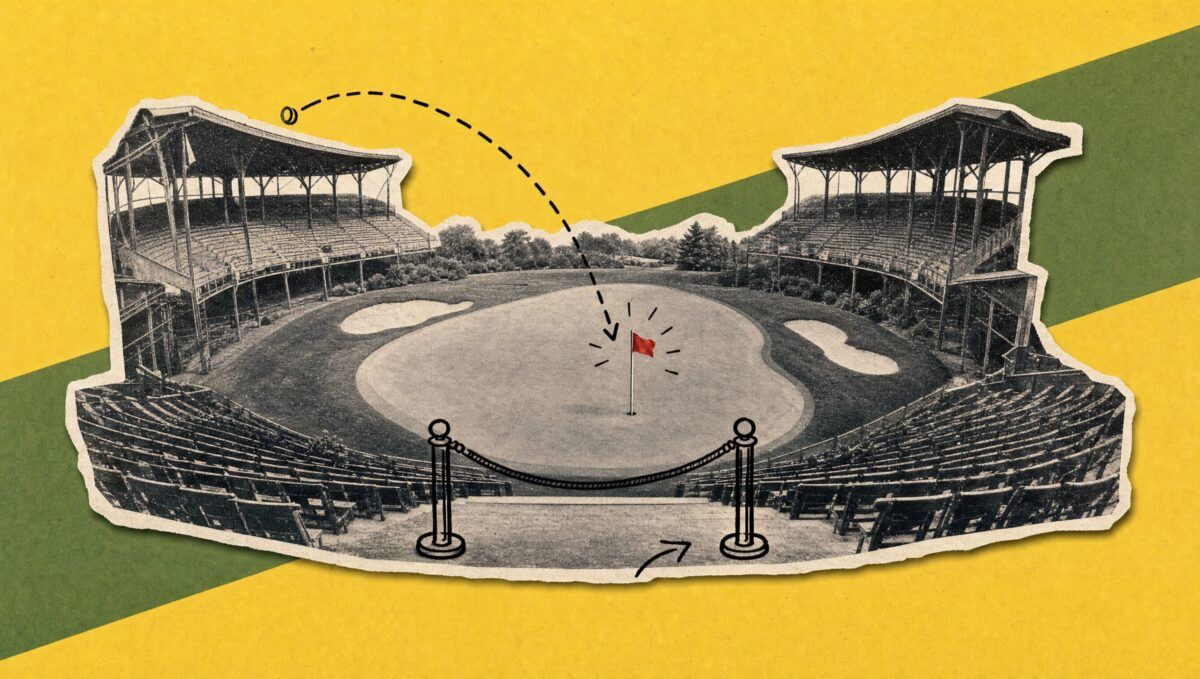
The flywheel is straightforward once summer is real. Year-round programming makes the real estate more valuable and more usable. More valuable real estate attracts more buyers, who become members. More members deepen the programming and the community, which raises property values again. The Yellowstone Club near Big Sky, Montana — structured as a private residential ski and golf community where membership is tied to property ownership — is built explicitly on this logic, pairing winter skiing with a golf course and summer mountain life so that the home, and the membership, carry value in every season (Wikipedia). Golf, notably, is a warm-season amenity doing winter-club work: it fills the calendar, deepens the community, and gives the real estate a reason to be occupied in July.
Building The Other 245 Days
A credible four-season program is not a random assortment of summer activities. It is a deliberately designed calendar that gives every member segment a reason to be at the club in every season. In practice, that means:
– Summer as a peak, not a filler. Mountain biking, hiking, golf, tennis and pickleball, water access, wellness and spa, and a genuine kids’ and family camp program. The goal is for a member family to plan their summer around the club, not to drop in once.
– Shoulder-season anchors. Fall color, harvest and food-and-wine events, founder weekends, and member gatherings that keep the community warm between the marquee seasons. The rosé-season summer wine club model — using seasonal releases and member-only tastings to create recurring reasons to engage — translates directly to a mountain club’s spring and fall calendar.
– Wellness as a through-line. Given that wellness now leads mountain-property demand, a serious year-round wellness program — spa, fitness, longevity, guided outdoor recovery — is no longer a differentiator but table stakes for the high-net-worth member.
– Events infrastructure working overtime. Weddings, conferences, and group business are among the largest contributors to ski-area summer revenue precisely because they monetize existing lodging and F&B. A private club can run the same play on a members-and-referrals basis, turning the clubhouse into a year-round gathering place.
The operational discipline that makes this work is honesty about staffing and cost. Four-season operation means four-season employment, which is itself a recruiting and retention advantage in mountain towns where seasonal-only jobs are a chronic liability. The clubs that pivot successfully treat their team as a year-round asset, the same way they treat their real estate.
The Private Club Partnership Opportunity
The four-season pivot is fundamentally a membership-marketing problem wearing an operations costume, and it sits squarely inside Private Club Marketing’s core work: making a high-net-worth membership feel indispensable twelve months a year.
Three strands of PCM’s practice apply directly. First, membership marketing that sells a year-round proposition rather than a single-season one — repositioning the club, in its messaging and its member communications, from “ski club” to “mountain community,” so that a prospect and a renewing member both understand they are buying all four seasons. Second, seasonal programming design: PCM’s work building recurring seasonal moments — the harvest dinner, the wellness retreat, the founder weekend, the family camp — is exactly the calendar engineering that turns a quiet summer into a retention engine and a real-estate accelerant. Third, cross-club high-net-worth reach: the household that owns a mountain home also belongs to a golf club, buys wine allocations, and travels for wellness, and PCM’s presence across those verticals lets a four-season mountain club reach qualified members who already live the year-round luxury lifestyle the club is now built to serve.
The single most valuable shift a mountain club can make is to stop measuring its year in ski days. Winter is the reason members arrive. The other 245 days are the reason they stay — and, increasingly, the reason they buy in the first place. The clubs that internalize that will not just fill their summers. They will own their members’ whole year.
Free Download
The 2026 Private Club Benchmark Report
The membership, amenity, and pricing data reshaping private clubs — from a 1,200-club analysis. Enter your details and we'll send it to your inbox.