
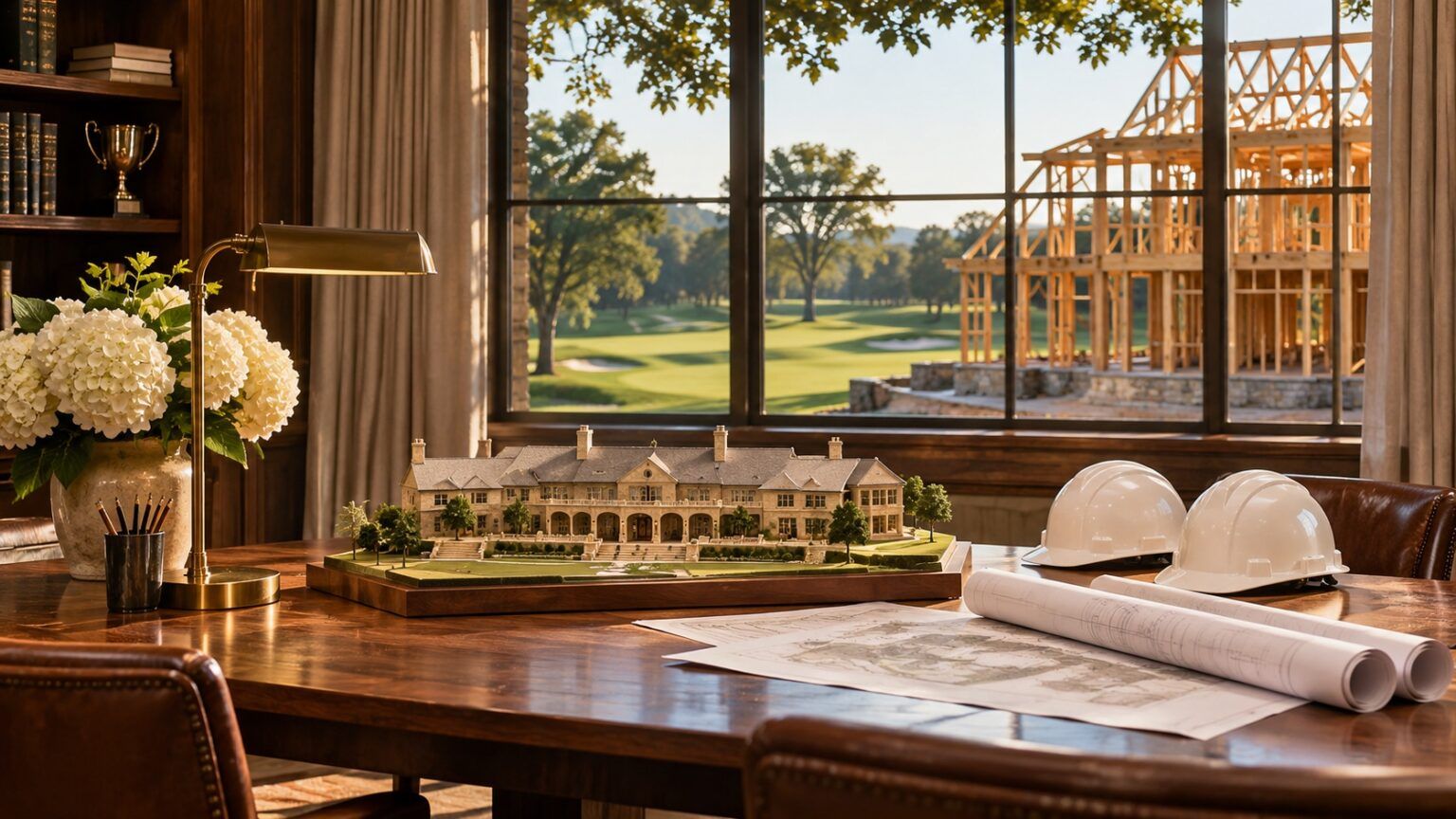
A club under construction has something an established club cannot easily manufacture: a reason to talk to prospects right now. There is a deadline, a visible change and a price that is about to move. A renovation is easy to treat as an inconvenience to manage. It can also be a sales window.
Whether you are opening a new club or repositioning an existing one, the mechanics of pre-opening membership sales are the same: show the future, price the risk, build a list, and convert the momentum before the ribbon is cut. Here is how that works in practice, with the public examples we could verify.
Sources: Golf Digest (Paul Sullivan, May 2025); SiouxFalls.Business, June 2023; Club + Resort Business, September 2021.
Sources: Golf Digest; Club + Resort Business (Rancho Santa Fe); Club + Resort Business (Country Club of the Rockies). Clubs are individual examples and self-reported, not an average.
46%
U.S. private golf clubs with a waitlist, including residential golf communities
25%
Had a waitlist before the pandemic
135
Membership applications at a new Sioux Falls club about 2.5 months after announcing
81
New members in August 2021 at a club mid-renovation
Why is construction the best time to sell club memberships?
Three things line up. First, urgency is real. A founding rate that ends when the doors open, or a pre-construction rate that ends when the work begins, is not a gimmick. It is a true statement about the price. Second, there is something to look at. Progress is visible and changes weekly, which gives you a reason to publish, email and invite. Third, the market is paying attention. Forty-six percent of U.S. private golf clubs, counting both standalone clubs and residential golf communities, have waiting lists and the median initiation fee is $56,000, in an article published by Golf Digest on May 27, 2025. Club Benchmarking founder Ray Cronin said that before the pandemic the median was $25,000 and a quarter of clubs had a waitlist, per Golf Digest. Demand for a good seat is not the problem. Giving a prospect a credible reason to commit now is. The same logic applies to renovations. Prospects who passed on a tired clubhouse will take a second look at a club that is visibly investing in itself, and the investment gives you a legitimate basis to reprice.What does pre-opening membership sales look like in practice?
A playbook in Club Solutions Magazine comes from Karima Neghmouche’s 2017 piece on pre-selling memberships, built on advice from Donyel Cerceo, marketing director of Merritt Clubs. Its core recommendations:- Start roughly a year before opening, but not so early that interest fades or prospects join a club that is already open.
- Build an on-site preview center with renderings and a video fly-through, and put the same material on the website.
- Price the pre-sale well below the grand-opening rate, so early joiners understand they are getting a real deal for committing before the club exists.
- Promote each construction phase, including in local newspaper ads, and urge prospects to join before the next phase’s higher rate.
- Hold a “reveal” hard-hat party a month or two before completion for pre-sale members, who can bring a friend, with local press and public invited.
How fast can a new club sell founding memberships?
It can move quickly when the offer is clear. About 75 days after Mapleton Golf Club was announced in Sioux Falls, South Dakota, it had roughly 135 membership applications across single, corporate and national categories, against a cap of 350, with an interest list a couple of hundred names long, as reported by SiouxFalls.Business on June 26, 2023. That was before a final zoning vote, which was scheduled for that week, and with renderings hoped for in late July or early August. Amundson, quoted in the story, said there was no expectation that the club had to sell out before it opens, which is a sensible posture: pacing matters more than a sold-out headline. The lesson is not that every club will repeat that result. It is that an early, specific offer plus a visible waiting list gives you data to plan with, and you can only get that data by asking for commitments early.Initiation fees before and after: industry median and two renovating clubs
How should founding member pricing be structured?
Founding member pricing works when the discount has a clear expiry that tracks real milestones. A few structures clubs use:- Phased rates. A founding rate until groundbreaking or opening, a standard rate after, with each step announced in advance.
- Pre-construction pricing. Ferncroft Country Club in Middleton, Massachusetts, which began a 36-month, multi-million dollar transformation in the summer of 2025, advertises “pre-construction pricing” with initiation fees reduced for a limited time. It is a useful reminder that the offer can be tied to the work itself.
- Capped categories. A fixed number of founding seats, by category, so scarcity is visible and honest.
- Refundable deposits. Our waitlist playbook covers how deposits and priority tiers filter for commitment and keep a queue credible.
What should a club show prospects before the building exists?
Prospects are buying a picture of their life at the club, so give them one:- A preview center or hard-hat tour with the floor plan, material samples and a fly-through. Walk prospects through the site in a hard hat with a member host, not just a salesperson.
- Renderings and video on the website, in email and in the tour, with the same opening date everywhere.
- Progress content on a steady cadence: a monthly update with photos and what finishes next.
- Named people. The architect, the superintendent, the chef. Prospects join people as much as buildings.
What is the phased sales timeline for a club under construction?
The sequence below combines the recommendations in the Club Solutions pre-sale guidance with the way we would structure a campaign. Adjust the dates to your construction schedule.12 months out
Tease and build the list
Announce the club, open the waitlist, publish renderings and set the founding rate with a stated end date.
9 to 12 months out
Open the preview center
Fly-through, floor plans and private tours for the waitlist. Founding offers go to the list first.
During construction
Announce each phase
Each milestone is a reason to email, post and step the rate, with progress photos and hard-hat tours.
1 to 2 months out
Hard-hat reveal party
Founding members bring a friend. Invite local press. Every guest leaves with a next step.
Opening
Close the founding rate
Move to the standard rate on the date you promised, and keep the waitlist alive for what comes next.
How do you build a waitlist during a renovation?
Make the waitlist the first step of every campaign. Anyone who attends a tour, opens a progress email or asks about the project should have an obvious way to raise a hand. Capture category, timeline and who referred them. Then use the list: preview invitations first, founding offers first, progress updates on a schedule. A list that hears from you only when you want money goes quiet. Keep a real distinction between the waitlist and the founding offer. People on the list have not committed. Treat them as qualified interest and give them a deadline to convert.Can a renovation justify higher initiation fees?
It can. Two public examples show it, with the caveat that both are self-reported trade-press accounts. At Rancho Santa Fe Golf Club, the initiation fee rose from $50,000 to $75,000, its first increase in 17 years, while a course renovation that began in April 2021 was under way, as reported by Club + Resort Business on September 9, 2021. Membership grew from 455 at the start of the year to 528, and the club added 81 new members in August, per Club + Resort Business. Enrollment fee revenue came in $2.4 million above budget, per Club + Resort Business, citing the Association’s chief financial officer, Seth Goldman. The clubhouse profile of Country Club of the Rockies, published by Club + Resort Business, describes a 2021 clubhouse refurbishment, an initiation fee that moved from $95,000 to $150,000, and a shift from 85 of its 350 members waiting to be removed from membership to a waitlist of six to seven years. Neither club is a template. Both are individual examples. The takeaway is that visible work gave each board a credible moment to reset the price.How do you convert renovation momentum into new members?
Three habits separate clubs that capture the moment from those that wait it out:- Turn members into the sales team. Existing members make credible tour hosts and referrers. The Club Solutions hard-hat party model, where pre-sale members bring a friend, is one simple way to do it.
- Put a date on every offer. Tie it to a construction milestone so the deadline is credible.
- Follow up while it is fresh. The tour is the high point. Send a personal note within a day, with the next step and the deadline.
FAQ: Selling club memberships during construction
When should pre-opening membership sales begin?
The guidance in Club Solutions Magazine, from Merritt Clubs marketing director Donyel Cerceo, is to start teasing about a year before opening, and not so early that interest fades.Should founding members pay less?
Typically yes, and the discount should be meaningful enough to reward the risk of joining a club that does not yet exist. It should also end on a stated date.Do we need a preview center?
Not necessarily a building, but prospects need something physical or visual: renderings, a fly-through, floor plans and a safe, hosted walk of the site.Is it a mistake to raise initiation fees during a renovation?
Not by itself. Two clubs covered above did so while projects were under way. The risk is raising fees without a sales story. Tie the increase to specific, visible improvements.How is a waitlist different from founding members?
A waitlist is interest. Founding members have committed, usually with a deposit or initiation payment. Use the list to feed the founding offer. If your club is opening, repositioning or mid-renovation and wants a sales plan around it, the Private Club Marketing club development team builds exactly that, serving private clubs since 2009. For help shaping the membership offer itself, see our membership consulting work. And if flooring is on your renovation list, start with our guide to choosing carpet for a clubhouse renovation.Free Download
The 2026 Private Club Benchmark Report
The membership, amenity, and pricing data reshaping private clubs — from a 1,200-club analysis. Enter your details and we'll send it to your inbox.