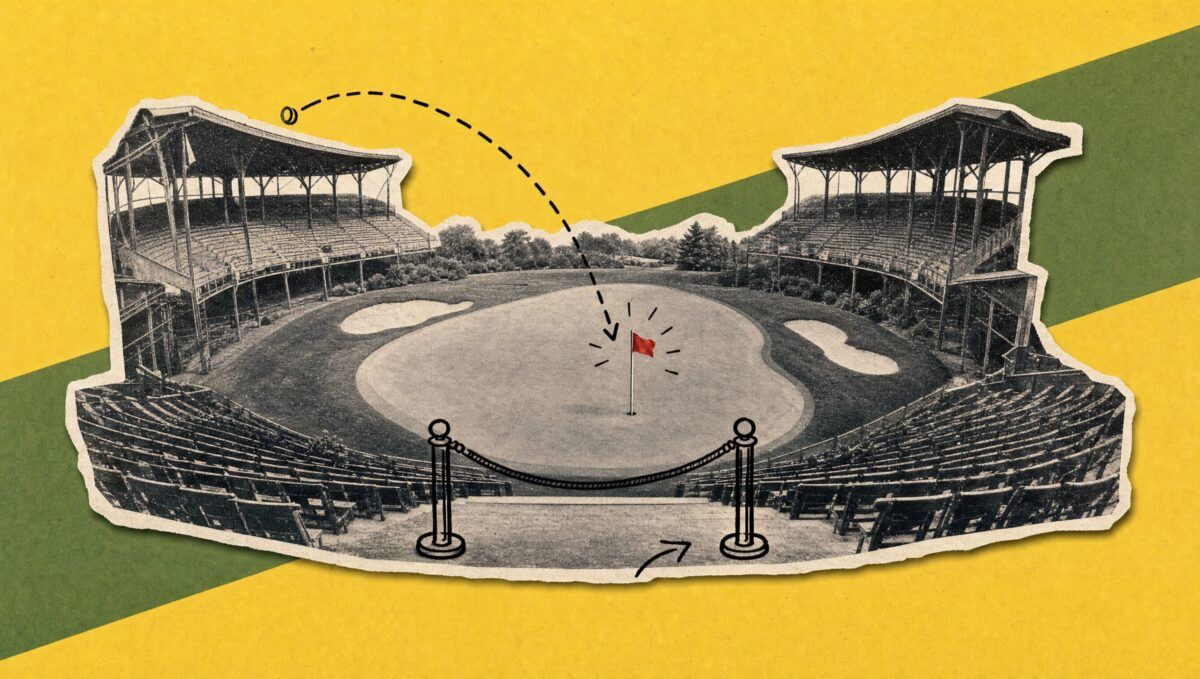

Here is the number that should shape your US Open tennis club programming this August: in GGA Partners’ Club Leader’s Perspectives Report (August 2024), only 15% of club leaders named tennis as an amenity with capacity concerns — compared with 50% for golf, 41% for pickleball, and 30% for fitness. Your tee sheet is full. Your pickleball courts are a scheduling war. Your tennis courts, at most clubs, have room.
That is not a problem to hide. It is the only unconstrained inventory you have during the one stretch of the year when the entire country is watching people play tennis. US Open Fan Week — the free, open-to-the-public run of qualifying matches, practice sessions, and exhibitions that precedes the main draw in Flushing Meadows — is the last on-ramp of the Grand Slam calendar. For two and a half weeks, tennis is culturally loud, prospects are primed, and you have courts to fill.
Most clubs treat this as a bar event. Put the matches on the big screen, run a themed cocktail, call it programming. That captures F&B spend from members who were already coming. It does nothing for the racquet roster. What follows is how to run the same window as a membership acquisition and reactivation campaign, and — more importantly — how to keep the people it brings in.
Start With the Segment You’re Actually Selling
Racquet is no longer a sub-line item. Growth Market Reports’ Global Private Club Membership Market Analysis & Forecast, 2018–2033 breaks out Racquet & Sports Clubs as a named sub-segment of athletic clubs, and separately tracks racquet sports as a distinct application category alongside gym, aquatics, and wellness & recovery. The same taxonomy carries Trial memberships and Under-30/Young Adult as explicit membership types the industry is now being measured on.
Read that as a structural hint. The analytical frame the market uses is a racquet-first, trial-first, young-adult-first product — which is exactly the product a Fan Week campaign is built to sell. If your membership matrix has no trial tier and no under-30 tier, Fan Week gives you a defensible reason to pilot both without reopening the full dues conversation with your board.
The revenue case is already visible in the operating data. In the GGA report, 35% of club leaders said sports, activity, and program fees exceeded budget, and 38% said initiation fees exceeded budget — while membership sales exceeded budget for only 31%, the lowest of the revenue lines reported. Program fees are outperforming membership sales. Fan Week is a program.
US Open Tennis Club Programming That Produces Names, Not Just Attendance
The design constraint is simple: every element should either put a prospect on a court or capture contact information from someone who watched. A televised match on a clubhouse screen does neither.
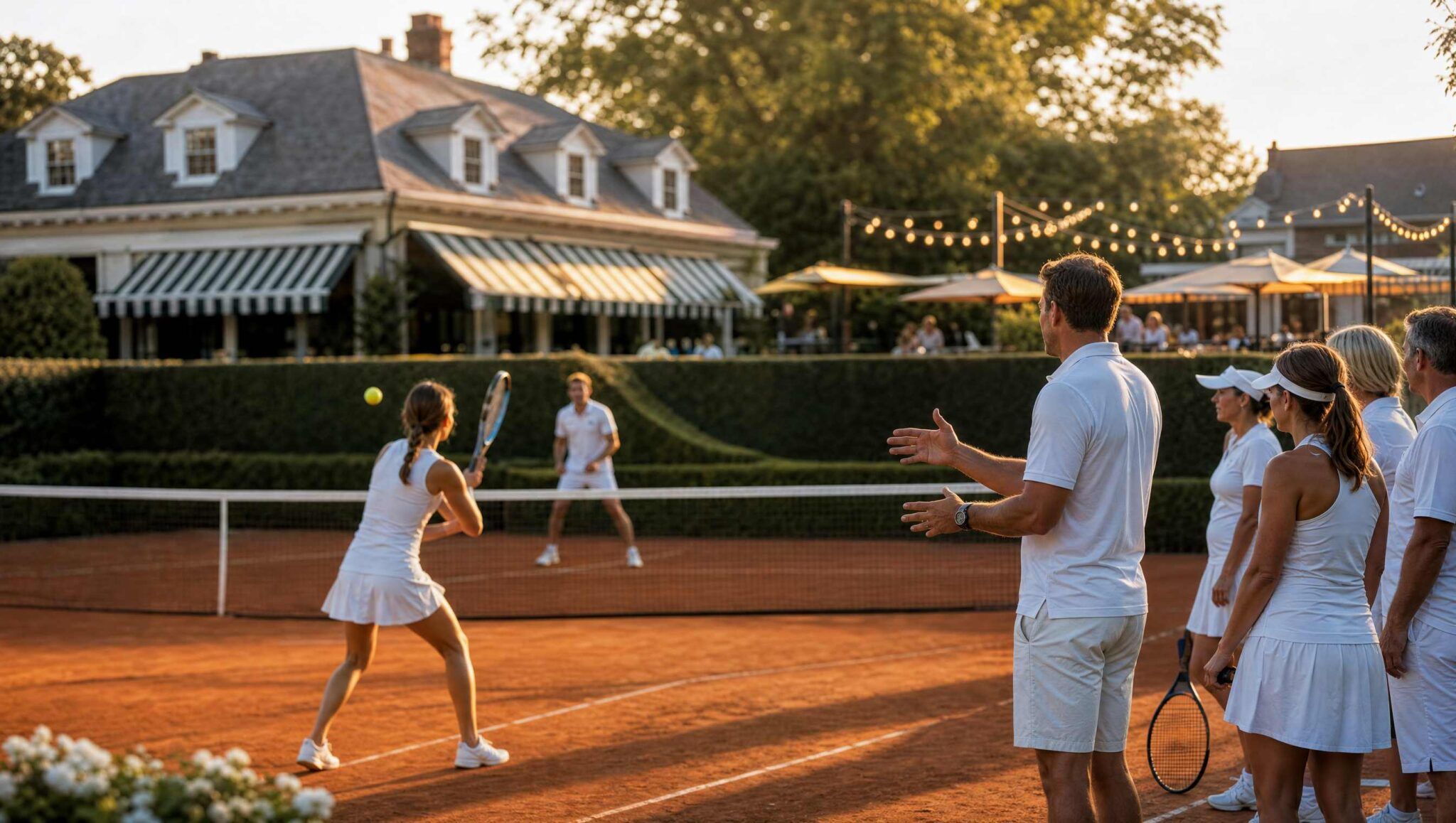
- Run your own qualifying draw. Fan Week is literally qualifying week. Mirror it — a members-plus-guests bracket where each member entry requires a non-member partner. This is the single highest-leverage rule in the campaign, because it converts your existing racquet players into a prospect-sourcing channel and puts every prospect on your surface, with your pro, in your environment.
- Schedule around the broadcast, not against it. Morning clinics, evening night-session watch parties. The night sessions are the cultural event; the mornings are when courts sit empty and a first-time player will actually accept a lesson.
- Program the racquet-curious, not the racquet-competent. The prospect you want is the household that plays pickleball three times a week and has never held a tennis racquet. Cardio tennis, a red-ball intro hour, a “first serve” 45-minute clinic. Given that GGA Partners found 41% of leaders report pickleball capacity concerns versus 15% for tennis, your own overflow list is the warmest prospect file in the building.
- Build one junior day and one family evening. Knight Frank’s Wealth Report 2025 found family experiences cited by 10% of Next Gen respondents as a top experience priority and sports/adventure by 8% — modest on their own, but the household decision to join a club is rarely made by the player alone.
- Anchor the week to wellness, not just competition. Among respondents earning US$1 million or more, Knight Frank found wellness and health is the top experience priority at 24%, ahead of international travel at 22%. Position court time as longevity and recovery — pair the clinic with your fitness or hydrothermal offering — and you are speaking the language your highest-value prospects already use.
Use the Heritage You Already Have
The best US Open tennis club programming is not borrowed from Flushing Meadows. It is borrowed from your own archive. The Open’s own lineage runs through private clubs: the tournament lived at The West Side Tennis Club in Forest Hills until 1977, and clubs like Longwood Cricket Club outside Boston and Merion Cricket Club in Philadelphia have racquet histories older than the modern professional tour. If your club has a wall of member champions, a 1970s club-championship draw sheet, or a court named after someone, that is the most credible marketing asset in the campaign — and it costs nothing to reprint.
Clubs without that lineage can substitute climate and lifestyle. Racquet-forward resort-adjacent clubs — think La Jolla Beach & Tennis Club or the racquet program at Sea Pines on Hilton Head — sell year-round court time and a social calendar rather than trophy cases. Both stories work. What does not work is a generic Grand Slam graphic with your logo dropped in the corner. Prospects can tell the difference between a club that plays tennis and a club that is renting a moment.
The Conversion Window Is Ninety Days, Not Ninety Minutes
This is where most event-driven membership pushes fail. The week ends, the trophy is lifted, the leads sit in a spreadsheet, and by November nobody remembers the clinic.
Translate that directly: a Fan Week attendee who plays once and never returns is not a soft lead, they are a churn statistic in waiting. The same body of research is widely reported as finding that members attending at least one group class per week showed 85% one-year retention, that members hitting early milestones within 90 days were 60% more likely to retain, and that 80% of members attending less than once weekly in their first month cancelled within six months.
So build the ninety days before you build the week:
- Every Fan Week participant leaves with a booked next date, not a brochure. A specific clinic, a specific ladder, a specific Saturday.
- Put them in a group format, not a solo court reservation. Ladders, round robins, and clinics are your version of the group fitness class.
- Set a 90-day milestone — a ladder finish, a first match win, a rating — and tell them what it is on day one.
Onboarding carries the same weight. Onboarding research by Dr. Paul Bedford found members who completed full onboarding were 87% active at six months versus 60% without, and 70% versus 38% at one year. A racquet onboarding sequence — pro introduction, level assessment, three named people to play with — nearly doubles one-year survival in the fitness context. There is no reason to expect the mechanism works differently on a tennis court.
Staff contact is the cheapest lever of all. The same IHRSA/TRP Member Retention Report found that when staff had just two interactions per month with a member, that member made one extra visit the following month, and that this two-interaction threshold cut cancellation risk by 33%. Two texts from your racquet pro. That is the whole intervention.
Make the Booking Layer Match the Expectation
The fastest way to lose a Fan Week lead is to make them call the pro shop during business hours to book a clinic they were excited about at 9pm on a Tuesday. The prospect you are courting reserves restaurants, flights, and padel courts from a phone. If your racquet program requires a phone call, a paper waiver, and a follow-up email to confirm, you have introduced three failure points between interest and a booked next date.
Three things need to be live before the qualifying draw starts:
- Guest capture at the point of play. A QR code on the court gate or scoreboard that collects name, email, mobile, and skill level in under twenty seconds — and writes straight into your CRM, tagged by event.
- Self-serve booking for the next date. Clinics, ladders, and round robins bookable online by non-members, with the trial tier priced and visible.
- An automated ninety-day sequence. We recommend a cadence built around the milestones above: a welcome from the pro on day one, a peer-introduction touch around day seven, a milestone check near day 30, a ladder invitation near day 60, and a membership conversation near day 90. Automated, but signed by a human your prospect has actually met.
Then measure the campaign the way you would measure a paid channel: guest names captured, percentage who booked a second date, percentage still playing at 90 days, and trial-to-full conversion. Attendance is not a metric. It is a rounding error dressed up as success.
Run the Week That Fills the Courts
Fan Week is a two-week cultural window that arrives on the same date every year and requires no rights fee, no sponsorship, and no capital project. What it requires is a program built to produce names, a ninety-day sequence built to keep them, and a booking layer that does not send a motivated prospect to voicemail. Most clubs will run a watch party. The ones that grow their racquet roster will run a campaign.
Private Club Marketing builds racquet membership campaigns — and the CRM, capture, and automated follow-up behind them — for private clubs across North America. If you want your Fan Week to end with a filled ladder instead of an empty spreadsheet, start the conversation with our team.
Free Download
The 2026 Private Club Benchmark Report
The membership, amenity, and pricing data reshaping private clubs — from a 1,200-club analysis. Enter your details and we'll send it to your inbox.