

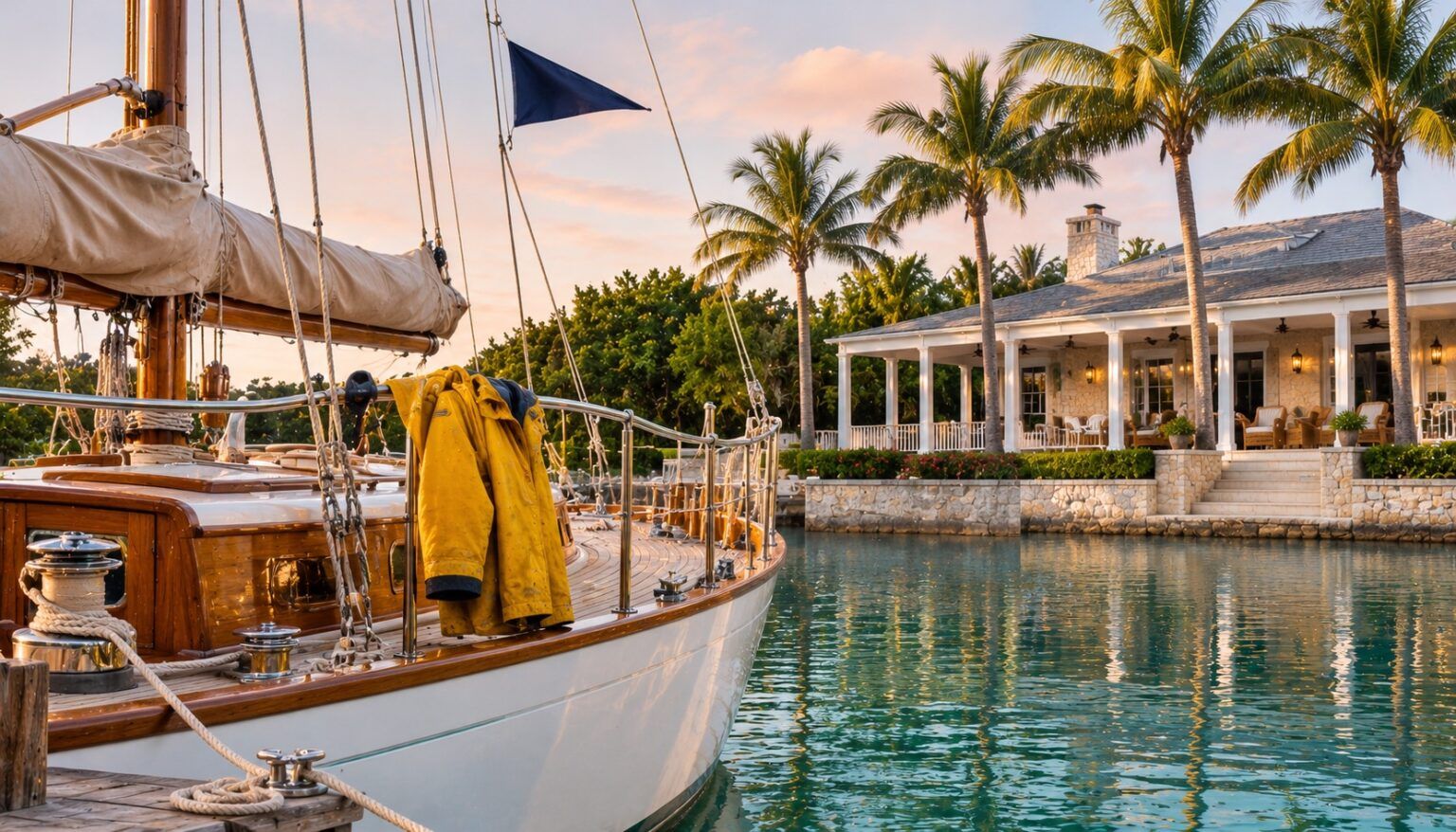
Reciprocal privileges are the quiet benefit that makes a yacht club membership travel. They are also the least standardized benefit in the business. Here is how a handful of Florida clubs, plus a few in the Caribbean and Bermuda, describe their own terms, and what a member should do before the lines go ashore.
Two Tracks: Council Members and Everyone Else
Most of the Florida clubs below sort visitors into two groups. The first is members of clubs in the Florida Council of Yacht Clubs, a state network whose goal, as Naples Yacht Club puts it, is to promote reciprocity among its members. The second is everyone else, from out-of-state clubs to members of national registries, and those visitors usually need a letter of introduction from their home club.
Terms vary from club to club and change over time. Every detail below should be confirmed with the host club before arrival.
Miami and Fort Lauderdale
Coral Reef Yacht Club on Biscayne Bay asks Council members to reserve in advance and carry a valid membership card. Its page limits privileges to once per calendar quarter and to guests who live outside the club’s 50-mile radius. Members of clubs outside Florida, including fellow members of the International Council of Yacht Clubs, must have their home club send a letter of introduction at least one week before the visit. Transient dockage is arranged ahead with the dockmaster. Jackets are preferred in the dining room.
Up the coast, the Coral Ridge Yacht Club in Fort Lauderdale invites visiting members of the Council’s 35 clubs and the American Registry’s 700-plus clubs Wednesday through Sunday for a la carte dining, transient dockage and the pool, for a two-week period, no more than once a year, in the guest guide published by Coral Ridge Yacht Club. The clubhouse is closed to guests on Mondays and Tuesdays.
The Lauderdale Yacht Club publishes a guest policy, a document created in April 2023, that treats the two tracks differently. Council guests need no letter of introduction. Non-Council reciprocal guests need a letter from their Membership Director or General Manager, emailed before each visit. A guest card runs for a maximum of one consecutive week in a six-month period, or one week in a three-month period for Council guests. Guests pay the usual fees for club facilities.
Florida’s Gulf Coast
Naples Yacht Club says Council clubs permit the first 24 hours of free slip use for members of other Council clubs, with reservations requested ahead. Visitors from outside Florida should first contact the membership office, and once the club confirms it can accommodate the request, send a letter on club letterhead. The club also says it does not use the Yachting Club of America subscription service to determine eligibility. When we read the page, its marina was described as closed for construction, a reminder to call before routing a boat there.
Also in Naples, the Naples Sailing & Yacht Club extends year-round reciprocal privileges, including dockage and dining, to Council members. Members of clubs on the American Register are welcome with a letter of introduction. From November to April, dining is limited to overnight Yacht Basin guests for a maximum of seven nights. From May to October, it extends to all visiting members. A 25 percent service charge applies to food and beverage.
The Sarasota Yacht Club describes a large network of reciprocal clubs, and asks visiting members to phone ahead before arriving. It gives no further terms on that page.
Beyond Florida: Bermuda and the Caribbean
Farther afield, the published detail thins out. The Royal Bermuda Yacht Club sits in the Atlantic rather than the Caribbean. Its members enjoy reciprocity at almost 100 clubs around the world, in the reciprocal clubs page published by Royal Bermuda Yacht Club, which also lists the club as a member of the International Council of Yacht Clubs. It asks reciprocal club members for a letter of introduction from their home club.
The Royal BVI Yacht Club says only that it enjoys reciprocal arrangements with many yacht clubs around the world and welcomes international members. The Antigua Yacht Club is more candid still. Its membership benefits page says reciprocal club membership is not formalised, though a membership card can be used to access many overseas clubs.
We found no published terms for the Bahamas or the Virgin Islands. For those clubs, the practical rule is to write first, and to treat any assumption of access as exactly that.
What This Means for Your Club
Put the rules on one page. The clubs above that state frequency, distance, notice and dockage in a few lines are the easiest to visit. Coral Reef’s page does this clearly.
Name your lead time. Coral Reef asks for one week, and Naples Yacht Club asks visitors to allow 48 hours for a reply. A stated number prevents a frustrated arrival.
Say what is closed. Coral Ridge tells visitors it is closed to guests on Mondays and Tuesdays, which saves a wasted trip.
Keep your own letters easy. Your members will request them every winter. A simple form is a service your office can brand. Our guide to how private club reciprocal privileges work covers the broader playbook, and our piece on the economics of yacht and sailing clubs shows where this benefit fits.
The Southbound FAQ
Do I need a letter of introduction to visit a Florida yacht club?
Often, but not always. Lauderdale Yacht Club says Council guests do not need one, while non-Council guests do. Coral Reef, Naples Yacht Club and Naples Sailing & Yacht Club ask for one from out-of-state or registry visitors.
Are reciprocal visits free?
Not necessarily. Naples Yacht Club says the first 24 hours of slip use are free for Council members. Coral Reef lists transient dockage at $5.00 per foot per night, with one complimentary night for Council members, subject to availability and advance reservation, in the visitors page published by Coral Reef Yacht Club. Lauderdale notes that guests pay normal fees for club facilities. Terms change, so ask when you book.
Can I visit the same club every winter?
Possibly, but limits apply. Coral Reef limits Council visits to once per calendar quarter and outside visits to once per calendar year. Coral Ridge limits visits to once a year.
How We Did This
We opened and read each club’s own page, linked above, and report only the terms printed there. Several clubs did not publish terms, which we say where relevant. Reciprocal terms vary and should be confirmed with the host club before arrival. The Lauderdale document dates from April 2023, and the Council and Registry club counts are the figures one member club gave. We did not verify them with the networks. For a broader view, see our guide to joining a private club without connections.
If your club wants its reciprocal program to read as clearly as its dining room, Private Club Marketing brings 20+ years in and with top private clubs to country club marketing. Talk with us.
Free Download
The 2026 Private Club Benchmark Report
The membership, amenity, and pricing data reshaping private clubs — from a 1,200-club analysis. Enter your details and we'll send it to your inbox.