
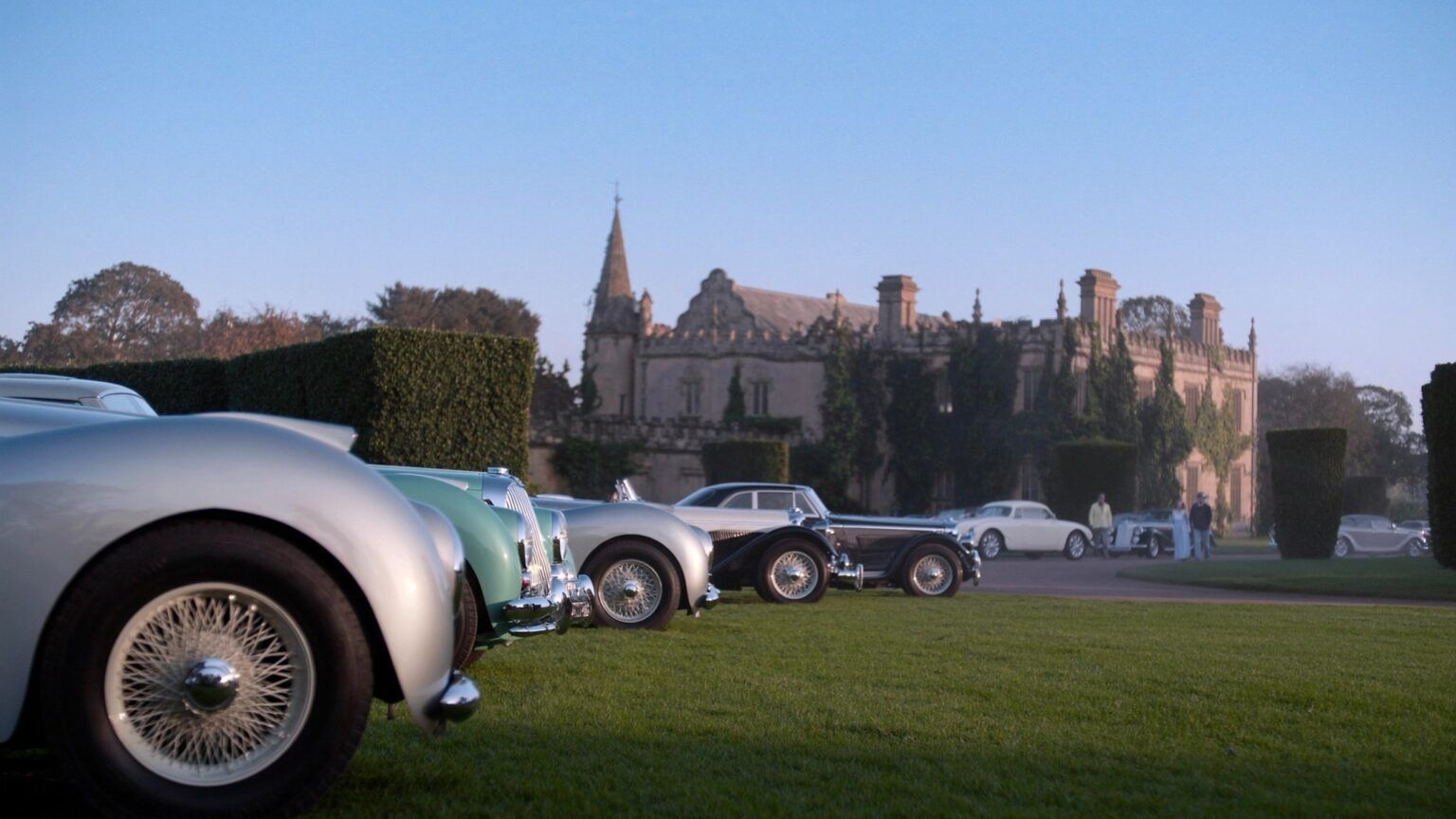
The first two weeks of September are the densest stretch on the automotive calendar, and they are also the best classroom in the world for anyone who runs driving club events. Salon Privé fills the lawns of Blenheim Palace from September 2–6. The Formula 1 Italian Grand Prix runs at Monza the same weekend, September 4–6. A week later, Chantilly Arts & Elegance takes over the château grounds north of Paris on September 13. Three events, three countries, three completely different models for gathering people who care about cars — and each one is a working case study for any club with a paddock, a garage program, or a member roster that skews toward collectors.
Most American driving clubs treat these weeks as content fodder: a few Instagram posts, a “who’s going?” email, maybe a watch party. That undersells the opportunity. The European concours circuit is a masterclass in how affluent enthusiasts want to be treated, and the lessons transfer directly to how your club programs its own fall season. If you followed our sister publication’s coverage of Monterey Car Week, the LXV Club Pebble Beach recap is the American half of this conversation; this piece is the European half.
The Collector Market Is Cooling — Which Makes Driving Club Events More Valuable, Not Less
Start with the money, because it shapes everything else. According to Knight Frank’s Wealth Report 2025, values for its basket of ten leading luxury collectible assets fell by an average of 3.3% in 2024, with the art market underperforming at 18.3% down. That is the backdrop against which Salon Privé, Monza and Chantilly are operating this year: collectors who are less certain that the car in the garage is an appreciating asset and more interested in what the car lets them do.
This is why the concours model keeps growing while auction results wobble. A concours is not a place to buy a car; it is a place to be seen with one, to have it judged by people whose opinions matter, and to spend three days in the company of people who understand the difference between a Series 1 and a Series 1.5. For clubs, the implication is direct: the value proposition behind your driving club events should lean harder on access, judgment and community than on the investment narrative that carried the hobby through the last decade.
The Coldwell Banker Global Luxury Trend Report 2025 reinforces the point from the residential side. In the report’s ranking of top interests among the high-net-worth clients of Coldwell Banker’s Luxury Property Specialists, travel ranks first at 65.7%, with health and wellness second at 52.2%. The same report lists golf and driving simulators and “stylish hobby rooms” among the top unique property personalizations luxury buyers requested in 2024 — a signal that the affluent household is building the hobby into the home. A club that wants to stay relevant needs to offer what the home garage cannot: other people, other cars, and a reason to travel.
What Each September Event Teaches Clubs About Programming
The three events succeed for different reasons. Treat them as three programming templates for your own driving club events calendar.
- Salon Privé (Blenheim, Sept 2–6): the garden-party concours. Salon Privé’s format is deliberately intimate — a Concours d’Elégance judged on the palace lawn, a manufacturer showcase, and hospitality that runs closer to a luncheon than a trade show. The Royal Automobile Club borrowed the same instinct when it launched its first Club Concours at its 350-acre Woodcote Park estate in Surrey in July 2025: around 2,000 members and guests turned out to see roughly 200 cars and motorcycles, many from members’ private collections, judged in seven categories, according to the Club’s own recap of the event. The lesson is that scale is not the point. A curated field of exceptional cars with excellent food and a real judging panel beats a parking lot of three hundred.
- Monza (Sept 4–6): the spectacle with a core. The Italian Grand Prix is the loudest event on the calendar, but its power comes from the tifosi — a tribe with rituals, colors and generational memory. American clubs are building their own version of that core. Ten Tenths Motor Club, a 100-acre members’ motor club built alongside Charlotte Motor Speedway, opened its 1.7-mile, F1-designer-built circuit in April 2025 and now runs scheduled track days year-round for members. P1 Motor Club in Fort Pierce, Florida, went further, trading fairways for more than nine miles of private racetrack across 650 acres, with a 4.5-mile FIA Grade 2 circuit and its first rallycross series launching in early 2025. Neither club is selling spectacle; both are selling the culture that regulars build when they bring newer members into the fold. That is Monza’s real lesson: the club provides the circuit, but the members provide the atmosphere.
- Chantilly (Sept 13): the cross-disciplinary event. Chantilly Arts & Elegance pairs cars with couture, gardens, dressage and fine art. It is explicitly designed for the spouse or partner who does not care about compression ratios. Classic Car Club Manhattan already programs this way at scale. In an interview with Gear Patrol, CCC co-founder Mike Prichinello said the club hosts “more than 50 events for our members,” including international touring rallies to Mugello, Spa-Francorchamps and the Nürburgring, plus road trips through Northern Europe and a rally through Cuba — driving club events built as travel and hospitality first, horsepower second. That is the single most under-programmed dimension at most American clubs, and it is where the membership growth is.
The Chantilly point deserves emphasis. GGA Partners’ 2025 Club Leaders’ Perspectives Report found that 73% of respondents indicated members of all ages share a balance of interest in socializing across generations, and 56% reported similar customer-service expectations across age groups. The same report flags that younger members tend to form exclusive social networks that limit intergenerational interaction. A car event that only rewards the person who owns the car reinforces those silos. A car event built like Chantilly — where the concours is one act in a longer weekend — pulls in the partner, the adult children and the friend who came for the lunch and left wanting a membership application.
The Top-Tier Client Is Tired of Being Marketed To
The most useful data point for anyone planning driving club events this month comes not from the auto world but from luxury goods. The BCG–Altagamma True-Luxury Global Consumer Insight Survey (June 2025), drawing on roughly 7,000 respondents across ten countries plus interviews with very important clients (VICs) and CEOs, maps the pain points of top-tier luxury customers. The number-one complaint is overcommunication without personalization. One VIC interviewed for the study put it bluntly:
“I engage with 57 brands in different categories, and I receive 40–60 outreaches a month…”
The report’s other top pain points read like a checklist of what not to do at a club car event: crowded, standardized retail experiences with no intimacy; artificial scarcity that requires the same spend every year just to keep status; and a lack of top-tier status recognition across channels. BCG summarizes what these clients actually want as “a luxury that goes back to the core: connection, intimacy, excellence and recognition.”
That is the concours formula stated in consultant language, and it is exactly what The Concours Club in Miami has built its entire model around. Rather than growing its membership-only motorsport resort through open recruitment, the club has deliberately kept one of the smallest rosters of any private motorsport property since opening in 2021, expanding almost entirely through member referral. As co-founder Ken Weiss has put it, membership growth has been “very organic,” aiming to be “amongst the smallest member group of any club on purpose.” That is scarcity that is real — a track and a clubhouse that can only hold so many people — as opposed to the artificial “waiting game” scarcity tactics BCG’s research has found luxury clients increasingly reject. Concretely, for your own club:
- Know which members own which cars before the event, and greet them accordingly. Do not make a member who has shown a car for five years fill out the same form as a first-timer.
- Give the concours a real judging panel, even a small one, and publish the results. Recognition is the product.
- Cap attendance and say so. Scarcity that is real — a lawn, a paddock or a garage that only fits so many cars — is different from scarcity that is manufactured.
- Route car-program communications through a single, named person. The VIC complaint is not about volume alone; it is about receiving messages from a brand that plainly does not know them.
The Email Lesson: Don’t Lead With the Marquee
Here is a counterintuitive one. The instinct when promoting a September car program is to put the famous names in the subject line — “Monza Watch Party,” “Our Salon Privé Recap.” In our experience across club email programs, marquee hooks underperform in subject lines. The event name promises spectacle; the member opens expecting to be sold something and finds a calendar invite instead, and the open rate never recovers on the next send. Lead instead with the outcome — the recognition, the access, the small-group dinner — and let the marquee name appear in the body copy, where it can do its work as proof rather than as bait.
Building Your Fall Driving Club Events Calendar
None of this requires a Blenheim-sized lawn or a Charlotte Motor Speedway budget. It requires the same discipline every one of these clubs applied: know your members, judge fairly, cap the guest list honestly, and program for the people in the passenger seat as much as the ones behind the wheel. September is the moment to test it — pick one event on your fall calendar and rebuild it around real scarcity and real recognition rather than volume.
If your club is planning its fall calendar and wants help translating these lessons into a concrete program — from invitation design to judging structure to the email sequence that supports it — Private Club Marketing works with driving and country clubs on exactly this kind of member-experience programming. Get in touch and we’ll help you build a September worth talking about.
Free Download
The 2026 Private Club Benchmark Report
The membership, amenity, and pricing data reshaping private clubs — from a 1,200-club analysis. Enter your details and we'll send it to your inbox.