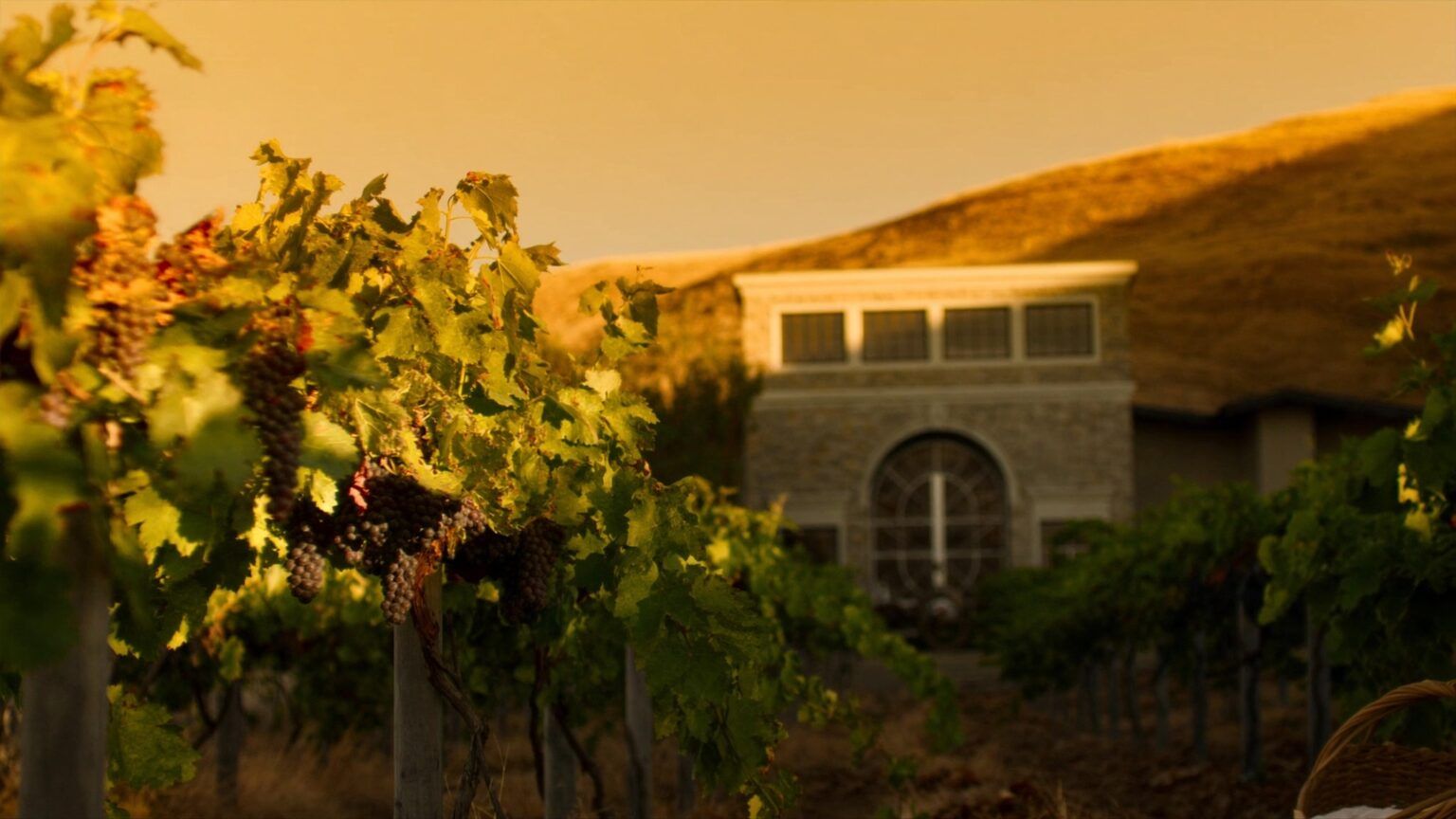
For roughly two weeks every September, Napa Valley becomes the single most compelling destination your club can put in front of members — and this year the calendar has done your programming for you. The Napa Valley Fine Wine Auction, now run through Sotheby’s, opens bidding September 3 and closes September 18. The Cabernet Pre-Release weekend runs September 8–10, when wineries pour barrel samples and offer allocations of Cabs that won’t hit shelves for two years. Both land squarely inside crush, when the valley smells like fermenting fruit and every winery is running at full tilt. If your club has a wine culture — or wants one — this is the window to sell a Napa harvest wine club trip, and the moment to finally launch the member wine-club program that has been sitting in the parking lot since spring.
We covered the broader harvest-season opportunity in our August 7 piece on fall wine programming, and the membership-tier logic in our August 20 article on ladder structures. This article puts the two together with a hard deadline attached.
Why a Napa Harvest Wine Club Trip Is a Buyer’s Window, Not Just a Party
Here is the insight most club wine committees are missing: the fine wine market has corrected, and that changes the economics of everything your club buys, cellars, and pours this fall.
According to Knight Frank’s Wealth Report 2025, fine wine was one of the weakest luxury collectibles sectors last year, with prices down 9.1% — a sharper decline than classic cars, handbags, or jewelry, and second only to art’s 18.3% drop. Tom Burchfield of Liv-ex, the global fine wine exchange, explains the mechanism plainly:
“The fine wine market enjoyed a bull run inspired by low interest rates during Covid. This resulted in a lot more speculation… with prices out of kilter with market conditions, resulting in a build-up of stock.”
The same report notes that many traditional fine wine collectors now have enough in their cellars, and the next generation is not yet picking up the slack. Translation for club buyers: allocations that were impossible to get three years ago are gettable. Wineries and distributors are motivated. A club that shows up in September with a real buying program — and a few dozen members’ worth of committed demand behind it — negotiates from strength.
On the supply side, quality has held. Silicon Valley Bank’s 2025 State of the US Wine Industry survey found that 60% of Napa County producers reported average harvest yields in 2024, with another 15% reporting better than average and only 3% at record lows — a balanced crop, not a scarcity story. Producers were also disciplined: SVB found wineries were rightly hesitant to take on juice or grapes without a defined plan for selling the wine. Disciplined supply plus soft secondary-market pricing is exactly the environment where a well-run club program locks in value.
The Demographics Are Moving Toward You
If your wine committee’s mental image of a Napa trip is a busload of retirees, update it. Visit Napa Valley research cited in the SVB report shows the average age of Napa Valley visitors dropped six years between 2018 and 2023 — from 46 to 40. Napa is getting younger, and so is the cohort of members you most need to engage.
That matters because experiential programming is precisely what younger affluent consumers are buying. Deloitte’s Global Powers of Luxury 2026 report found luxury executives ranking the shift toward experiential luxury as one of the top consumer behaviors shaping the next 12–18 months, just behind personalization — which 40% of US respondents named as the dominant trend. BCG and Altagamma’s True-Luxury 2025 research groups food, wine, hotels, and exclusive vacations together as the experiential category where top-tier clients expect spending to grow.
Travel patterns reinforce the case. A McKinsey & Company study released in June 2024, cited in the SVB report, found that affluent consumers continue to spend on luxury and wine but are slightly more cautious with travel — and when they do travel, they are more likely to travel domestically. A three-day Napa harvest wine club trip is the perfect product for that consumer: domestic, luxurious, wine-centered, and short enough to sell to a working 40-year-old member who can’t disappear for two weeks.
GGA Partners’ Club Leaders’ Perspectives research confirms that members and leaders alike rank activities, events, and entertainment among the core components of member value — and clubs are entering this season with pricing power, with GGA’s 2024 report showing initiation fees rising an average of 8.7% across the industry. Members are paying more to belong. Give them something to belong to.
The Member Trip: What to Sell and How to Frame It
Bay Colony Golf Club in Naples, Florida already has an established wine program built around in-house wine lockers, a curated cellar, and member events led by its sommelier — proof that clubs can build real wine culture around dedicated space and programming. A Napa harvest trip is the domestic, higher-margin version of that same idea, timed to a calendar event your members can’t get on their own.
The trip writes itself around the two anchor events. A workable three-night itinerary:
- Day one: Arrival, welcome dinner, and a private preview of Sotheby’s auction lots — bidding is open the entire window (September 3–18), so members can participate from the trip itself, with your GM or wine chair coordinating paddle logistics.
- Day two: Cab Pre-Release weekend appointments (September 8–10). Barrel tastings, futures allocations, and the kind of winemaker access that individual visitors rarely get but a small club delegation can command.
- Day three: Crush-season immersion — a working-harvest visit, sorting-table access, and a closing dinner where the club announces its own wine-club allocations for the year.
Frame it as access, not tourism. The Sotheby’s connection does real work here: Knight Frank’s report catalogs the headline-grabbing prices Sotheby’s houses achieved in 2024 — an $8 million NBA championship jersey, a $4.8 million Marie Antoinette necklace, a $17 million Ferrari at RM Sotheby’s. Your members read those stories. Attaching your club’s trip to the Sotheby’s auction calendar borrows that prestige at zero cost, while the actual wine market — down 9.1% over the past year, according to Knight Frank’s Wealth Report 2025 — means the lots themselves are more attainable than the branding suggests.
Sell it now. The trip is ten days out from the auction’s opening as of this writing, which is tight for a full charter but comfortable for a “club delegation” model: members book their own travel against a club-negotiated itinerary, appointment sheet, and dinner reservations. The scarcity is real and the deadline is real — the two ingredients every club marketer wishes they had.
What Other Private Clubs Are Already Proving About Wine
You don’t have to guess whether members will respond to real wine programming — clubs across the country are already showing the range of what works. Philadelphia Country Club in Gladwyne, Pennsylvania built “Around the World in 80 Wines,” an annual tasting series that spotlights wines from a single region per session, capped at a limited number of attendees and paired with winemaker dinners and a stamped tasting passport. “Two years ago, we wanted to create a cohesive wine series that could run throughout the year,” says Robert Colclaser, the club’s Director of Food & Beverage. “The tastings were introductory, and the winemaker dinners are more advanced.” The series went from sparsely attended to nearly sold out within a few months, and the club’s wine list grew substantially as a result.
*Figure as reported by the club, not independently verified.
Other clubs have proven the same appetite exists even without a formal tasting calendar. The Clubs at Houston Oaks in Hockley, Texas converted a Cold War-era bunker built by Tenneco into “Bunker 55,” a members-only wine cellar, bar, and lounge with storage capacity ranging up to 5,000 bottles — and member demand for the space has driven continued expansion of its locker and storage programs. Fiddler’s Elbow Country Club in Bedminster, New Jersey took a smaller-footprint approach, adding a bank of temperature-controlled wine lockers anchoring a recurring wine club with monthly socials. “As our wine club has grown, we added wine lockers, and demand for casual space became evident,” says General Manager Tom Hurley. And at The Cliffs, the seven-community network across upstate South Carolina and western North Carolina, a sommelier-curated Wine Consortium gives members access to bottles at up to 40% off retail, according to The Cliffs’ own member communications — an example of a club-run buying program, not a winery’s marketing budget, working to move price.
Launch the Wine-Club Program Off the Back of the Trip
Here is where the parked program comes off the shelf. A member wine-club program — curated in-house, offered in 3, 6, and 12-bottle tiers — is the recurring-revenue engine that turns a one-time Napa harvest wine club trip into a year-round wine culture. The September trip is its launch event.
The structure that works, and the one we recommend:
- In-house curation. Your wine director selects every bottle. This is the personalization play Deloitte’s research says luxury consumers now expect as table stakes — a named person at the club choosing wine for members, not an algorithm or a winery’s marketing department.
- Three tiers: 3, 6, and 12 bottles per release. This mirrors the ladder logic from our August 20 piece — a low-commitment entry tier for the curious, a core tier for regulars, and a collector tier that doubles as a status signal. Members climb ladders; give them rungs.
- No winery placement fees. Orders route through your distributor, not a winery’s sales team, which is exactly what lets The Cliffs’ Consortium members buy at discounts wineries would never offer direct. Your club keeps the curation credibility without the conflict of interest.
- A physical or social anchor. Fiddler’s Elbow’s experience is instructive: the wine club came first, and the demand for a locker room and monthly social followed. You don’t need Houston Oaks’ bunker to start — a modest tasting corner and a standing monthly pour night will do the same job at a fraction of the capital outlay.
Announce the first release on the closing night of the Napa trip. The members who just spent three days inside the harvest, tasted futures they can’t buy anywhere else, and watched the Sotheby’s paddle numbers climb are your warmest possible audience for a 12-bottle collector tier. Sell the trip, then sell the subscription.
Book the Trip, Then Launch the Program
The auction opens September 3. The Cab Pre-Release weekend runs September 8–10. The auction closes September 18. None of those dates move, and none of them wait for your next board meeting. Every week you delay is a week of allocation, pricing leverage, and member excitement you don’t get back.
Talk to your GM and wine committee this week about a delegation-model Napa harvest wine club trip, and put a hard date on when the 3/6/12-tier wine-club program launches. If you need help structuring the itinerary, the tier pricing, or the launch communications, Private Club Marketing builds exactly this kind of program for clubs — reach out and we’ll have a plan on your desk before the auction opens.
Free Download
The 2026 Private Club Benchmark Report
The membership, amenity, and pricing data reshaping private clubs — from a 1,200-club analysis. Enter your details and we'll send it to your inbox.